

Dr Andrew Amos: Australian Psychiatrist Handed AHPRA Restrictions Over Transphobic Social Media Posts
When a psychiatrist publicly compares trans identity to psychosis and misgenders a distinguished academic, is the regulatory response that follows really best described as silencing?
The story landed in The Australian on 2 March 20261 under the headline “Doctor silenced for posts on gender.” Queensland psychiatrist Andrew Amos had been banned from posting about gender medicine on social media and had restrictions placed on his clinical practice, all after complaints from “trans activists.” The framing was unmistakable: a brave, questioning doctor, targeted by activists, silenced by an overreaching regulator. I want to read this story carefully with you, because I think the headline and the record tell rather different stories, and I think that matters very much for the trans people whose lives sit at the centre of it.
What the Complaints Were About
The conditions imposed on Dr Amos’s registration by the Australian Health Practitioner Regulation Agency (AHPRA) and the Medical Board of Australia2 were triggered by four complaints. The Australian reports them, and they are worth setting out clearly, because the details matter.
The first complaint followed a post Dr Amos made on X in September 2024, in response to the case of Jennifer Buckley, a Queensland trans woman who had used a combination of hormones and medication to induce lactation so that she could breastfeed her son. Dr Amos wrote publicly that men who induced lactation were “the embodiment of narcissism.”
The second and third complaints related to an ABC online article that quoted Dr Amos and cited his posts on X, in which he stated that “there is no reliable evidence that trans identification can be differentiated from psychosis” and that “doctors who affirm gender delusions are liable for patient harms.”
The fourth complaint related to an exchange on X between Dr Amos and Professor Stephen Whittle, a trans man in the UK and one of the most respected academics in the field of trans rights and healthcare. In that exchange, Dr Amos suggested that Professor Whittle was “a woman pretending to be a man.”
These were not careful, evidence-based challenges to a clinical pathway. They were not peer-reviewed arguments about treatment protocols. They were public statements on social media: that trans identity may be a form of psychosis, that a trans woman who chose to breastfeed her child was narcissistic, and that a distinguished trans academic is not who he says he is.
Why These Statements Cause Harm
I want to spend a moment on the claim that trans identification cannot be differentiated from psychosis, because this one matters particularly from a clinical standpoint.
This claim is not true. Psychiatry has well-established diagnostic criteria for both psychotic disorders and gender dysphoria, and they are different clinical presentations that respond differently to treatment. Gender dysphoria is not classified as a psychotic disorder in the DSM-53 or the ICD-114. The statement is factually incorrect, and that matters not only as an academic point, but because of what happens when a psychiatrist says this publicly.
Trans people read it. They internalise it. They wonder whether their own identity might be a form of illness, whether they are deluded, whether their doctor privately thinks they are psychotic. They delay seeking care. They hide themselves. The complaints against Dr Amos specifically alleged that his statements created a danger that trans people might not come forward to access care, and that risk is real, documented across the research on healthcare-seeking behaviour in marginalised communities.
The statement that “doctors who affirm gender delusions are liable for patient harms” is also worth examining. It is factually wrong, since courts and regulatory bodies in multiple jurisdictions have consistently upheld appropriate gender-affirming care when properly delivered. It is also potentially damaging, in that it might deter clinicians from providing care that trans patients genuinely need.
A Word About Professor Whittle
Professor Stephen Whittle5 OBE is a trans man, a Professor of Equalities Law at Manchester Metropolitan University6, and one of the most respected academic voices on trans rights and healthcare in the world. Describing him as “a woman pretending to be a man” is not a clinical or scientific statement. It is a denial of his identity and his humanity, made publicly by a registered medical practitioner.
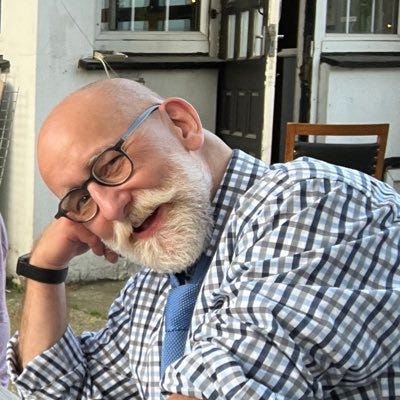
AHPRA’s own statement, quoted in The Australian, notes that it respects freedom of expression “provided it does not involve abuse, discrimination, or pose a risk to public safety.” Publicly misgendering a colleague with the apparent intent to dismiss and demean is discriminatory conduct, and it falls outside the boundaries of professional behaviour regardless of anyone’s views on gender medicine.
The Podcast, the Coalition, and “Gender Nonsense”
I have also read a transcript of a podcast interview in which Dr Amos appeared on a programme called The Dollhouse, hosted by two people who describe themselves as gender-critical feminists and who open their show with the stated purpose of talking about “sex, gender, and all the nonsense in the Antipodes today.”
In that conversation, Dr Amos enthusiastically joins in with the framing, referring to trans healthcare as the “gender nonsense” in the programme’s opening. He describes the evidence base for trans healthcare not as contested science requiring further investigation, but as a deliberate strategy by trans rights organisations to suppress scrutiny. He makes categorical statements that gender-affirming medicine is “medically wrong” and “ethically wrong,” not as nuanced clinical positions derived from evidence, but as flat assertions. At the close of the conversation, he says he is “very happy to be part of the coalition” with his hosts.
I raise this not to suggest that appearing on a podcast is itself a regulatory matter, but because context matters when we assess what kind of activity is taking place. There is a meaningful difference between a doctor raising evidence-based clinical concerns within professional forums, and a doctor who has publicly aligned himself with a coalition whose explicit purpose is to oppose trans healthcare and who describes that healthcare as “nonsense.” Both involve speech, but only one of them is straightforwardly medical inquiry.
What AHPRA Actually Did, and Did Not Do
It is worth being precise about what the conditions on Dr Amos’s registration actually say, because the “silencing” framing is not accurate.
He is not struck off. He remains a registered medical practitioner. The conditions place restrictions on his social media engagement specifically in relation to gender medicine, gender identity, and transgender persons. They also restrict where he can practise and bar him from clinical patient contact while the investigation continues. The conditions explicitly do not affect his academic work. He can continue to publish, to research, and to engage with professional peers.
AHPRA can impose conditions like these as an “immediate action” when it forms a reasonable belief that there may be a serious risk to people, without needing to establish all the facts first. An investigation may take up to two years. This is not a final finding against Dr Amos. It is a precautionary measure, taken in response to specific complaints about specific statements.

On the Chilling Effect
The Australian also quotes Dr Jillian Spencer, a doctor why reportedly holds very negative views that have not been tolerated.7
She says she is “very anxious” about being targeted next, and describes a situation in which medical professionals have been suppressed from questioning the gender-affirming model. She is concerned that colleagues will “run for cover” because of AHPRA’s action.
I take this seriously, because it raises a real question. Legitimate clinical debate should be possible. Doctors should be able to examine evidence, raise questions, and challenge prevailing models of care where the evidence genuinely warrants it. If papers are being rejected from professional journals not for methodological reasons but because reviewers dislike their conclusions, that is a problem worth addressing. Professional forums should accommodate honest inquiry.
What is not the same thing is a doctor posting on social media that trans identity is indistinguishable from psychosis, that a trans woman who breastfeeds her son is narcissistic, and that a trans academic colleague is not who he says he is, and then describing that as clinical debate. The harm of those statements falls not on the medical profession, but on trans people who are already marginalised, already struggling to access healthcare, and already vulnerable to the stigmatising messages that accumulate around them.
The chilling effect that I am most concerned about is not the one on doctors who might have their social media activity scrutinised. It is the one on trans people who read a psychiatrist’s posts saying their identity may be psychosis, and decide that seeking help is not safe.
Why This Matters
I want to be clear about something before I finish. I am not saying that all questions about trans healthcare are wrong, or that medicine should not continue to examine and refine its evidence base. It absolutely should, and I welcome rigorous, honest, evidence-based clinical research and debate. I am not saying that AHPRA is infallible, or that regulatory processes are always applied fairly. Those are legitimate questions too.
What I am saying is that the framing of Dr Andrew Amos as a silenced, brave doctor, targeted by trans activists for raising legitimate clinical questions, does not match the record. The record shows a psychiatrist who publicly stated that trans identity may be a form of psychosis, who called a trans woman’s parenting narcissistic, who misgendered a distinguished trans academic, and who told a gender-critical podcast that he was “very happy” to be part of their coalition against trans healthcare.
AHPRA has placed conditions on his registration while it investigates, and told him to stop making statements on social media that may cause harm to trans people. That is accountability, not silencing.
Trans people deserve doctors who will treat them with dignity, who will engage honestly with the evidence, and who will not broadcast stigmatising falsehoods about their identities into the world. They deserve a healthcare system that takes its responsibility to protect them seriously. On this occasion, AHPRA appears to have recognised that responsibility and acted on it.
If this article has been useful to you, please share it with someone who has seen the headlines and wondered what is really going on. The comments are open, and I would love to hear from you.
Dr Helen Webberley, Gender Specialist and Medical Educator
www.helenwebberley.com
Thank you, Dr. Webberley, for all of the outstanding, heartfelt work, and support, and validation, and advocacy and love you provide to our community. As a retired physician myself, I feel this deeply and passionately, and I am so very grateful. Thank you.
I've literally said before "I'm glad you don't understand because truly understanding would mean you've experienced this too; I wouldn't wish that on anyone."
Yet... there is such a vast difference between not understanding and wilfully and actively sticking your fingers in your ears while closing your your eyes and screaming repeatedly "I can't see you, I can't hear you, you're not real!"
I mean, what would you even call the type of behavior? Psychosis perhaps? Another "every accusation is a confession" situation?
The only real conclusion I've been able to come up with, sadly: what is wrong with some people?