

Journey to Acceptance: A Mother’s Story of Love, Fear, and Finding Her Way Back
Tracy and her daughter El share their story of transition, understanding, and the power of showing up – even when you don’t have all the answers.
My Review
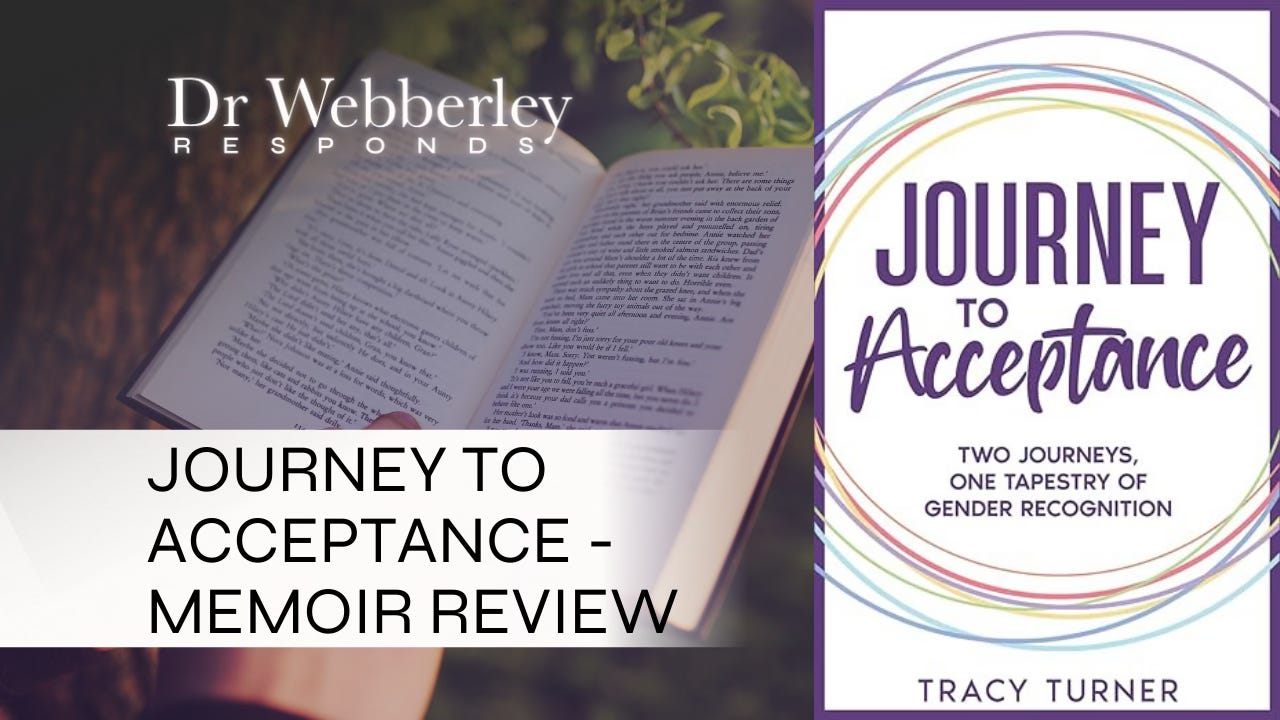
In this moving memoir, Tracy tells the story of her daughter El’s transition, but perhaps more importantly, her own. What begins as a mother’s confusion and worry slowly evolves into deep understanding, fierce advocacy, and unconditional love. Her honesty is disarming, her vulnerability is relatable, and her courage is inspiring.
What makes Journey to Acceptance stand out is the way it shows the human side of transition. Not as a clinical process or a headline, but as a deeply emotional, relational, and evolving journey. It explores the early signs of gender incongruence, the heartbreak of long NHS waiting lists, the importance of timely care, and the role GenderGP played in El’s healthcare and support. Tracy doesn’t shy away from the hard parts, but she leads us through them with grace and compassion. El’s voice, woven through Tracy’s reflections, brings so much light and perspective.
This book isn’t just a memoir. It’s a lifeline for other parents and a beacon of hope for young people who long to be seen and supported.
You can find Journey to Acceptance on Amazon here:
An Interview wit Tracy and El
I was so pleased that Tracy and El agreed to share more of their story with me. Here is our conversation.
The Beginning
When did you first realise something was different about El? What were the early signs, looking back?
I was completely unaware until El shared her emotions. Her disclosure that day completely astonished me. Looking back while writing the book, I saw indications that might have existed, though they could also reflect a child’s efforts to navigate their surroundings. It amuses me now to think about how El never gave back her sister’s fairy wings for an entire year! I also remember with some guilt now that she often became angry, withdrawn and what I described as ‘difficult’ around years 6 or 7.
I sought counselling for El, and it revealed she perceived herself as having two distinct sides: Angry El and simply El. I attributed this to the separation from her father and thought no more of it.
How did El tell you? What was that conversation like?
El, with remarkable composure and obvious planning, explained her desire to be acknowledged and accepted as a woman. She requested that I be seated, remain composed, and pay attention. I did exactly that. So, the conversation was calm, but surreal, I would say. I presented a calm demeanour, much like a swan, while paddling furiously internally, struggling to process what I was hearing. Inside I was screaming – What! How! Why! My ego took over and started spouting off things like: “How can you say that?”, “You’ve never had an actual relationship,” “Are you even gay?”, and “You don’t really know anything about the world.” I was confused, and I wrongly believed that sexuality and gender identity were the same. Not my finest hour!
What was your immediate reaction, honestly? How did it change over time?
My immediate reaction was disbelief, shock, anger and even shame! I initially considered how this would change my life, my connections with others, and how people would perceive me. I was clueless about how to handle this and unsure if I even wanted to! Faced with the unfamiliar, we seek refuge in the familiar; for me, that was control. I sent El for counselling, hoping that would be an end to the matter. It wasn’t!
From the start, I tried to offer El support and financial help, but I secretly hoped she’d reconsider, and I now know she felt my negativity and felt isolated because of it. When she briefly re-transitioned five years later, I didn’t even attempt to understand her reasons. I felt a sense of relief at not having asked the questions, as the answers were something I preferred to remain ignorant of. I kept hoping she’d change her mind, even after eight years, until El’s facial feminisation surgery was done. When she started transitioning again, I had already begun self-help therapy and discovered how to confront my anxieties. This allowed me to begin our second journey from a place of greater understanding. I pursued reliable information, posed the challenging questions I’d been avoiding, and discovered a support system. I was finally in El’s corner. To quote El, “It’s not where you started, Mum, but where you finished.”
The Journey
What was the hardest part of those early days, as a parent?
I felt helpless because I couldn’t guide El, didn’t know where to find help, and they didn’t include me in her medical appointments since she was an adult. The persistent delays and recurrent consultations with her general practitioner wore El out. It was disheartening to witness the delays and lack of empathy and knowledge from many healthcare professionals. Witnessing my child’s mental health decline with no solutions in sight was very difficult. I saw El isolate herself, overwhelmed by the continuous difficulties she encountered. I sometimes felt that El had surrendered, and as her mother, I couldn’t bear to witness it. I saw her suffering, and the fear of losing her consumed me. Fake news made me anxious, and I often felt sick to my stomach. I couldn’t stop thinking about the possibility of El making the wrong choice. The fear I felt was overwhelming, and it frequently took precedence over all other feelings. I struggled to keep this a secret from El.
How did other family members react? Was everyone on the same page?
Even though they didn’t get it, my family was all supportive. While everyone backed El, I doubted they knew how they would do it. To avoid causing offence or confusion, the topic was often ignored, causing me to handle my feelings of rejection in solitude. In the beginning, I think shame and guilt burdened me as I was not coping. We’ve talked about it since, and they thought my lack of response showed I didn’t want to talk, while their silence felt like they were rejecting me. Communication is a better option.
What helped you most?
Ultimately, I sought counselling and support for myself. Grasping the basis of my beliefs and my conduct. Adjusting my mindset, gaining understanding, and welcoming transformation. Dismissing fake news while identifying trustworthy sources. Seeking LGBTQ+ community members for guidance and support. Listening to El, and working from a place of belief, positivity, and love, not disbelief, negativity, and fear.
What do you wish someone had told you at the start?
Find what brings you joy. Be it dancing, a walk in nature, or socialising with friends. Prioritise your well-being, and you will be a better parent. You cannot pour from an empty cup! We parents frequently try to do this. Avoid judging yourself when you make mistakes! Some of the most valuable guidance originated in the mistakes I made.
El’s Experience
What has been hardest?
Probably managing my mental health. During that period, medical resources were few, and I also found myself with little support from my family. A single low day could make me miss a doctor’s appointment or job interview, which could then increase my self-hatred and make it hard to leave the house. It’s difficult to cope with so much when you feel isolated.
What has helped you the most?
Honestly, taking breaks from my transition. I was concerned that others would doubt my commitment to transition because of these pauses, but taking a step back and assessing my situation without the stress was incredibly beneficial. Taking a break solidified my decision and allowed me to strategise, ensuring future success by anticipating and overcoming obstacles.
How are you doing now?
Great, obviously I still have low days but I am happy with who I am. I have a loving partner, an adorable puppy and a Mum that, despite how things started, is really in my corner now and has made me so proud to be her daughter.
El’s transformation profoundly inspires those around her, and her family remains her biggest cheerleader. She agrees the journey was hard, but it was worth the effort. She has embraced her authenticity and stopped pretending.
Looking Forward
If a parent came to you tomorrow and said “my child has just told me they’re trans,” what would you say to them?
Breathe! I think I held my breath for years! Begin by believing what your child says and then listen. Create a safe environment for your child, allowing them to communicate their feelings and thoughts without being judged or facing prejudice. Explore the origins of your feelings and don’t be hard on yourself if they don’t meet your ideals. Locate trustworthy information sources and don’t hesitate to ask for help. Seek a community where you and your child feel welcome. Keep learning, developing, and adapting to new things. Ignorance and misinformation will only make your fears worse. Do not engage with false information or sensationalised media.
What’s one thing you want other parents to know?
I want to encourage parents to feel comfortable expressing their thoughts, even the ones they might hesitate to share. In today’s society, parents can easily feel discouraged when considering the environment faced by transgender youth. Fighting for your child’s existence is exhausting. The debate, denial, and demonisation of their identities in news reports is a deeply upsetting experience. Wanting it all to end is an expected reaction. It’s permissible to feel your emotions, doubt yourself, and even be selfish and judgmental at times. Be honest, while also showing empathy, kindness, and a willingness to adapt. Life has a way of transforming your pain and suffering into gratitude, understanding and strength. Listen and believe.
Why did you decide to write the book?
As part of my recovery. To gain additional insight into El’s story. I hoped to understand the effect my choices, whether active or passive, had on El, and I aimed to assist other parents by highlighting these. Because of limited firsthand accounts from trans parents in 2014, I decided to provide a resource rooted in reality, focusing solely on truth, support and optimism, rather than political statements. I wanted to write the book I wish I’d had when I started. I wanted to chronicle El’s remarkable path, and where she is today, mirrored by my journey of self-discovery. This story illustrates love triumphing over fear, uncertainty, judgment, and anxiety. I want parents to know that a happy outcome exists for their child, and it’s a goal worth pursuing. To find the strength and resolve to persevere, even when all seems lost. Parents should know that their children’s rights are being championed, and support systems can be found. I hope it gives encouragement and motivation.
What do you hope readers take away from it?
Credit belongs to El, who dared to be in the arena, who fought for her authenticity. There will always be those who disagree, discriminate under whatever disguise they choose, but know those often-nameless individuals who criticise do not count.
It’s natural for people to see things differently. Views on the transgender community differ, for and against, but this book poses the question: if transitioning makes someone happy, why does there need to be a choice? Shouldn’t compassion, empathy and understanding lead the way?
I hope my honesty and guidance will help other trans-parents. For other readers, I hope it helps them to have a greater understanding of the adversity and discrimination this community faces. Discrimination and fear persist because of negativity, ignorance, and procrastination. I hope readers contemplate their own beliefs. Question their origin. Maybe acknowledge their restrictions. Are they rooted in reality, social expectations, internal struggles, a lack of understanding or just fake news?
I hope readers see that when we foster acceptance, inclusion and love, it has a significant impact.
Whether at work, the gym, a café or walking down the road, everyone has the power to make a difference with just a simple smile, and it’s never too late to try!
Journey to Acceptance: Two Journeys, One Tapestry of Gender Recognition is available on Amazon:
Thank you, Tracy and El, for your bravery, your honesty, and for trusting me with your story. This book will help so many families, and I am honoured to share it.