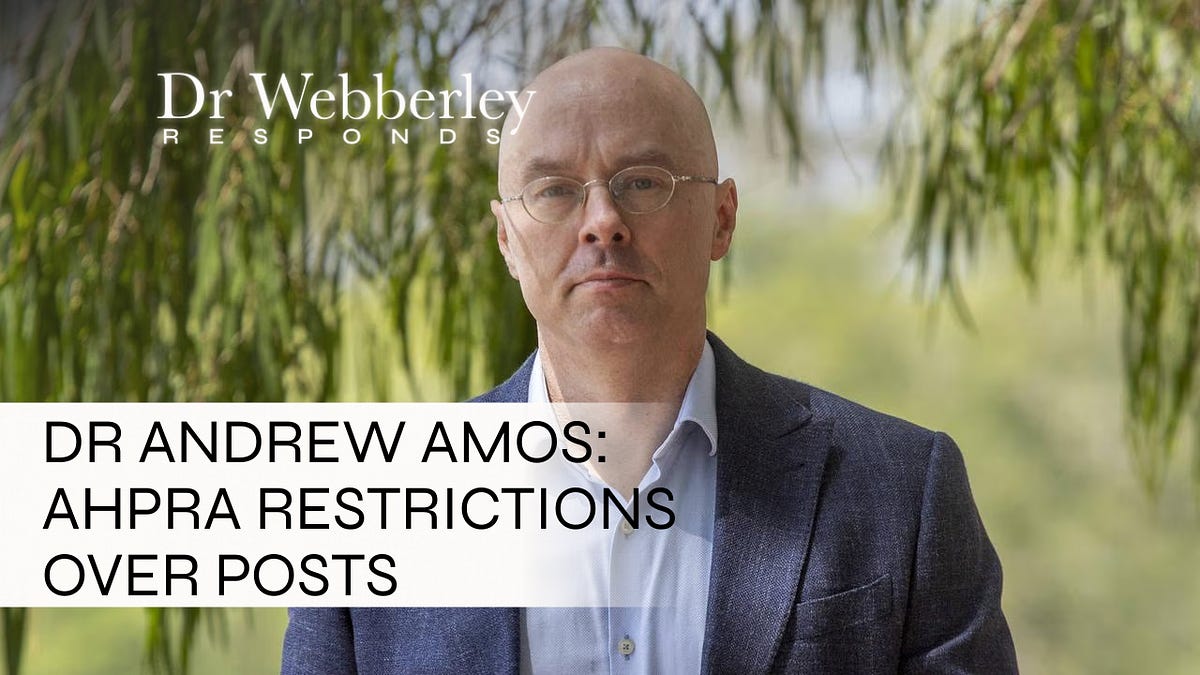
Psychiatrist faces restrictions over transphobic social media
By Dr Helen Webberley·Responding to Substack·5 March 2026·1 min read
When a healthcare professional uses their platform to compare trans identity to psychosis and publicly misgender a distinguished colleague, regulatory action is not silencing, it is accountability. The case of Dr Andrew Amos, who faced AHPRA restrictions over transphobic social media posts, draws a line medicine has always needed to draw: professional freedom does not extend to causing harm.
A recent case involving an Australian psychiatrist who faced AHPRA restrictions following transphobic social media posts raises important questions about professional accountability and free speech in healthcare. The psychiatrist had compared trans identity to psychosis and misgendered a distinguished academic, prompting regulatory action that some have characterised as silencing.
There is a meaningful difference between restricting someone's right to speak and holding healthcare professionals to standards of practice and conduct. When clinicians use their platforms to promote views that contradict current evidence and undermine the dignity of the people they may treat, questions about fitness to practise become relevant rather than matters of free expression.
The full article explores what happened, what it means for trans healthcare, and why these distinctions matter so much. Read on to understand more about professional responsibility and how regulatory bodies approach these complex situations.
Comments