
Two-thirds of Americans telling a pollster they prefer birth sex on IDs is not a verdict on what is right. It is a snapshot of what people think they know, shaped by years of political noise. Minority rights have never been decided by majority preference, and there is good reason for that.
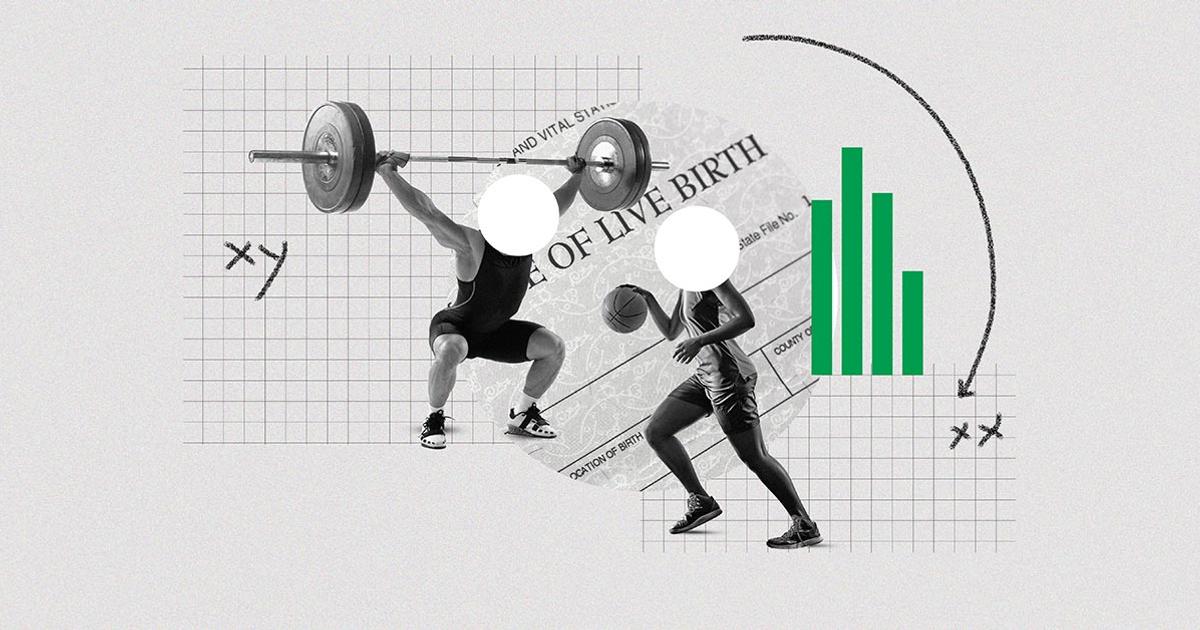
Gallup has published its latest Values and Beliefs survey, and the headlines are being read as damning: 69% of Americans think transgender athletes should compete only in categories matching their birth sex; 66% think government documents like passports and driving licences should list birth sex rather than gender identity. Support for transgender athletes competing in line with their gender identity has fallen ten points since 2021.
Those numbers are being misread almost everywhere they are being discussed.
What the poll actually measured
A poll measures what people say they think when asked a simple question with a simple answer. It does not measure what they know. It does not measure the full weight of what the question means to the people most affected. And it cannot tell you whether the preference expressed is just.
Gallup asked people whether they prefer a simple rule. A lot of people said yes. That is almost always what happens when you ask whether people prefer a simple rule. Simple rules feel clean. They feel fair, in the abstract, to people who do not have to live inside them.
But trans people do live inside them. A passport that names the wrong sex is not an administrative inconvenience. It is a document that forces someone to out themselves every time they travel, invites scrutiny, and in some situations exposes them to danger. A rule that requires a trans woman to compete in male categories does not protect anyone: it removes her from sport entirely, because the practical reality of competing in a category defined by a body that is no longer hers is not participation, it is exclusion with extra steps.
None of that is in the poll. The question was simpler than the reality, and that is the gap that matters.
Majorities have been wrong before
There is a long history of polling on minority rights that the Gallup write-up quietly gestures towards, and I think it deserves more than a gesture. Gallup has been asking about gay and lesbian relationships since 1977. For most of those years, majorities said they were morally wrong. Today, 64% say they are morally acceptable. The number did not change because the truth changed. It changed because familiarity grew, because people met gay and lesbian people and found them to be, unremarkably, people.
Gallup's own analysis notes this directly: Americans are more familiar with gay and lesbian people than with trans people, and familiarity shapes opinion. That is not a neutral observation. It is an explanation for why opinion is where it is, and a strong signal that it will move as understanding grows.
In the meantime, we do not let majorities decide which minorities deserve legal protection. That is not how rights work, and it is not how they have ever worked when they worked properly. The Equality Act, the Human Rights Act, constitutional protections across the democratic world: these exist precisely because the popular vote has, historically, often been on the wrong side of minority welfare.
What four years of political noise can do
The ten-point drop in support for trans athletes since 2021 is striking, and Gallup's write-up does not fully reckon with the context. The past four years have seen an unprecedented volume of legislation, executive action, and media coverage specifically targeting trans people, and almost all of it has been framed in terms designed to trigger discomfort: safety, fairness, children, protection.
Donald Trump signed executive orders eliminating federal recognition of gender identity, banning trans people from the military, restricting gender-affirming healthcare for minors, and aiming to exclude trans women and girls from female sport. These were political acts presented as common sense, and they saturated the public conversation. When opinion shifts in that environment, the shift tells you something about the power of sustained messaging. It does not tell you something about the merits.
The finding that 50% of Americans attribute being transgender to environment and upbringing rather than biology is another number that looks worse than it is, in isolation. Gallup found exactly the same pattern with gay and lesbian identity until the early 2000s, at which point the "nature" explanation gradually overtook "nurture" and has led ever since. Public understanding follows science slowly, and science on gender identity, biology, and development has moved considerably. Opinion tends to catch up, given time and space to do so.
The question nobody asked the people most affected
What strikes me most about this poll is the question it did not ask. It did not ask trans people what it costs them to have their identity erased from their documents. It did not ask trans athletes what it means to be told the category they have trained for is not available to them. It did not ask trans young people what they feel when they hear that a majority of their fellow citizens think something is morally wrong with who they are.
Polls ask the majority about the minority. They rarely ask the minority what the majority's preferences feel like from the inside. That asymmetry is built into the method, and it matters when we decide how much weight to give the result.
54% of Americans think changing one's gender is morally wrong. I read that and I think about every trans person who has spent years trying to reconcile who they are with a world that keeps telling them it disapproves. Being told you are morally wrong is not a neutral data point. It is a weight carried in every interaction, every official document, every news cycle that treats your existence as a debate.
Why the numbers will change
I am not dismissing the poll. I am reading it for what it actually shows. It shows that sustained political pressure moves numbers. It shows that unfamiliarity breeds discomfort. And it shows, in its own historical comparison, that both of those things are reversible.
The trajectory on gay and lesbian acceptance is not a coincidence. It happened because people came out, because families met trans people, because the abstract became human. That process is slower for trans people partly because there are fewer of them and partly because the political pressure against them has been more recent and more intense. But it is the same process, and there is no reason to believe it ends differently.
In the meantime, the rights of a minority are not something to be put to a popular vote. A poll that shows two-thirds of Americans prefer a simple rule is not a mandate for a rule that causes serious harm to real people. It is a starting point for a better conversation, and that conversation needs to include the people the rule is about.
If there is a news story you would like me to cover then just let Sammy know.
Dr Helen Webberley is a Gender Specialist, Medical Educator, writer, and advocate, and the founder of GenderGP. She writes about gender diversity, trans healthcare, and the lives of trans people and their families.
Comments