
The Good Law Project is building a coordinated series of legal challenges to defend trans rights in the UK, from workplace toilet bans to gym exclusions and community spaces like Hampstead ponds. Each case is a piece of a larger effort to establish what the law actually requires, and to make clear that trans exclusion is not inevitable or legally settled.
A quilt of cases, not a single battle
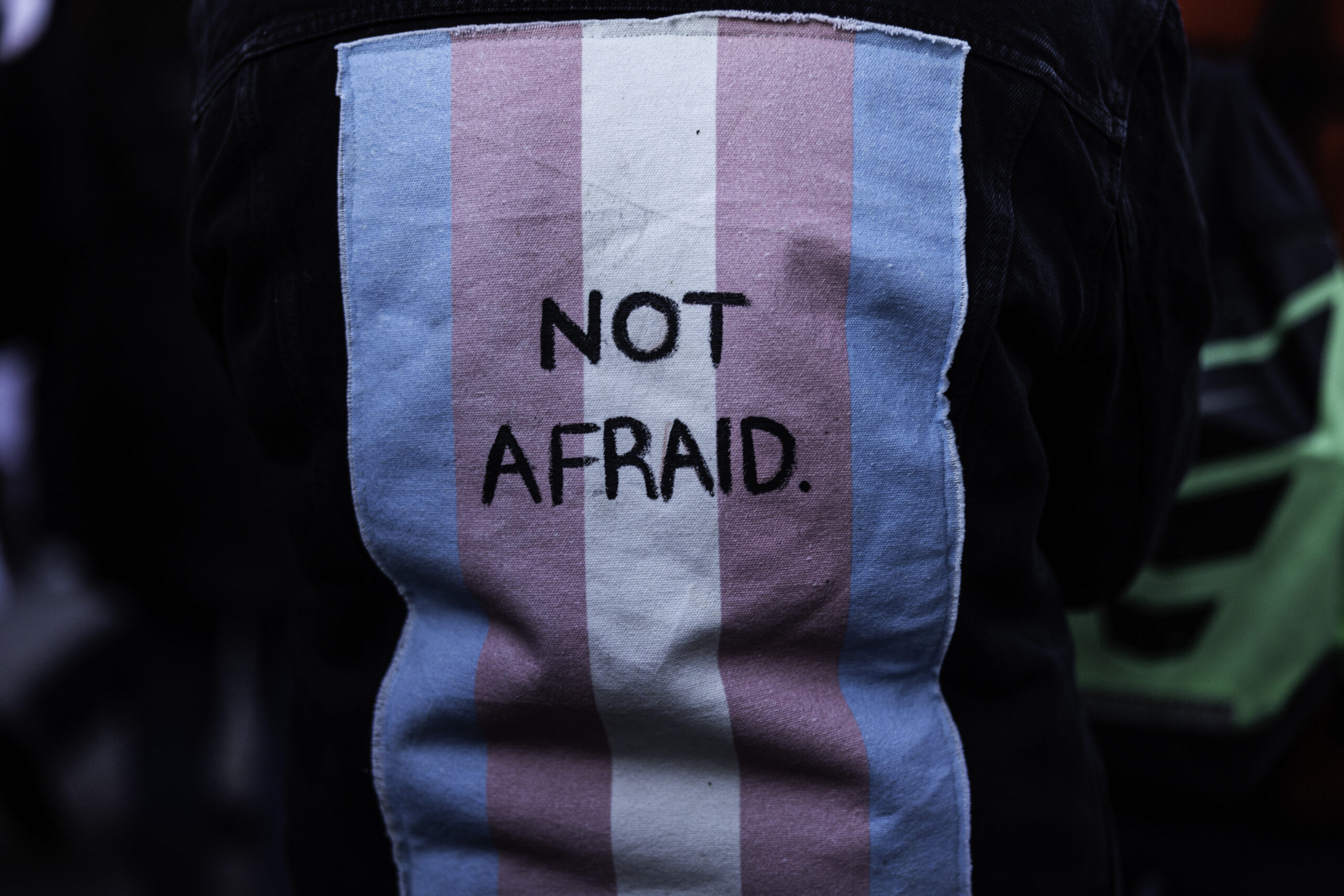
I love the image the Good Law Project have chosen for this campaign: a patchwork quilt, assembled from hundreds of small contributions, carried through London at Trans+ Pride. It captures something true about how this kind of legal work actually functions. No single case will fix everything. Each one establishes a piece of the picture, challenges a piece of the narrative, and builds the record that allows the next case to go further.
The quilt itself is real: a giant patchwork the trans community helped create, which was carried at London Trans+ Pride. The legal work it represents is just as real, and just as carefully pieced together.
The EHRC challenge: what it is and why it still matters
The most significant case is the challenge to the Equality and Human Rights Commission's interim guidance, rushed out in the days immediately after the Supreme Court's decision. That guidance told employers and service providers that they had to exclude trans people from gendered facilities. Three claimants, a trans woman, a trans man, and an intersex person, each found themselves told by their employer that they could no longer use the appropriate toilets at work.
Think about what that actually means. Going to work and being told: not that toilet, not that space, not with those colleagues. Being pointed towards a third space that may not even exist. Being treated as a problem to be managed rather than a person to be employed.
The High Court ruled against the challenge in February, finding that requiring trans people to use third spaces was justifiable, and comparing the risk of trans people being outed to mere "workplace gossip". That framing tells you a great deal about how little weight was given to what trans people actually experience. Being outed at work is not gossip; it can end careers, damage safety, and destroy the professional life someone has built.
Good Law Project have applied for permission to appeal, and I think they are right to do so. The High Court's own judgment contains something that has been almost entirely ignored in the public discussion: a clear statement that trans-inclusive toilets, provided for both cis and trans women together, could be entirely lawful, and would not discriminate against cis men by excluding them. That is a significant finding. The EHRC and the government have pressed ahead regardless, with updated draft statutory guidance claiming that trans-inclusive women's services are "very likely" to discriminate against cis men, directly contradicting what the court actually said. Good Law Project wrote to Bridget Phillipson in February to highlight this, and the problem has not been addressed.
The EHRC has now written to the Court of Appeal suggesting that the updated code of practice overtakes the challenge. Good Law Project strongly disagrees, and so do I. The code of practice covers service providers and associations. The interim guidance affected workplaces. Each of the three claimants was excluded at work. The challenge remains live, relevant, and pressing.
Virgin Active and the reality of "third spaces"
The gym case makes the abstract concrete in a way that matters. Two trans gym users are suing Virgin Active after the company introduced a policy excluding trans people from gendered changing facilities, following threats from GB News presenter Michelle Dewberry, backed by the anti-trans group Sex Matters.
The claimants are not asking for anything extraordinary. They are asking to use the gym they pay for. But because the pool and sauna can only be reached through the men's or women's changing rooms, being excluded from those rooms means being excluded from entire sections of the facility. Both claimants have either greatly reduced or stopped using parts of the gym altogether, out of fear of being harassed. That is the lived reality of trans exclusion policies: not a tidy administrative arrangement, but a daily calculation about whether existing in a space is worth the risk.
Virgin Active are not alone. The Women's Institute and Girlguiding both faced legal threats and chose to exclude their trans members rather than fight. Good Law Project offered to defend both organisations and indemnify them against costs. Thousands of people wrote in to encourage them to accept. They declined. Even now, the EHRC's own draft guidance acknowledges that associations can choose to be inclusive, offering membership to both cis and trans women without having to admit cis men. The choice to exclude was a choice, not a legal requirement.
Hampstead ponds: where the majority spoke
Not everyone has capitulated. Hampstead ponds ran a public consultation after pressure to exclude trans swimmers, and 86% of respondents said they wanted the ponds to remain trans-inclusive. Over 14,000 people signed a petition supporting that position. The ponds chose inclusion.
Sex Matters were initially refused permission to challenge that decision, then won permission on appeal. Good Law Project plan to intervene, and have spent months gathering witness statements from people who have swum at the ponds alongside trans people, often for decades. Those voices deserve to be heard in court.
I find something genuinely moving in those numbers. 86% of people who responded said: yes, trans people belong here. That is not a marginal view. That is the inclusive majority, and it needs to be visible in the legal proceedings.
Why litigation matters even when cases are lost
People sometimes ask me whether any of this is worth it when cases keep being lost. I understand the exhaustion behind that question. But strategic litigation is not a single throw. It is a long game, and it works by accumulation.
Each case forces a court to engage with what the law actually says, rather than what anti-trans campaigners claim it says. Each judgment, even an adverse one, contains findings that can be used in the next case. The Court of Appeal has the opportunity to explain how the law can protect trans people's human rights. If it decides that is impossible under current legislation, it can issue a declaration of incompatibility, which tells parliament directly that trans human rights are being violated and that legislation is needed to fix it. If the domestic courts ultimately fail, the route to the European Court of Human Rights opens, though domestic remedies must be exhausted first.
That is a long road. It will take time, and money, and the continued courage of the people willing to put their names to these cases. But it is a road, and it leads somewhere. The alternative, accepting that exclusion is the settled law without testing it, leads nowhere except further exclusion.
The law is not what anti-trans campaigners say it is. Courts have already said so. The work now is to make that understanding reach every workplace, every gym, every changing room, every pond. That is what this quilt of cases is for.
Comments