
More than 55,000 school suspensions in England linked to racist abuse. Over 13,000 for homophobic or transphobic abuse. Nearly 1,600 for disablist abuse. And those are only the suspensions, only the incidents schools chose to record, in a system where recording bullying is not even mandatory. Read those numbers again and ask yourself: what are we actually doing to protect children?
The BBC has reported on new Department for Education data showing a 68% rise in prejudicial abuse cited as a reason for school suspension between 2020 and 2025. Education specialists are linking this to funding cuts, social media harms, divisive politics, and the gutting of anti-bullying outreach programmes. The DfE called the figures "shocking". I agree. But shocking and surprising are two different things, and nobody who has been paying attention should be surprised.
This is what happens when you defund the people doing the work
The Anti-Bullying Alliance once reached tens of thousands of teachers a year. Now it reaches a fraction of that, because it had to start charging to cover the costs that government funding used to cover. Show Racism the Red Card has lost central government grants and local authority contracts. Just Like Us, the LGBTQ+ charity that sends young ambassadors back into schools to share their own experiences, relies entirely on donations. Twelve out of fifteen school outreach organisations analysed by the BBC have faced cuts since 2019. This is not a coincidence. It is a consequence.
When you strip out the people going into schools, talking to children, helping teachers understand what they are dealing with, this is what fills the gap. Slurs. Threats. Children left suicidal. Cameron Wright, a Just Like Us ambassador, described going from feeling safe at school to feeling completely excluded, while teachers couldn't get a handle on what was happening around them. That is not a failure of those teachers as individuals. That is what happens when you remove their training and support and then leave them to manage a classroom that reflects everything ugly in the world outside it.
This is also what happens when politics makes certain children fair game
I want to say something clearly. The rise in homophobic and transphobic abuse in schools does not happen in a vacuum. It happens in a political climate where trans children are debated like policy problems, where LGBTQ+ inclusion in education is treated as a controversy rather than a basic duty of care, and where adults with platforms spend considerable energy telling children that some identities are questionable, suspicious, or up for discussion. Children hear that. They learn from it. And some of them take it into the playground and into the corridor and into the toilets where another child is trying to get through the day.
The principle I keep coming back to is this: if you allow anti anything, it extends to anti all. Tolerance of prejudice does not stay contained. The child who learns that it is acceptable to mock a trans classmate does not develop a neatly bounded prejudice. Contempt spreads. The research on this is consistent, the human logic is plain, and the suspension data now puts the numbers on what we already knew.
Sam Coutts
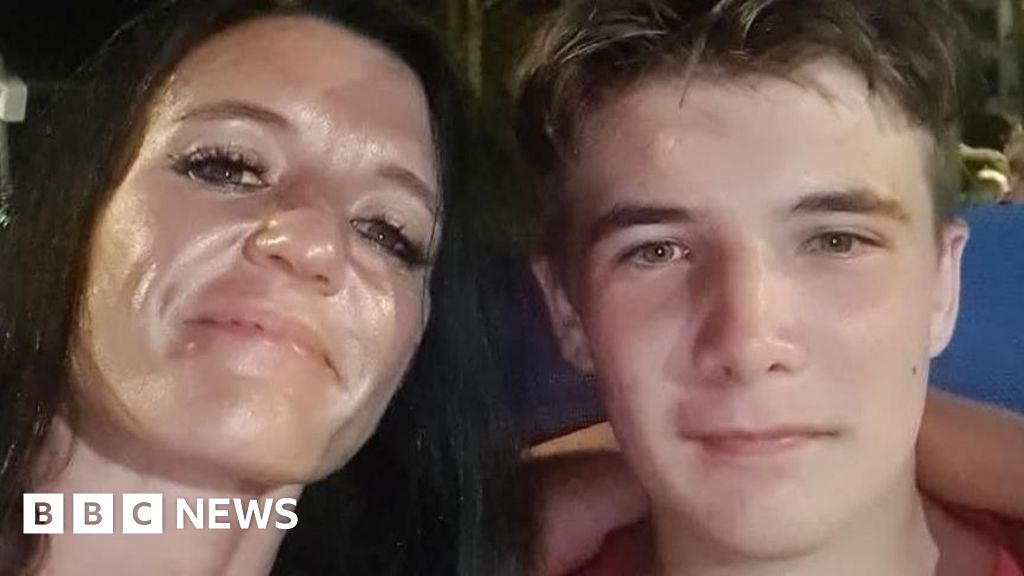
Kirsten Coutts lost her son Sam earlier this year. He was 18, autistic, and had been shaped by years of disablist bullying that she says left him feeling that nothing about him was right and that he wasn't welcome in society. He asked her how she would feel if someone told her everything about her was wrong. Then he died.
Kirsten said the data was horrifying but not surprising. She is right on both counts, and I think she is also right that something has to change, that it starts at home, and that schools and parents need to work together. But it also starts in government. It starts with funding the organisations that go into schools and do this work. It starts with mandatory bullying recording so we actually know what is happening. It starts with a national anti-bullying strategy, which education charities and unions are calling for and which currently does not exist.
What needs to happen
Restore funding to outreach programmes. Make bullying recording mandatory, as the Equality and Human Rights Commission has already recommended. Require anti-bullying and anti-discrimination training as part of teacher education. Give schools a national strategy with real resources behind it, not guidance documents and a press statement calling the numbers shocking.
And stop creating a political atmosphere in which some children are told, implicitly or explicitly, that who they are is a problem to be solved. Every child in a school building deserves to feel that they belong there. Not because it is a nice idea. Because the alternative is what we are already living with.
If this is useful to you, please share it. Every share helps more people find accurate information about gender diversity.
Dr Helen Webberley, Gender Specialist and Medical Educator.
helenwebberley.com
Comments