
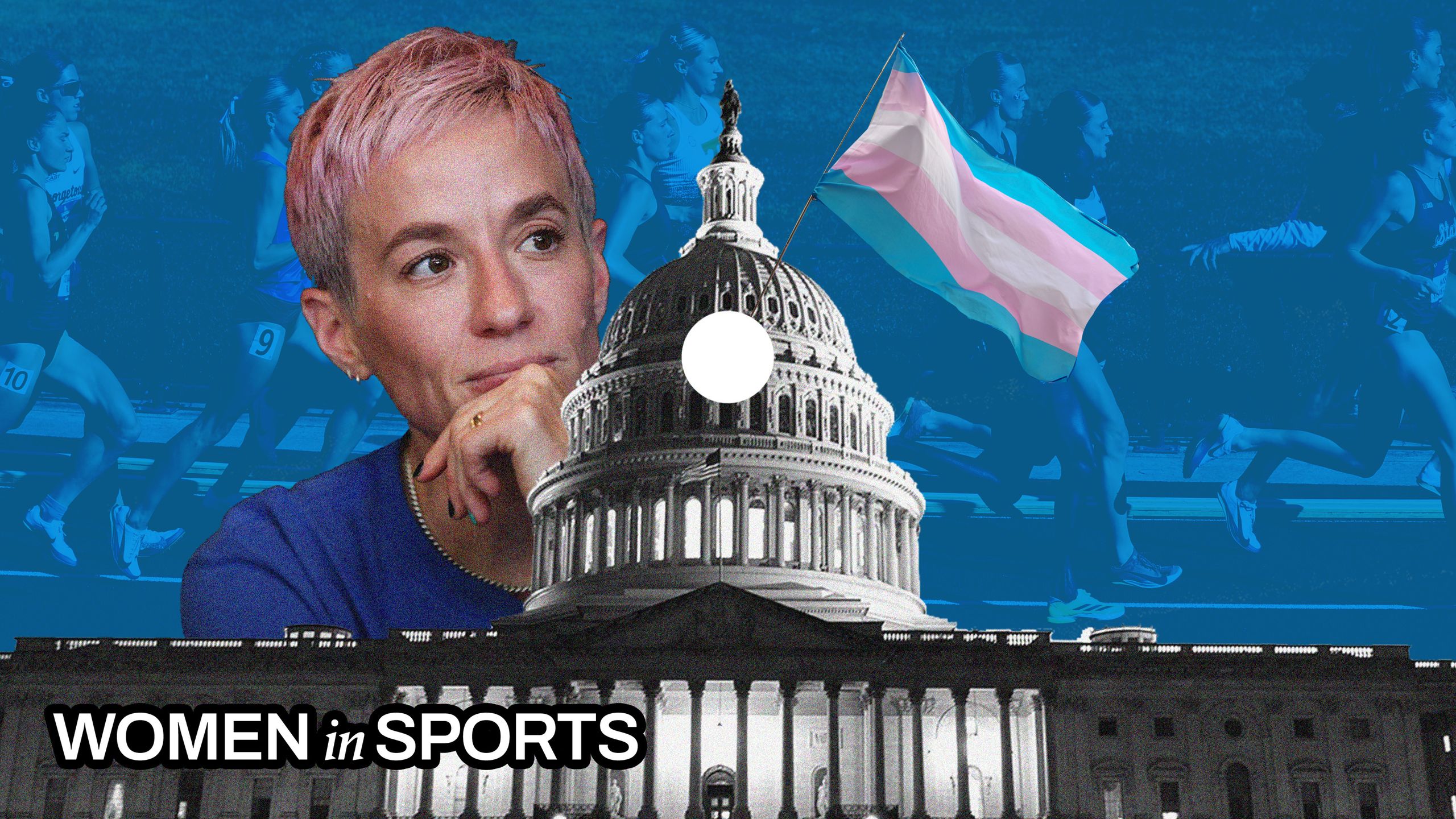
Megan Rapinoe was packing for a flight, about to shoot a World Cup commercial, when her agent rang to say the brand had pulled her from the spot. The reason: AI software had flagged her as a risk. The risk was that she had said, publicly and clearly, that she supports trans rights. That is where we are. A piece of software, fed on the political noise around trans athletes, processed a two-time World Cup champion and Olympic gold medallist and returned a verdict: too controversial. Too much trouble.
She wrote about it in Marie Claire, and I've been thinking about it ever since.
What it takes to say this out loud
I want to stay with that phone call for a moment, because it is easy to read past it. This was not a politician voting against a bill. This was not an activist risking their livelihood. This was a woman being told, the day before she was due to work, that standing up for trans people had cost her the job. That is the specific, material price of saying what Rapinoe says. And she said it anyway.
People tell me, again and again, how much it matters to see someone with a platform use it. Trans people are watching. The parents of trans children are watching. The 13-year-old who doesn't fit the shape someone else has decided a girl should be is watching. When Rapinoe writes that she was that girl at 13, the one who didn't look or move or compete the way some people thought a girl should, she is not being abstract. She is naming something that trans girls already know, that scrutiny of who is "girl enough" lands first and hardest on the girls who were never going to pass anyone's test.
The argument in "protecting girls"
Rapinoe's argument is precise and I think it deserves to be followed carefully. The legislation being rolled out across the United States drapes itself in the language of fairness, protection, safety for women and girls. And at the same time, women across the country are being denied reproductive healthcare, left in hospital car parks because doctors are afraid to intervene, stripped of choices over their own bodies. The banner says "protect girls." The policy says otherwise.
She makes the case that these laws are not an accident or an overcorrection. They are a feature. Spaces that leave girls and women feeling powerful, sports teams, locker rooms, the simple experience of belonging, are exactly the spaces these bills target. If you follow the logic of Washington's proposed Measure I-638, which would require all girls, and only girls, to undergo genital inspection or pay for hormone and DNA testing before competing in school sports, you reach a conclusion that has nothing to do with fairness: thousands of girls whose families cannot afford the tests, or whose parents refuse to submit their daughters to this, will simply stop playing. That is the point. The trans girl is the stated target. Every other girl is collateral, and that is not an oversight.
Girls of colour have always known this. Rapinoe names it plainly: Black and Brown athletes have been questioned about their bodies, their performance, their femininity, for as long as there have been women in sport. The new laws create fresh machinery for the same old harassment, and the girls with short hair, low voices, strong bodies, the ones who don't fit a politician's idea of a girl, will be the ones who get caught in it.
What the brand risk actually was
I keep coming back to that AI flag. The software identified Rapinoe as a risk. The risk was association with trans rights. Not with a scandal, not with a crime, not with anything a reasonable person would call harm. The risk was that she believes trans people should be included.
That is the cultural work the anti-trans movement has managed to do. It has made inclusion sound like a liability. It has taken the straightforward idea that trans people exist and deserve to compete and belong, an idea supported by decades of policy across sport, and reframed it as a debate so toxic that brands run from it. The trans people watching Rapinoe lose that job understand exactly what is being communicated: that supporting them is a career risk, that companies will pay to stay quiet, and that the quiet costs something too.
Rapinoe did not stay quiet. She wrote a piece that names who is actually funding the campaign to police girls' bodies, a mega-millionaire Trump donor with no background in women's sport, who claims to speak on behalf of women and girls. She says what many of us have been saying for years: we do not need protecting by people who have never cared about us. We can speak for ourselves.
Why this matters beyond sport
Sport is where a lot of people encounter trans inclusion for the first time, because it has been made the site of the debate. But what Rapinoe is writing about is not really about sport. It is about which bodies are acceptable, who gets to determine that, and what happens to the girls who fall outside the answer. It is about the fact that the same political movement threatening trans kids is also the one that left women to miscarry without care. Those are not separate issues. They share an architecture.
Trans girls are girls, the legislation that targets them harms all girls, and the woman who said so lost a commercial for it, then sat down and said it louder. That is worth noticing. I hope other athletes are watching.
If there is a news story you would like me to cover then just let Sammy know.
Dr Helen Webberley is a gender specialist, medical educator, and advocate, and the founder of GenderGP. She writes about gender diversity, trans healthcare, and the lives at the centre of both.
Comments