
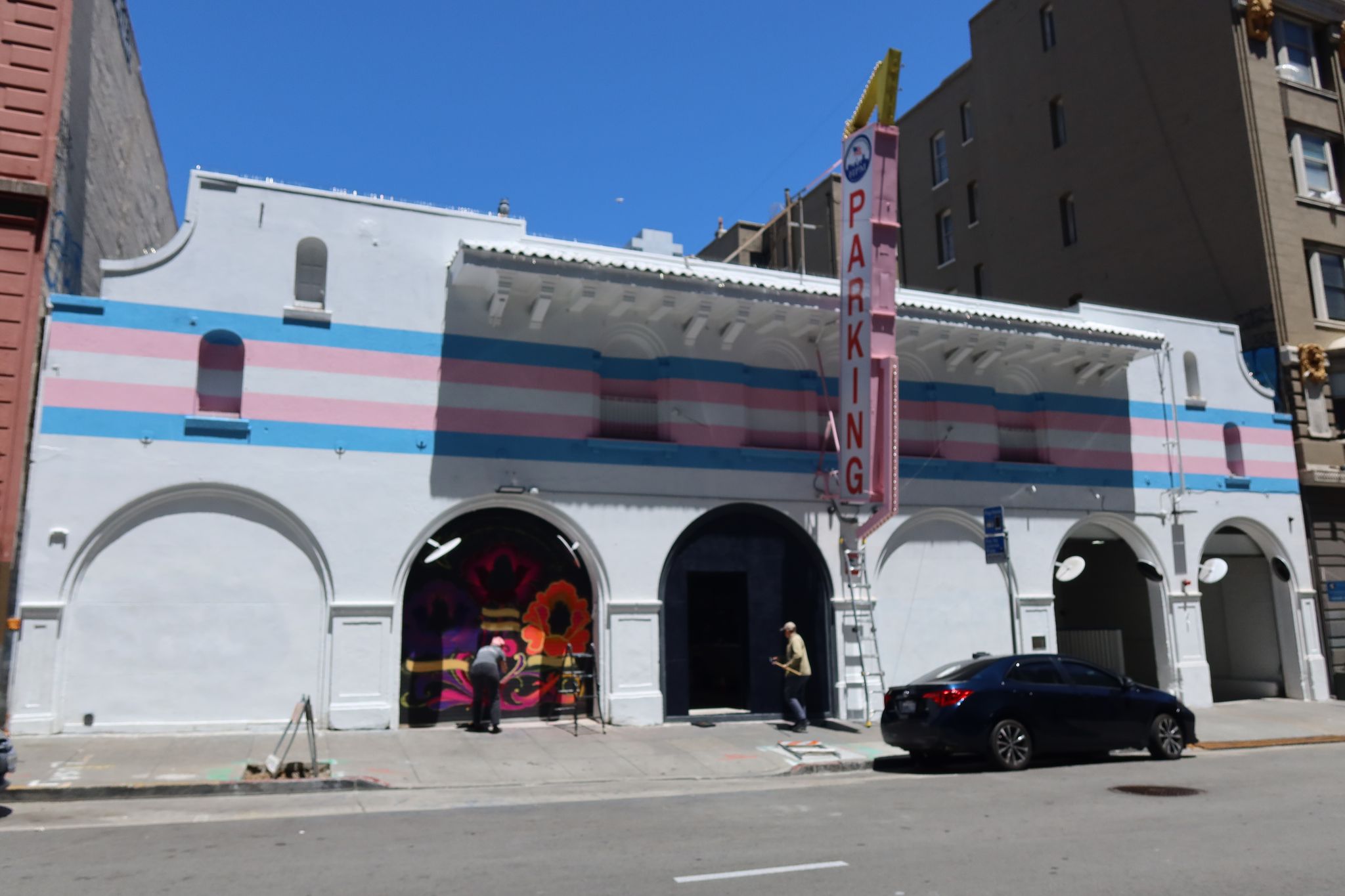
There is a garage on Golden Gate Avenue in San Francisco's Tenderloin neighbourhood that is about to become something more. Six archways on its facade, painted by seven queer artists, will tell the story of a community that has lived, fought, grieved, and danced in those streets for longer than most people realise. The Transgender District, the only officially recognised community of its kind anywhere in the world, has commissioned its first exterior mural, and it is being unveiled this Pride Month at precisely the moment when that kind of visibility feels both urgent and defiant.
Breonna McCree, co-executive director of the Transgender District, put it simply: "We have always been here. And we are going to be bold and loud even right now as you try to erase that." I read those words and felt the weight of them. This is not a ceremonial gesture. This is a community saying: you will have to look at us.
The riot that history almost forgot
The mural reaches back to August 1966, to a night at Gene Compton's Cafeteria in the Tenderloin when trans women and gender-nonconforming people, exhausted by years of police harassment, fought back. One woman threw coffee in a police officer's face. Windows were broken. People were arrested. And something shifted.
The Compton's Cafeteria Riot predates Stonewall by three years. It is one of the earliest recorded LGBTQ uprisings in American history, and it happened right here, in this neighbourhood, carried out by trans women, many of them women of colour, many of them poor. Historian Susan Stryker documented it in her 2005 documentary Screaming Queens, and artist Rebekah Rose has chosen that precise moment, the coffee, the cop, the spark, as the subject of her panel on the mural.
I find that choice quietly extraordinary. Not the triumph, not the aftermath, but the instant before everything changed. A trans woman deciding she had had enough. That is the moment worth painting on a wall.
Trans joy is resistance
What strikes me about this project is that it refuses to be only about struggle. Mars Wright's panel uses what the Chronicle describes as their signature martian characters to explore trans masculine identity, and includes the phrase "Trans joy is resistance." S. Apollo Fisher painted two figures dancing to celebrate Transgender History Month. Tanya Wischerath honoured the founders of the Transgender District itself.
The mural carries the history of harm alongside the insistence on joy, and that is exactly right. When I hear trans people talk about their lives, this is what I hear too. Not a single note of suffering, but the full range: the relief of finally being seen, the fun of working out who you are, the love of friends who get it, the frustration of systems that don't, and underneath it all, a stubborn, warm, sometimes funny determination to live well anyway.
McCree called the mural "a testament to our resistance and our joy." Those two things belong together. Resistance without joy burns out. Joy without resistance ignores what is real. The Transgender District seems to understand both.
Why public visibility matters right now
The district was founded in 2017 by Aria Sa'id, Honey Mahogany, and Janetta Johnson. It sits across the Tenderloin and South of Market, one of San Francisco's ten official cultural districts. The mural was funded by private donors and Avenue Greenlight, which provides grants for improving commercial areas, and the garage's owner, Orhan Kaplankiran, gave his full support. "This mural honors the resilience, history, and vibrant culture of San Francisco's Transgender District," he told the Chronicle, "transforming the facade of 64 Golden Gate Avenue into a lasting symbol of pride and visibility for the trans community."
I notice that. A private citizen handing over his building's exterior so that trans history can live on it. That is not nothing, especially now. McCree is right that creating public visibility in cities has become more essential, not less, as trans identity faces renewed political attack. When governments try to erase people from public life, from bathrooms, from schools, from healthcare, from the law, putting faces and stories and history on the sides of buildings is a direct answer. You cannot scroll past a mural.
The official unveiling will happen later this month, with a dedication ceremony, and the mural will also be the centrepiece of the district's annual Riot Party fundraiser in August, which honours the Compton's Cafeteria Riot as its own form of Transgender Pride Month. That continuity, from 1966 to 2025, from a coffee cup thrown in anger to a painted garage celebrated in joy, is the whole story in miniature.
Trans people have always been here. They are still here. And now, on Golden Gate Avenue, you can see exactly what that looks like.
Comments