
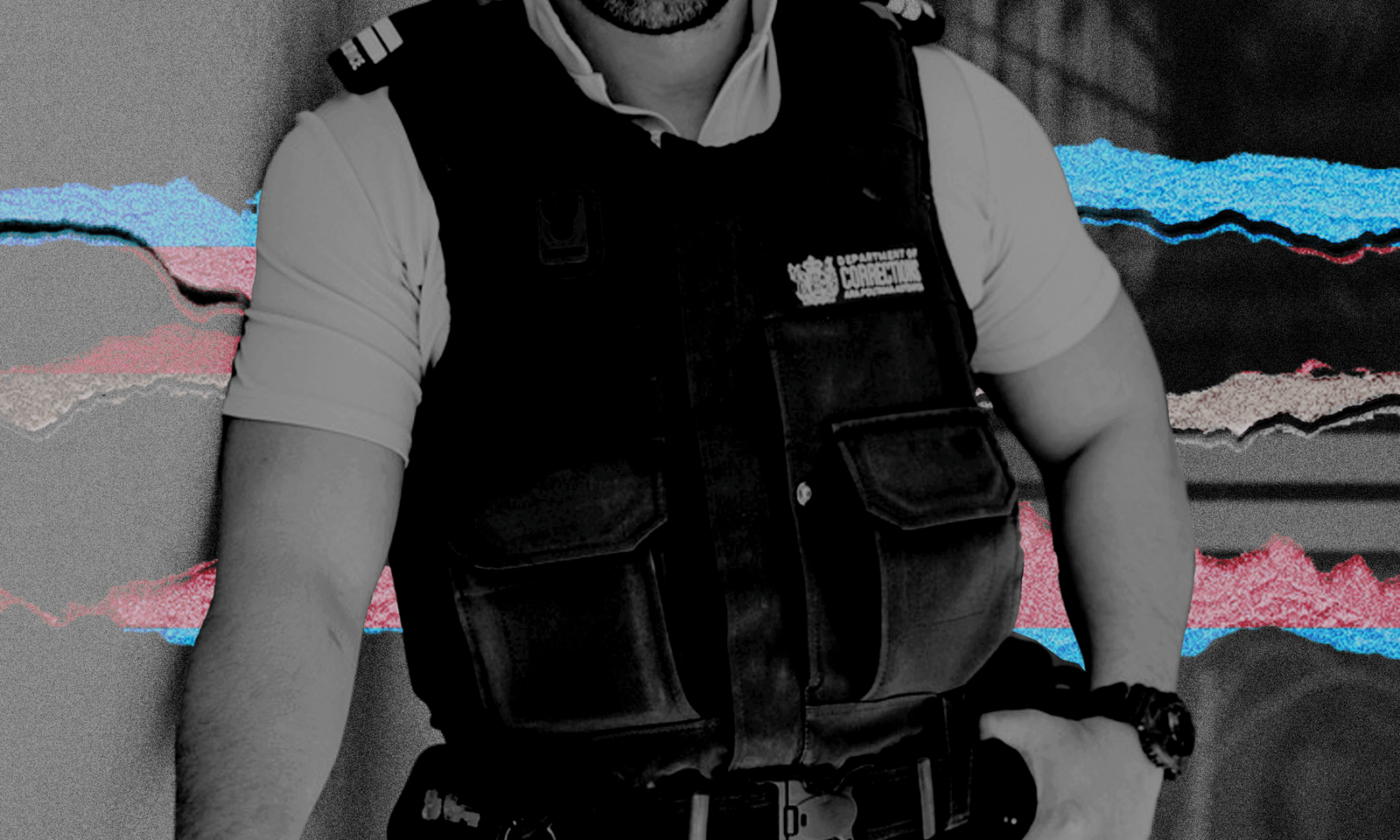
A transgender corrections officer in Aotearoa New Zealand has settled a landmark human rights case against the Department of Corrections, winning a formal apology, a confidential compensation payment, and a commitment to better staff training. It is the first time a transgender person has been at the centre of a sex-based discrimination case in Aotearoa, and it matters far beyond this one man's experience.
The man at the centre of the case, known as Adam, alleged that Corrections barred him from performing prisoner searches because of his gender, and that he faced sustained harassment and bullying at work. The settlement was announced alongside a statement from the Office of Human Rights Proceedings, whose principal solicitor Nicole Browne put it plainly: "Dignity is a central human rights value. Any denial of a transgender person's identity is also an infringement on their dignity." Adam himself said he brought the case to show that the transgender community deserves protection and respect. "I just want to be able to exist like any other man."
Not a radical demand, and not a complicated one: just existence, on the same terms as everyone else.
A life that always made sense, once he had the words for it
Alex Casey interviewed Adam for The Spinoff back in 2024, and the portrait he drew is one I recognise from so many conversations with trans men over the years. Adam knew from a very young age that something wasn't matching up, even if he didn't yet have the language to name it. He remembered, as a toddler, comparing himself with another boy and bursting into tears, certain that he was broken. Puberty made things worse, as it so often does: the mental health impact was severe, the distress was real, and without a name for what he was experiencing, there was nowhere for it to go except inward.
He found his way to Corrections almost by accident, following a family member into the work. He started in 2017, presenting as female, and was initially treated as the weakest person in the room. "Until you prove them wrong," he said, with what sounds like considerable understatement. Corrections is a high-risk environment, demanding alertness and a thick skin. Adam had both. What he didn't yet have was a self he could bring to work.
That changed after he found a community group for gender diverse people. He described the experience as puzzle pieces coming together. Meeting other trans and non-binary people gave him not just language but recognition. "I must be trans," he said, as though it were the most straightforward conclusion in the world. And it was. It just took the right company to arrive at it.
He came out to his mum in 2021. Her response was immediate: "Your whole childhood just makes sense now." His close friends were largely the same, a little exasperated with him for taking so long, which he found funny in retrospect. The only negative reaction came from his father, who didn't want to know him after hearing the news. That cost was real. The relief of being known, after so many years of careful concealment, was also real. "I no longer had to put on a mask," he said. "It's really hard work, trying to be someone that you're not."
The workplace was a different story entirely
Coming out to the people who love you is terrifying. Coming out in an environment where you have already heard the jokes, where you know exactly what your colleagues think of people who don't fit neatly into a box, is something else again. Adam described bottling it up for as long as he could, knowing that becoming visible meant becoming a target.
When he finally told his manager in March 2022, the response was dismissive: "You can't just change your name because you want to." He left that meeting feeling pushed back underground. From there, the pattern of the case becomes familiar and dispiriting. Some colleagues updated his name on rosters; others changed it back to his deadname. Even after he supplied legal documentation of his name change, it took three months of chasing before Corrections updated their own systems. A site-wide email was eventually sent about his new name, pronouns, and facilities, something Adam permitted but wasn't entirely comfortable with, because he hadn't been shown any other way to navigate it.
All of this happened in a workplace where he had already proven himself. He hadn't become a different person; he had simply become a visible one. The obstruction he faced wasn't about capability or conduct. It was about identity, and about colleagues and management who felt entitled to make that identity conditional.
What the word "landmark" actually means here
Cases like this one don't just resolve the individual grievance, though that matters enormously. They change what the next person can point to. Before this settlement, there was no precedent in Aotearoa for a transgender person being at the centre of a sex-based discrimination case. That gap meant that trans workers in similar situations had no map, no reference point, no proof that the law could reach them. Adam has changed that.
The apology matters too. Compensation can be framed as an institution managing risk; an apology is an acknowledgement that something was wrong. The commitment to better training matters, because discrimination in workplaces like Corrections doesn't only come from hostile individuals. It comes from managers who don't know what their obligations are, from systems that weren't designed with trans employees in mind, and from cultures that mistake discomfort for a legitimate objection.
Trans people work in prisons, in police forces, in hospitals, in schools, in every environment where colleagues hold real power over their daily lives and their careers. The question of what protection they actually have, in practice and not just in principle, is not an abstract one. Adam spent years proving himself in a dangerous job, fighting for his name to appear correctly on a roster, and eventually taking a case that no one in his country had taken before. The settlement he has won is a step toward a world where the next person doesn't have to fight quite so hard just to exist as themselves at work.
I am genuinely glad this has been resolved, and I hope Corrections means what it has promised about training. The real measure will be what happens the next time a trans employee walks into a manager's office and says who they are.
Comments