
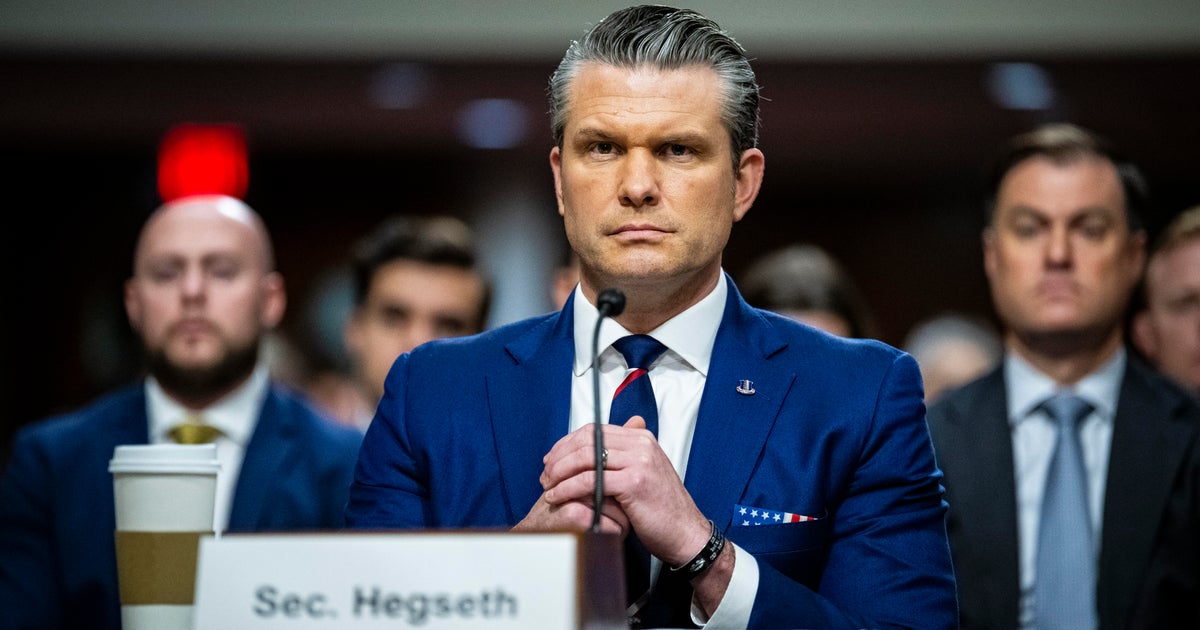
A divided federal appeals court has ruled that the Trump administration's ban on transgender people serving in the military is likely unconstitutional. Two judges on the U.S. Court of Appeals for the D.C. Circuit found that the policy was driven by animus toward transgender people, leaving in place a preliminary injunction protecting transgender troops currently serving. Pete Hegseth's response? "See you at SCOTUS."
What the court actually found
The ruling is striking for how directly it names what is going on. Judge Robert Wilkins did not dress it up: the government's stated rationale was "pretextual," he wrote, and the policy was motivated "at least in part, on a non-legitimate state interest to harm the politically unpopular group of transgender persons." The Trump administration, he noted, conceded that there was "no evidence" that people with gender dysphoria lack honesty, humility, or integrity. And yet the ban was issued anyway. When a court has to reach for Groucho Marx to make its point, you know the government's position has not held up well under scrutiny.
The plaintiffs in this case have served a combined 130 years in the military and earned more than 80 commendations between them. The Trump administration did not contest that they have served honourably. What it argued, in effect, was that their gender identity made them unfit regardless. The court was not persuaded, and the record makes it easy to see why.
These are people, not a policy debate
More than a dozen active-duty transgender service members brought this case. They were not asking for anything extraordinary. They were asking to continue doing a job they have already been doing, often for years, often with distinction. Some had deployed. Some had commendations. All of them had to go to court to defend their right to keep serving a country that was simultaneously trying to push them out.
That takes something. It is not a small thing to be told, at the level of executive order, that your existence is incompatible with the values of the institution you have given years of your life to. Honesty, humility, integrity: the very qualities the ban claimed trans service members lacked are precisely the qualities it took to keep showing up, keep serving, and keep fighting a legal battle while in uniform.
An estimated 4,200 troops had been diagnosed with gender dysphoria as of December 2024. Roughly 1,900 active-duty members received gender-affirming care between 2016 and 2021. These are not abstractions. They are people with careers, colleagues, deployments, families, and decades of service behind them.
What Hegseth's three words tell us
"See you at SCOTUS" is not a legal argument. It is a signal. The administration has already been to the Supreme Court once on this issue, in the Tacoma case in May 2025, and the Court allowed the ban to continue while litigation moved forward. Hegseth knows that a more sympathetic bench might produce a different outcome, and he is betting on it.
That is the honest picture here. Monday's ruling is genuinely good news, and I was relieved to read it. It is also partial: the injunction only covers the active-duty plaintiffs in this case, not the transgender individuals who were trying to enlist and remain blocked. And with the Supreme Court already having allowed enforcement in the Tacoma case, the legal road ahead is uncertain. Courts are doing their job. Whether the final destination is justice is a different question, and it depends on who gets to answer it.
Why "animus" matters as a legal finding
Courts rarely use that word lightly. A finding of animus means the policy was not based on a legitimate government interest; it was based on hostility to a particular group. That is a constitutionally serious conclusion. It means the equal protection argument has real weight, and it is the strongest ground on which transgender service members can stand as this moves through the courts.
The dissent came from Judge Justin Walker, nominated to the bench by Trump in 2020. A 2-1 split on a politically charged question was always likely, but the majority opinion is detailed, carefully reasoned, and unflinching about what the evidence shows. That matters, whatever comes next.
What this means right now
For the transgender service members covered by the injunction, Monday's ruling means they can keep serving while the case continues. That is not nothing. For the people who were trying to enlist and are still blocked, the picture is harder. For all of them, the litigation is far from over.
What I keep coming back to is the 130 years of combined service, the 80 commendations, the concession from the government that it had no evidence of dishonesty or lack of integrity. The case for inclusion is not just legal. It is written in the service records of the people who brought this case.
If there is a news story you would like me to cover then just let Sammy know.
Dr Helen Webberley is a Gender Specialist, advocate, and the founder of GenderGP. She writes about gender diversity, trans healthcare, and the lives of trans people and their families.
Comments