
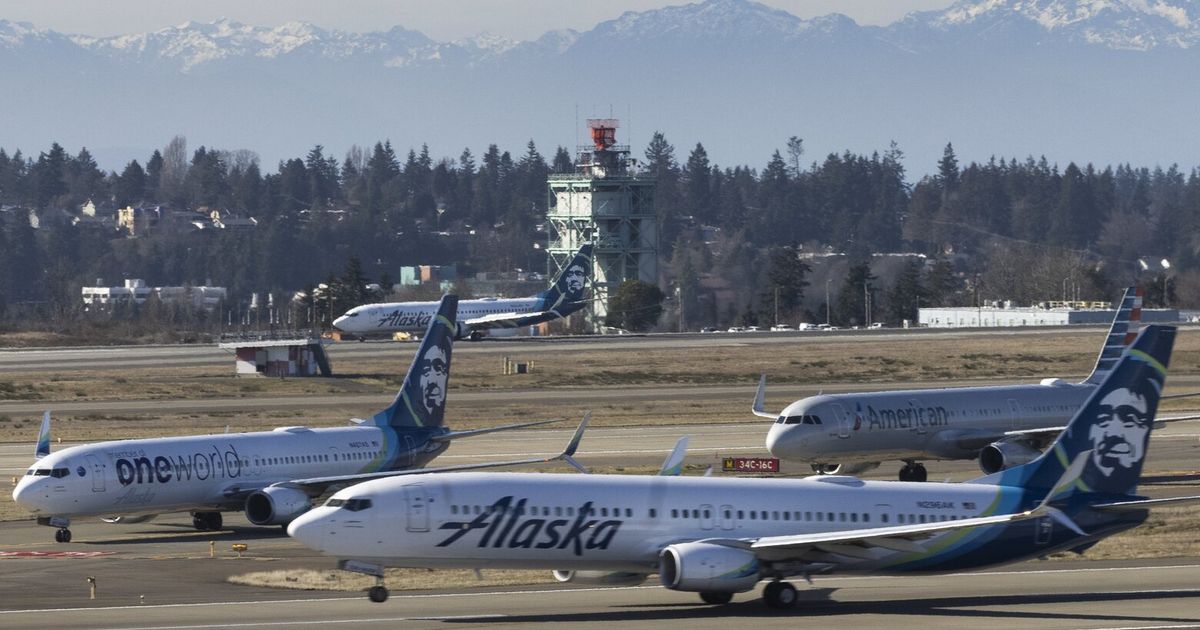
Two former Alaska Airlines flight attendants fired for posting anti-trans comments on a company internal channel have won the right to a jury trial, after the Ninth Circuit Court of Appeals overturned a lower court ruling in their favour. The case asks how far a workplace must accommodate religious belief when that belief targets colleagues' identities.
What actually happened
In 2021, Alaska Airlines posted on its internal communication platform expressing support for the Equality Act, the proposed federal legislation that would have extended non-discrimination protections to include sexual orientation and gender identity. The airline invited employees to comment. Two flight attendants did.
Lacey Smith, who had worked there for six years, asked whether it was possible to "regulate morality." That is a question worth pausing on, actually, because underneath it is the suggestion that protecting someone from discrimination is a form of moral imposition, rather than a basic condition of fair employment.
Marli Brown, who had been with Alaska for eight years, went further. She wrote that the Equality Act would endanger "the Church," obliterate women's and parental rights, and, critically, that "giving people blanket permission to enter private spaces for the opposite sex enables sexual predators to exploit the rules and gain easy access to victims."
Alaska deleted both comments the same day, launched an investigation, and eventually fired both women, finding that their remarks were offensive and discriminatory, targeting people on the basis of legally protected characteristics. The flight attendants' union filed grievances on their behalf; both were denied.
In May 2022, Smith and Brown sued, represented by First Liberty Institute, a conservative Christian legal organisation. A federal district court ruled against them in May 2024. The Ninth Circuit has now overturned that, finding there is a "genuine dispute of material fact" that should go before a jury. That is not a finding that Alaska was wrong to fire them; it is a finding that the question is close enough to need a trial.
What the predator claim actually does
I want to focus on Brown's words for a moment, because the framing tends to get lost in the procedural back-and-forth of court reporting.
The claim that allowing trans people to use appropriate facilities enables predators is not a religious belief. It is a factual claim, and it is a false one. There is no evidence that non-discrimination protections have increased safety incidents in shared spaces. What the framing does do, reliably and consistently, is tell trans people that their presence is inherently suspicious, inherently threatening, inherently something that other people need to be protected from.
When that message appears on an internal company platform, it is not a private act of faith. It is a statement made to colleagues, including trans colleagues, who have to read it, process it, and then walk back onto a plane with the person who wrote it. Alaska's position was that this crossed into harassment of people with protected characteristics. That strikes me as a reasonable reading of what happened.
The religious freedom argument
The legal question the jury will now consider is whether Alaska and the union discriminated against Smith and Brown because of their religious beliefs. That is a real question under US employment law, and I am not dismissing it. People do have the right to hold religious beliefs, including beliefs their employers find uncomfortable.
But there is a distinction that tends to get flattened in coverage like this: between holding a belief and expressing that belief in a way that causes harm to named groups of colleagues. A faith community's internal teaching about gender is one thing. Publishing, on a company-wide platform, a claim that a category of colleagues constitutes a threat to children and vulnerable women is another. The first is protected; the second is the kind of speech that anti-harassment policies exist to address.
First Liberty Institute's statement celebrated the ruling as proof that "you cannot be fired because your employer does not like your religious beliefs." That is true, as far as it goes. But the question Alaska was answering was not "do we like their beliefs?" It was "did these comments harm other employees?" Those are different questions, and the framing matters.
What this means for trans workers
There are trans flight attendants at Alaska Airlines. There are trans workers in every industry. When cases like this are framed entirely as a story about the religious freedom of the people who were fired, the people who had to read those comments are erased from the narrative entirely. Lacey Smith told reporters the lawsuit has been weighing on her for five years, and I do not doubt that. Losing a job is genuinely hard, especially during a pandemic, and I have some sympathy for the personal difficulty she has been through.
But the trans employees who read Brown's post, who saw themselves described as covers for predators, who wondered whether their colleagues and their employer would stand behind them: they have been living with something too. Their experience belongs in this story.
The case will now go back to federal district court in Seattle. Whatever a jury decides, the broader dynamic it represents is not going away. Across the US and beyond, "religious belief" is increasingly being invoked as a reason why anti-discrimination protections for trans people should yield. The argument, stripped back, is that the sincerely held belief that trans people are dangerous or wrong should limit the degree to which trans people are protected. That logic, wherever it leads in this particular courtroom, is one I will continue to push back on.
If there is a news story you would like me to cover then just let Sammy know.
Dr Helen Webberley is a Gender Specialist, Medical Educator, writer, and advocate, and the founder of GenderGP.
Comments