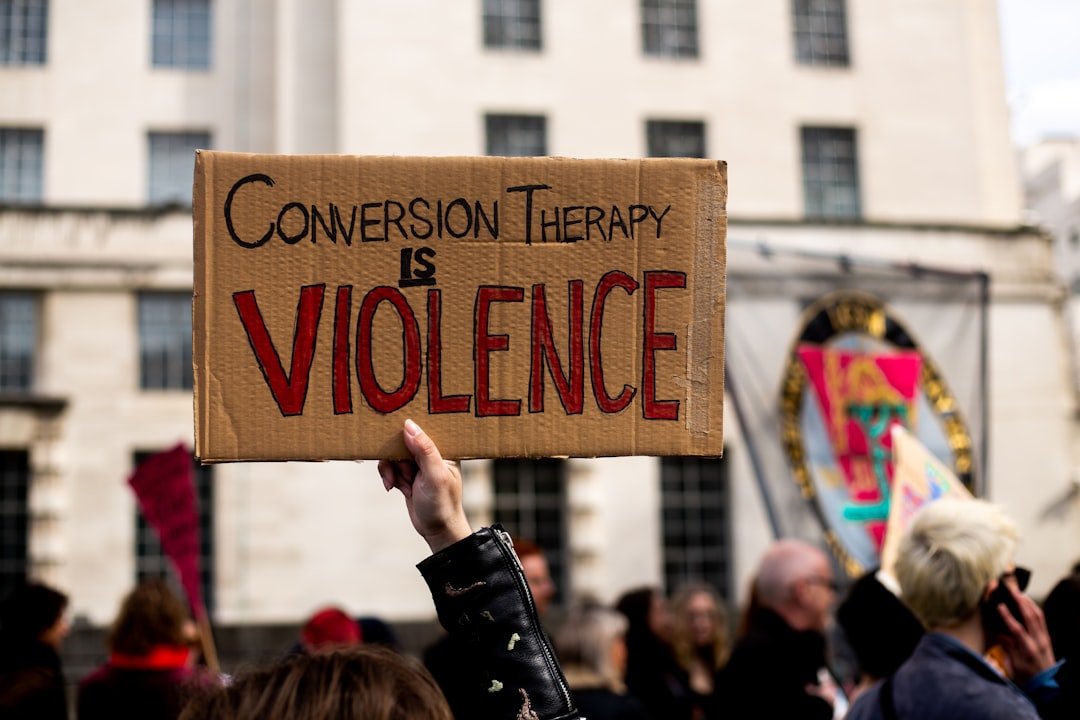
The draft Conversion Practices Bill makes it a criminal offence in England and Wales to carry out abusive practices aimed at changing or suppressing someone's sexual orientation or transgender identity. Coercive, threatening, or psychologically harmful conduct is covered. The maximum sentence is five years, and religious context is not a defence.
What is the Bill actually trying to do?
The government has published a draft Conversion Practices Bill that would make it illegal to carry out what it calls an "abusive conversion practice" on another person. That is a deliberately precise phrase, and the precision matters.
A conversion practice, under the Bill, is any conduct aimed at one of two goals: changing or suppressing someone's sexual orientation, or changing or suppressing someone's transgender identity. That includes trying to make someone gay, straight, bi, or none of the above, and it includes trying to make someone identify differently with their gender, or not to identify as trans at all.
But conduct with that intention only becomes a criminal offence if it is also abusive. The Bill is not criminalising conversations, disagreements, or opinions. It is criminalising a specific kind of harmful behaviour carried out with the intention of changing who someone is.
What makes something "abusive" under the Bill?
The Bill lists the kinds of conduct that courts will look at when deciding whether something crosses the line. They include:
- words or behaviour of a sexual nature directed at the person
- violent or threatening words or behaviour
- controlling or coercive conduct
- economic pressure, such as threatening someone's financial support
- psychological or emotional pressure
This is not an exhaustive list. Courts will look at all the circumstances. But you can see the shape of what Parliament is targeting: conduct that harms, controls, threatens, or demeans a person because of who they are attracted to or who they are.
Some examples in plain terms
Here are some situations to make this concrete.
Example 1. A parent discovers their teenage child is trans and responds by withdrawing money for university, cutting off their phone, and telling them they will be homeless unless they stop "claiming" to be trans. That is economic and psychological pressure directed at suppressing a transgender identity. Under this Bill, that could be a criminal offence.
Example 2. A religious leader sits a gay young person down and tells them, calmly and privately, that in their view homosexuality is a sin, and offers to pray with them. That is a conversation. It may be hurtful, but it is not coercive, threatening, or controlling in the way the Bill describes. It does not meet the threshold.
Example 3. That same religious leader then contacts the young person's employer, tells them the person is gay, and suggests they should lose their job unless they "seek help," while simultaneously organising a group within the congregation to pressure the family. That is a different matter entirely: coordinated, coercive, and targeting someone's livelihood and relationships. That could be criminal.
Example 4. An organisation offers a residential weekend described as "healing" for trans young people. During the weekend, participants are isolated, subjected to group sessions designed to induce shame, told their identity is a symptom of abuse or mental illness, and denied sleep. That is a textbook example of what this Bill is designed to stop.
Example 5. A therapist, working with a trans client who is exploring their identity, asks open questions and helps the person think through their feelings without steering them in any direction. That is good practice. It is not a conversion practice at all, because there is no intention to change or suppress anything, only to support the person's own process.
What about healthcare?
The Bill specifically carves out healthcare. If someone is receiving health care services and a clinician's conduct, even if it touches on their gender or sexuality, falls within ordinary professional standards, that is not a conversion practice. The exemption only disappears if the clinician acts in a way that falls far below what is reasonably expected of them. So gender-affirming care is not at risk. Neither is psychological support that is genuinely exploratory rather than directive. What would be caught is a clinician who uses their position to pressure a patient into suppressing a trans identity through coercive or harmful conduct.
Religious practices are not a workaround
This is the part I want to address directly, because I have already seen people suggest that conducting conversion practices within a religious context will be protected.
It will not.
The Bill does not contain a religious exemption. There is no clause that says "unless it is done in a place of worship" or "unless it is carried out by a minister of religion." If the conduct is abusive, as the Bill defines that term, the fact that it happened in a church, a mosque, a synagogue, or a faith community centre does not make it legal.
What religious communities can still do is preach, teach, conduct services, hold pastoral conversations, pray with and for people, and express their theological views. Those things are not banned by this Bill. The Bill does not ask religions to change their beliefs. It asks everyone, religious or not, to stop harming people.
The distinction the Bill draws is not between secular and religious conduct. It is between conduct that is abusive and conduct that is not. A religious leader who sits with a young gay person and talks about their faith tradition is doing something very different from a religious leader who threatens, isolates, demeans, and coerces that same person into attending sessions designed to change them. The Bill catches the second. It does not catch the first.
The reach of the Bill
One detail worth knowing: the Bill also creates an offence of encouraging or assisting an abusive conversion practice that takes place outside England and Wales. So a person in the UK who helps organise a conversion practice trip abroad, or funds one, or arranges for a vulnerable person to be taken overseas for that purpose, can still be prosecuted under this Bill. The law cannot simply be evaded by getting on a plane.
Courts can also issue conversion practice protection orders, similar in shape to injunctions, to protect specific people who are at risk. These can be applied for by the person themselves, by a chief officer of police, or by a local authority, and they can cover conduct both inside and outside England and Wales.
Why this matters
People tell me, again and again, about the harm that conversion practices cause. Not as an abstract policy problem, but as something that happened to them: in their family home, in their place of worship, in a residential setting they were taken to as a child. The shame, the isolation, the message that who they are is wrong and must be fixed, leaves marks that take years to heal, and sometimes never fully do.
This Bill is not a threat to anyone's freedom to hold their beliefs. It is a protection for people who are being harmed. That is a distinction worth keeping clearly in mind, especially when you hear claims that the Bill is an attack on religion or free speech. It is neither. It is, at its simplest, a law that says you cannot hurt people into being someone they are not.
If there is a news story you would like me to cover then just let Sammy know.
Dr Helen Webberley is a Gender Specialist, Medical Educator, and advocate for gender diversity.
Comments
"(3) Conduct which—
(a) is carried out by a person towards an individual with such an intention [of influencing their sexuality or gender identity], but
(b) is carried out in the course of providing health care services to the individual concerned,
is not a conversion practice unless the person acts in a way that falls far below the standards reasonably expected of a person in their position."
The phrase "unless the person acts in a way that falls far below the standards ..." is so vague as to essentially worthless, and the addition of the requirement their behavior fall, not just "below" such expectations, but "FAR below", can only be read as intentionally making the burden of proof for any abuses committed by so-called "conversion therapists" EXTREMELY difficult to prove.
At the same time, the intentional vagueness could as easily be turned around and weaponised against supportive practitioners encouraging gender-questioning individuals to explore and try to better understand what they are experiencing, perhaps even practitioners such as those operating this very website, for example, should government decide to declare -- as one should note, is already being widely done in the US -- that such a supportive stance "falls far below" it's wholly unspecified standards.
Certainly, should the current trend in government continue, it's not difficult to predict which side of things the any interpretation by the courts is likely to fall on. In short, we are going to need far better than this draft to put a stop to these kinds of dangerous, harmful practices; and in fact, there's cause for concern that this bill may ultimately be little more than in insidious back door, and another way for the disingenous "gender-critical" lobby (which again, it must be said, the current government is plainly favouring, while continuing to refuse to take seriously the voices of the people most directly affected by recent policy U-turns) to turn reality on its head, this time by labeling much-needed support as "abusive practice" while giving a free pass for genuinely abusive practices to continue under the guise of "health-related" and "therapeutic" care.