
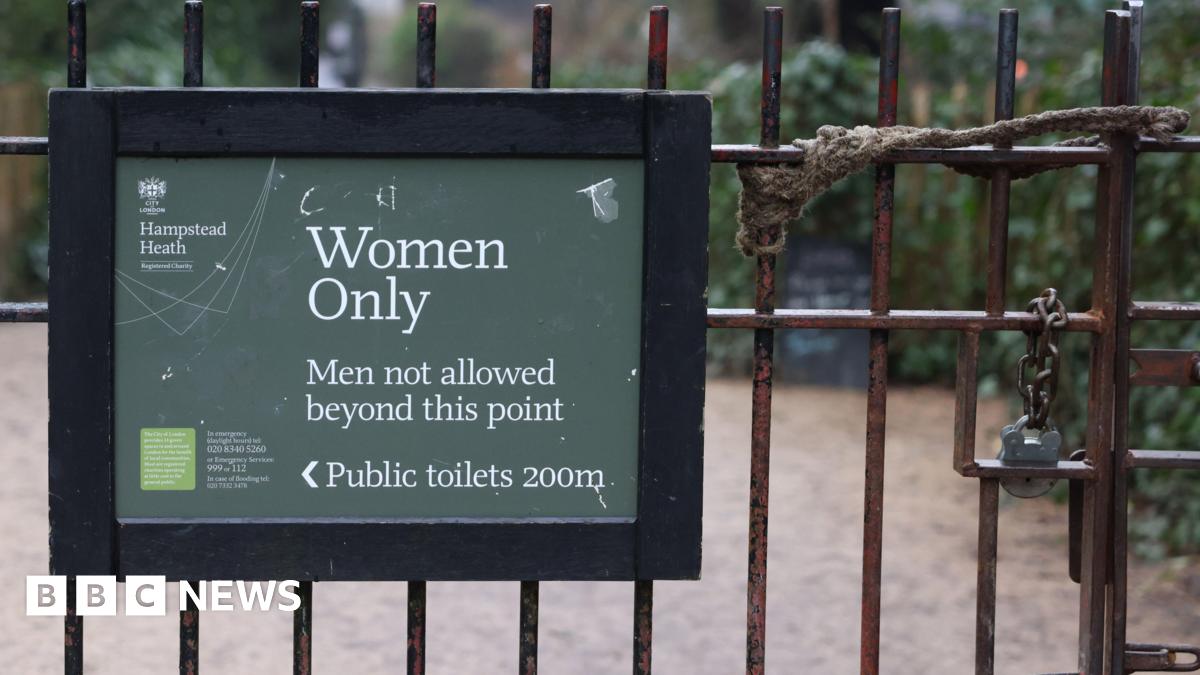
The High Court is hearing a challenge by Sex Matters to City of London Corporation's policy allowing trans people to access Hampstead Heath's single-sex ponds by gender identity. The corporation has recorded no substantiated incidents of inappropriate behaviour involving a trans person since the policy started in 2017. Its lawyers say a sex-based policy would strip the ponds of their unique character and expose the corporation to discrimination claims.
What actually happened in court
On 3 November 2026, lawyers for the Sex Matters charity argued before the High Court that the City of London Corporation's trans-inclusive access policy at Hampstead Heath's swimming ponds places women at a "particular group disadvantage compared to men." Tom Cross KC, representing Sex Matters, was careful to say the charity was not suggesting that "every, or most, or even many" transgender women posed "an actual threat" to women. The argument instead rested on a more diffuse claim: that women feel their privacy, dignity, and sense of safety compromised by sharing a space with someone who was not born female.
David Stilitz KC, for the corporation, made the counter-case plainly. The current policy is "a proportionate means" of minimising disadvantages faced by trans people, he said, while "fostering an environment that reflected the ethos of the ponds." A purely sex-based policy, he argued, would have stripped the ponds of their unique character and would almost certainly have given rise to indirect discrimination claims from trans users, "which the corporation would have struggled to justify."
The corporation has also spent hundreds of thousands of pounds on private changing and shower facilities for those who prefer not to use shared spaces. The corporation was not complacent; it actively invested in making the ponds work for everyone.
Zero incidents. Nine years.
The court heard that since the trans-inclusive access policy was introduced in 2017, the City of London Corporation has recorded no substantiated incidents of inappropriate behaviour involving a trans person at the ponds. Not one. Nine years of the policy in practice, and the harm that Sex Matters is asking the court to prevent has simply not materialised.
When you strip away the legal arguments and the theoretical scenarios, what you are left with is a real-world record showing that trans women swimming at Kenwood Ladies' Pond have not caused the harm that this litigation is built around. The case is not responding to something that happened, but to something imagined.
Tom Cross KC acknowledged as much. His argument was not that trans women at the ponds have harmed anyone. It was that a woman cannot know whether a person who presents as a trans woman genuinely has a trans identity, or simply "prefers to use the facilities of the opposite sex." That is a striking thing to put before a court. It asks judges to design policy around the theoretical bad actor rather than the real people who have swum at those ponds without incident for nearly a decade.
Who is Hampstead Heath actually for?
Kenwood Ladies' Pond is one of those genuinely beloved London institutions. Women have swum there in all weathers, in all stages of life, for generations. Many of them are trans women, who have found in that cold, reed-edged water the same thing everyone else finds: peace, community, a body doing something it loves. The ponds have been inclusive because inclusion is part of their character, not in spite of it.
Stilitz put it well when he told the court that the current policy reflected "the ethos of the ponds." He is right. These ponds have never been a place that asked swimmers to prove who they are. The challenge being mounted now would change that, and not only for trans swimmers. It would change the ponds themselves.
What the Supreme Court ruling does and does not do
This case is being framed, as so many are right now, as a consequence of the Supreme Court's ruling on the definition of "woman" under the Equality Act 2010. That ruling is one court's interpretation of the Act; it did not rewrite the statute, and it has been widely criticised as inconsistent with Parliament's original intent. What it has done, in practice, is hand organisations like Sex Matters a legal lever they are now using in court after court, challenge after challenge.
The Equality Act 2010 remains the law. It protects trans people. It also allows for single-sex services where that is a proportionate means of achieving a legitimate aim. The question in this case is whether excluding trans women from the ladies' pond meets that test. Given nine years of no incidents, given the private facilities the corporation has invested in, given the specific and particular culture of these ponds, it is hard to see how it does.
The pattern behind the case
What troubles me about this litigation is not the ponds. It is the pattern. Sex Matters has built its entire purpose around challenging trans inclusion, one case at a time, in swimming pools and changing rooms and workplaces and sports clubs and courts of law. Each case is presented as being about a specific, bounded space. But the cumulative effect is to relitigate, endlessly, whether trans women belong anywhere that women gather.
Parliament never intended the Equality Act to be used this way. The protections in that Act were designed to include trans people, not to exclude them. What is happening now is a systematic attempt to use the courts to do what the legislature did not, to construct a legal architecture in which trans women are separated out, challenged, made to prove themselves, turned away.
The trans women who swim at Kenwood Ladies' Pond are not a threat. They are swimmers. They are women who have found a place that feels like theirs. Nine years of evidence says so. I hope the court sees it that way too.
If there is a news story you would like me to cover then just let Sammy know.
Dr Helen Webberley is a Gender Specialist, Medical Educator, and advocate for trans rights and gender diversity.
Comments