
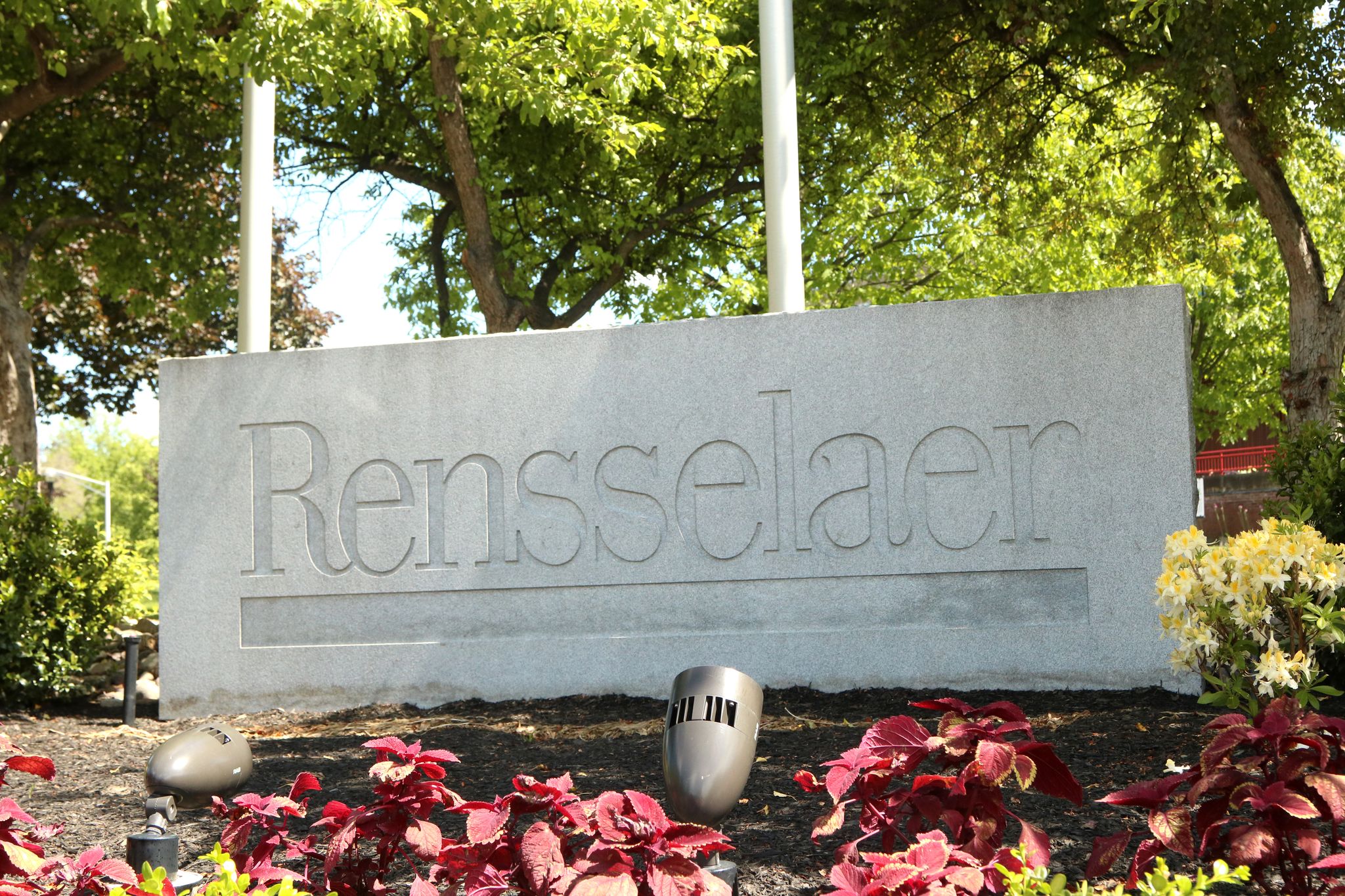
A New York state judge has ruled that Sadie Schreiner's discrimination lawsuit against Rensselaer Polytechnic Institute can proceed, finding that Trump's executive order on transgender athletes does not override New York state law. An executive order is not a statute, and institutions cannot use it as cover to discriminate against trans women. The case now moves forward on its central claim.
Who is Sadie Schreiner, and what actually happened?
Sadie Schreiner is a sprinter. She transitioned during high school, went to Rochester Institute of Technology, and during the 2023-24 collegiate season she won Liberty League outdoor track titles in the women's 200 and 400 metres. She set a league record in the 400. At the NCAA Division III championships that same year, she finished third in the 200 and eighth in the 400, all while encountering protestors at meets. That detail strikes me every time I read it: competing at championship level, running the races of her life, and doing it with people standing at the side of the track to tell her she should not be there.
In February 2025, the day after Trump signed Executive Order 14201, the NCAA updated its policy to ban athletes assigned male at birth from competing on women's teams or as individual women. Sadie did not compete for RIT during the 2025 season. She ran instead as an unattached athlete at meets that would have her. Then RPI, which was hosting an April 2025 meet, barred her from competing. Not because any court had ordered it. Not because any statute required it. Because they were afraid of what the Department of Education might do.
Sadie sued.
What the judge found, and why it matters
Judge Richard McNally's ruling is worth reading slowly. He found that Executive Order 14201 is not a statute, not a regulation, and does not concern foreign policy. Therefore it does not preempt New York state law. Gender identity and expression are protected statuses under New York's Human Rights Law, and New York's law should, in the judge's own words, be "liberally construed." His finding that placing significant limitations on how a person is permitted to use an educational institution's facilities necessarily denies that person use of those facilities in a material way is precisely the kind of clear-eyed reasoning that courts exist to provide.
He also dismissed RPI's argument that Title IX categorically bans trans women from women's sport, noting that RPI was essentially arguing Title IX has that effect "because Executive Order 14201 says it does." The judge was not persuaded, and neither am I. An executive order is a political instruction from a president. It is not an Act of Congress. It does not rewrite federal civil rights law by declaration. Sadie's attorney, Susie Cirilli, put it plainly: "The executive order is not the law." That should not need saying, and the fact that it does says everything about the climate institutions have been navigating.
Institutions hid behind fear rather than law
What RPI did was a choice. They were not legally required to bar Sadie from their meet. They were afraid, and they acted on that fear in a way that had direct and concrete consequences for a real person. Sadie was not a policy question. She was an athlete who wanted to run a race, in a state where her rights are protected, and an institution chose to exclude her rather than stand behind those rights.
I understand that institutions feel caught between federal funding threats and state law obligations. The political pressure from the current administration is real and deliberately designed to intimidate. But feeling pressure is not the same as being legally compelled. The judge's ruling makes that distinction with admirable precision. You cannot use an executive order as a shield for discrimination when that executive order does not have the force of law to override state protections.
It is also worth noting what was dismissed: the public accommodation claim and the claim of intentional infliction of emotional distress did not survive the motion. The path forward is narrower than Sadie's legal team would have hoped. And her separate cases against SUNY Geneseo and the NCAA both had motions to dismiss granted, though appeals have been filed. The legal road is long, and none of this is won yet.
What this ruling actually changes
For now, it changes one immediate thing: Sadie's core discrimination claim lives. RPI must face it. The ruling also sends a signal to every other institution in New York that has been eyeing an executive order as a convenient reason not to protect trans athletes: the courts are not impressed by that argument, and state law is not optional.
People tell me, repeatedly, that what trans people in sport want is not special treatment. They want what every other athlete wants: to compete, to improve, to belong to something, to feel the ordinary joy of running a good race. Sadie has set league records and competed at national level. She has also spent much of her recent athletic life in courtrooms and lawyers' offices, running unattached, watching institutions fold under political pressure. That cost is enormous, and it is one she should never have been asked to pay.
The case moves forward. I will be watching closely.
If there is a news story you would like me to cover then just let Sammy know.
Dr Helen Webberley is a Gender Specialist, Medical Educator, and advocate, and the founder of GenderGP. She writes about gender diversity, trans healthcare, and the lives of trans people.
Comments