
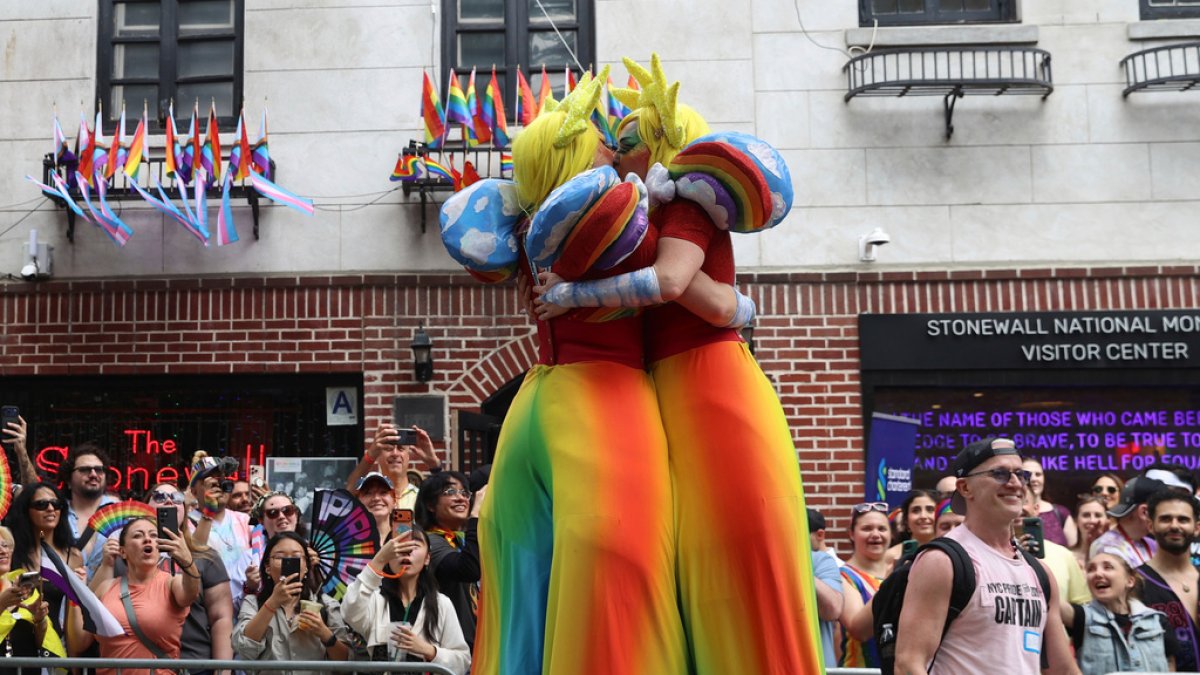
Hundreds of thousands of people took to the streets of New York City on the anniversary of the Stonewall uprising, and this year the air was different. Not heavier, exactly, but sharper. Pride has always mixed celebration with politics, but in 2025 the politics are not a backdrop; they are the reason people are lacing up their shoes and making the journey in.
Carlos Duarte came in from Long Island. "It's very important for us to be here," he said, "to be all together for love, peace and to show the world who we are." That sentence says everything about what Pride is when it is working properly: not a party that happens to have a cause attached, but a room full of people reminding themselves and each other that they exist, and that their existence is worth something.
What people were marching against
The Trump administration has spent months working methodically to narrow the space trans people can occupy in American life. Among the moves that landed before this parade: the removal of the rainbow Pride flag from the Stonewall National Monument, which was only reversed after a lawsuit; executive orders rolling back transgender rights; the targeting of diversity, equity and inclusion initiatives across federal institutions. Republican governors competed to rename June something else entirely, as though the month itself needed correcting.
Then there is the healthcare picture, which is the one that keeps me awake. Hospitals in New York City announced in recent months that they were stopping transgender youth treatments. The cutoff came under pressure from the Trump administration, and at least some of those hospitals also received federal Justice Department subpoenas for trans patients' medical records. A judge has temporarily blocked that demand, but "temporarily" is not the same as "resolved", and the families caught in the middle know that very well.
Christen Clifford, a mother of two trans children, stood before a press conference and asked the question plainly: "How can you let institutions that are actively harming queer kids march in Pride?" She called on New York City Pride to ban those hospitals from future parades until they restart care, so that families like hers know their concerns are being heard. Heritage of Pride said it has been in conversation with the hospitals, noting that parade contingents are organised by LGBTQ+ employee groups rather than the administrators who made the care decisions. That distinction matters legally. Whether it satisfies a parent whose child has lost access to treatment is another question entirely.
Showing up is the argument
Chris Piedmont, a spokesperson for Heritage of Pride, put it plainly before the parade: "As LGBTQIA+ events and symbols are being erased, it's vital that our community have safe spaces to show up and march to make clear: We are here. We will not be erased."
I keep turning that phrase over. "We will not be erased." It is not triumphant in the way Pride slogans sometimes are. It is a statement of fact, and a refusal: a refusal to disappear, to be quiet, to accept the framing that trans people are a problem to be solved or a flag to be taken down. The people marching on Sunday know the political situation. They are not naive about what is being done. They are choosing to be visible anyway, and that choice, made by hundreds of thousands of people at once, is its own kind of argument.
Stonewall itself began as an act of resistance to exactly the same impulse: the desire of those in power to make queer people invisible. The patrons of the Stonewall Inn in June 1969 did not set out to start a movement; they set out to stop being harassed. The modern Pride march grew from that refusal. Fifty-six years later, the refusal is still the point.
Joy is not in spite of the difficulty
The joy at these events is not a contradiction of the difficulty. It is not people pretending things are fine. It is people insisting that their lives contain more than the harm being done to them, and that the beauty and love and ordinary humanity of trans existence cannot be taken away by an executive order or a subpoena or a renamed month.
Trans people have always known how to find joy in hostile conditions. That is not a silver lining; it is a political act. When you show up, when you dance, when you hold your child's hand on a parade route, when you wear a colour that makes you feel like yourself, you are saying that this life, your life, is worth living fully. You are saying it to yourself, and you are saying it to everyone watching.
The families at this year's Pride, the parents marching with their trans children, the young people who got there under their own steam, the people who came in from Long Island or from much further afield: they are not symbols. They are people who wanted to be with other people who understand what this moment is. That is the oldest and most human reason to gather anywhere.
If there is a news story you would like me to cover then just let Sammy know.
Dr Helen Webberley is a gender specialist, medical educator, and founder of GenderGP. She writes about gender identity, trans healthcare, and the lives of trans people and their families.
Comments