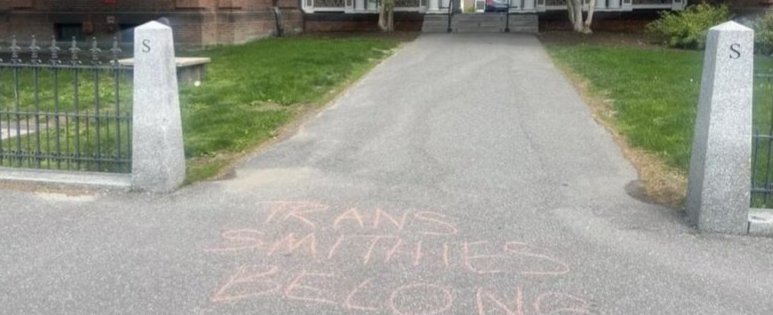
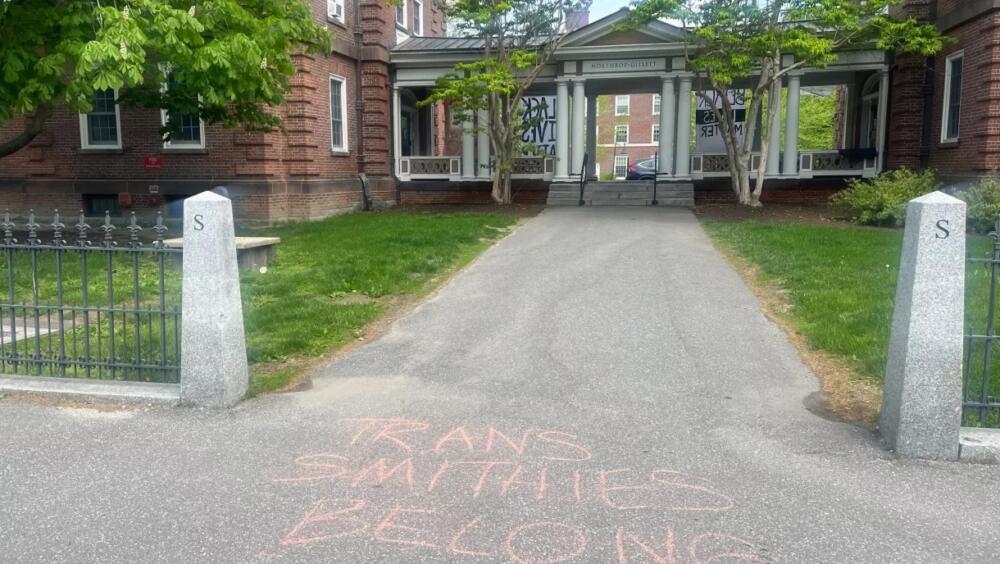
The US Department of Education's Office for Civil Rights has opened a Title IX investigation into Smith College, a historically women's college in Massachusetts, over its policy of admitting transgender women. Students on campus are scared. They should not have to be.
What the investigation is actually claiming
The argument from the Department of Education is that admitting trans women, and allowing them access to shared spaces like dormitories and locker rooms, violates Title IX protections for women. This argument only makes sense if you do not believe trans women are women. We do. A trans woman is a woman. The adjective describes one feature of her life. It does not redefine the noun.
Smith College has always been a women's college. Admitting trans women is entirely consistent with that. Excluding them would not be protecting women's spaces. It would be excluding some women from spaces built for them.
The predator framing, and why it is false
One of the Smith students quoted in the coverage said it plainly: the federal government is taking a minority group and making them seem predatory. She is right. That is exactly what is happening. Trans women are not predators. They are students who came to Smith to study, to get their degrees, to live their lives. They are far more likely to be the targets of hostility than the source of it. The data bears this out. The lived experience of women's spaces, in which trans women have participated for decades without incident, bears it out too.
The non-trans student quoted in the same piece put it well. Officials pushing this framing have likely never met a trans person. That is where fear of this kind comes from: distance, not evidence.
What this feels like for the students involved
One trans student at Smith, who chose not to be named because she feels targeted, said she does not feel safe in the United States right now. She described the investigation as one more pressure added to an already frightening political climate. She came to college to study. Instead she is having to process the fact that her government has decided her presence at her own institution is a legal problem.
That is a real harm. It is not abstract. It lands on real people, in real time, in the middle of their degrees.
What we know about single-sex spaces
If you create a space for women, all women belong in it. That includes trans women, black women, disabled women, women who do not fit any particular picture of what a woman is supposed to look like. The principle is consistent. The only question is whether trans women are women, and the answer is yes.
The suggestion that including trans women makes a space unsafe for other women is not supported by evidence. It is supported by a political project whose aim, as the Smith student put it, is to outlaw anyone who is different.
Smith's position
The college has said it is committed to its institutional values and to compliance with civil rights law, and that it does not comment on pending investigations. That is the appropriate legal posture. What matters beyond the legal process is whether the college continues to stand behind its trans students as people, not only as a policy question. From the students speaking out, it is clear that is what they need right now.
If this piece is useful to you, please share it. Every share helps more people find accurate information about gender diversity and what is actually happening to trans people in education right now.
Dr Helen Webberley, Gender Specialist and Medical Educator.
helenwebberley.com
Comments