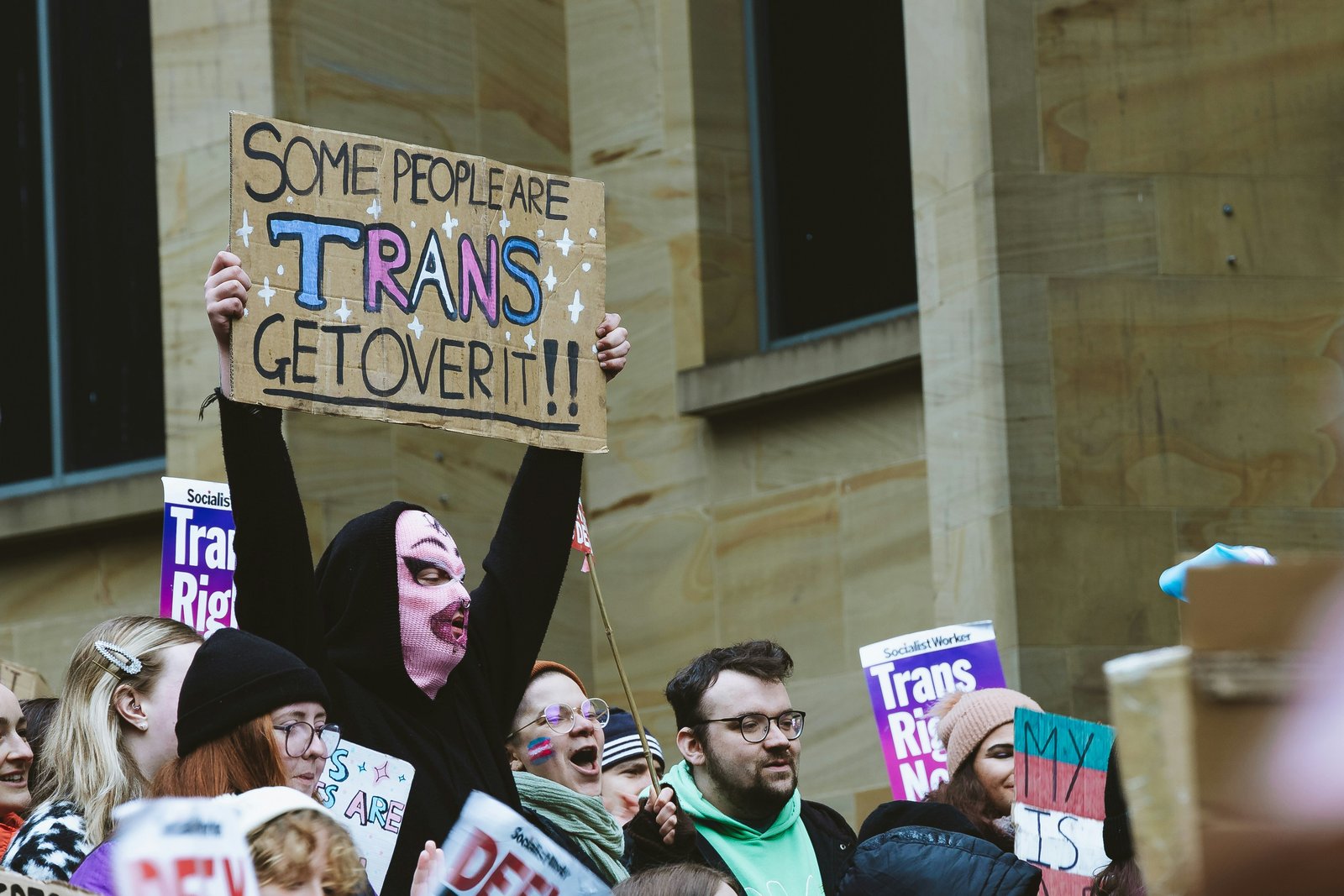
There is a recurring effort in parts of the media and public debate to frame support for transgender people, and for evidence-based gender care, as an outlying or radical stance. The evidence does not support that framing. Across medicine, law, and human rights, affirmation of gender diversity is a well-established and widely held position.
What the global picture actually shows
Major clinical and human rights bodies around the world, including the World Health Organisation, the World Professional Association for Transgender Health, and numerous national endocrine and paediatric societies, recognise gender diversity as a normal aspect of human variation. They support access to appropriate care for transgender and gender-diverse people. This is not a new development. It reflects decades of clinical experience, peer-reviewed research, and ethical deliberation across many countries and healthcare systems.
How a consensus gets misrepresented
When a position is held by a broad coalition of clinicians, researchers, and legal bodies, describing it as fringe requires a significant distortion of the available evidence. What sometimes gets called a fringe view is, in practice, the considered position of many of the world's leading medical and human rights institutions. The voices that dissent from that consensus tend to be far fewer in number, even when they receive disproportionate coverage or political attention.
The UK context
In the United Kingdom, recent years have seen considerable policy turbulence around gender services, particularly for younger people. The NHS has been criticised for its approach, and the Cass Review, which has been widely challenged by clinicians and researchers internationally, has been used to justify restrictions on care that would not be considered acceptable in comparable healthcare contexts. The Supreme Court ruling of April 2025 clarified that the word "sex" in the Equality Act refers to biological sex for the purposes of that legislation. It did not make a broader determination about the legal or social status of transgender people, and it did not remove existing protections under the Gender Recognition Act.
Why the framing matters
Language shapes how people understand their options. When a well-supported clinical and ethical position is repeatedly described as extreme or marginal, it can deter patients from seeking care, discourage clinicians from providing it, and give policymakers cover to restrict access without engaging seriously with the evidence. Recognising that the broad, international, evidence-based position supports gender-affirming care is not a political statement. It is an accurate description of where clinical and legal understanding currently stands.
If this article is useful to you, please share it. Every share helps more people find accurate information about gender diversity.
Dr Helen Webberley, Gender Specialist and Medical Educator.
helenwebberley.com

Comments