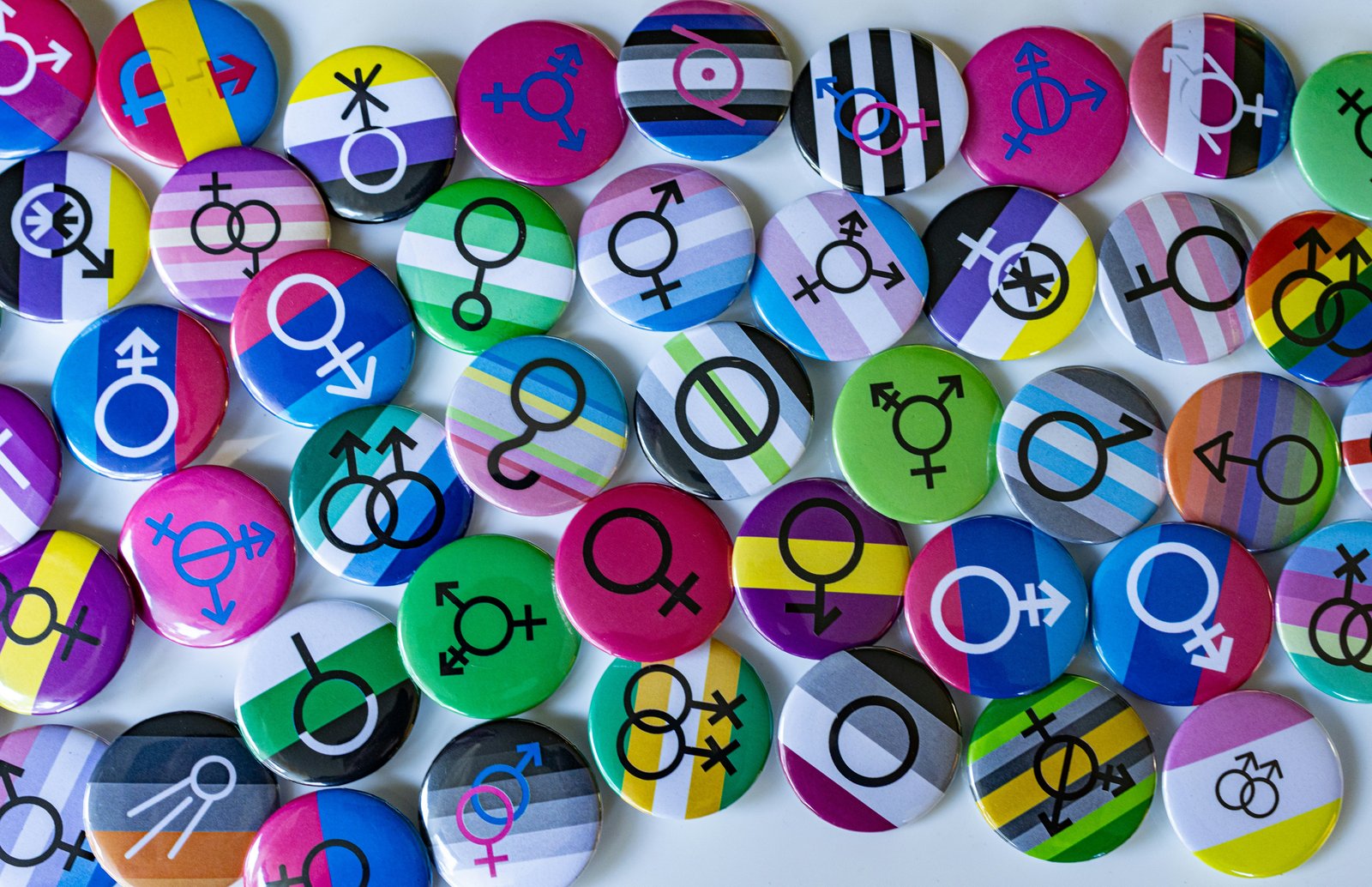
The International Olympic Committee has announced that transgender women will be barred from competing in women's events at the 2028 Los Angeles Olympics, while also introducing mandatory genetic testing for all athletes wishing to compete in the women's category. The policy will affect cisgender women with naturally occurring hormonal variations, many of whom will be disqualified on the basis of biological characteristics they did not choose and cannot control. Before this announcement, exactly one openly transgender woman had competed in Olympic history.
What the new rules actually say
Under the IOC's new framework, all athletes seeking to compete in the women's category must submit to genetic testing to confirm they meet the committee's biological criteria. Transgender women are barred entirely, not from the men's category, but from women's competition. Women with conditions known as differences in sexual development (DSDs), where the body's chromosomal, hormonal, or anatomical characteristics do not follow a standard pattern, are also excluded. No equivalent testing requirement applies to male athletes. The policy redefines eligibility for women's sport around a specific set of genetic prerequisites that have not previously been required for participation.
Who is most affected
The practical effect of this policy falls most heavily on cisgender women, those who were assigned female at birth, have female anatomy, and have lived their entire lives as women. Many will be disqualified because their bodies produce hormones at levels outside the range the IOC has decided is acceptable. These are not performance-enhancing substances taken artificially; they are organic features of those athletes' physiology. Careers built over years of training and discipline will end not because of any wrongdoing, but because of naturally occurring biological variation. The transgender women the policy is ostensibly designed to exclude are, statistically, almost entirely absent from Olympic competition. Laurel Hubbard, who competed at the Tokyo Games in 2020, finished last in her event. No broader pattern of competitive advantage has been demonstrated at this level.
What the science actually says
Supporters of blanket bans on transgender athletes frequently argue that prior male puberty or testosterone exposure creates a permanent and decisive athletic advantage. The science, however, does not support that degree of certainty. Eric Vilain, a geneticist at the University of California, Irvine, who advised the IOC on gender for more than a decade, has stated that the science of how to ensure fairness and measure advantage in this context is "not settled at all". Athletic performance varies considerably across individuals and sporting disciplines. Applying a single rigid rule across all events and all athletes does not reflect that complexity; it overrides it.
The question of consistency
A policy applied exclusively to women, requiring them to prove their biological credentials before competing, while making no equivalent demand of male athletes, raises questions that go beyond sport. Genetic variation exists across all human bodies. The decision to test only women, and to define eligibility for women's categories around a narrow and contested biological standard, treats womanhood as a category requiring policing in a way that manhood does not. Discrimination does not become something else simply because it is dressed in the language of fairness. When the burden of proof falls entirely on one group, and when that burden is constructed in a way that disqualifies people who have never been accused of gaining any unfair advantage, the stated justification deserves scrutiny.
If this article is useful to you, please share it. Every share helps more people find accurate information about gender diversity.
Dr Helen Webberley, Gender Specialist and Medical Educator.
helenwebberley.com

Comments