
Transition is not one story. That is the thing anti-trans politics most needs you to forget, and it is the thing these people, by simply living openly, keep proving wrong.
E! News gathered a collection of quotes and moments from trans public figures, and what strikes me reading through them is not any single narrative but the sheer variety. Zaya Wade, nineteen years old, talking about hope and the courage to feel safe in yourself. Elliot Page, shirtless in the sun, writing about the joy of a body that finally fits. Laverne Cox describing the relief of stopping the fight against herself. Kai Schreiber, daughter of Liev Schreiber and Naomi Watts, practising her catwalk in the kitchen for years and now walking Paris Fashion Week. These are not versions of the same story. They are different people, different timelines, different textures of experience. And that variety is not incidental. It is the whole point.
A father learning from his daughter
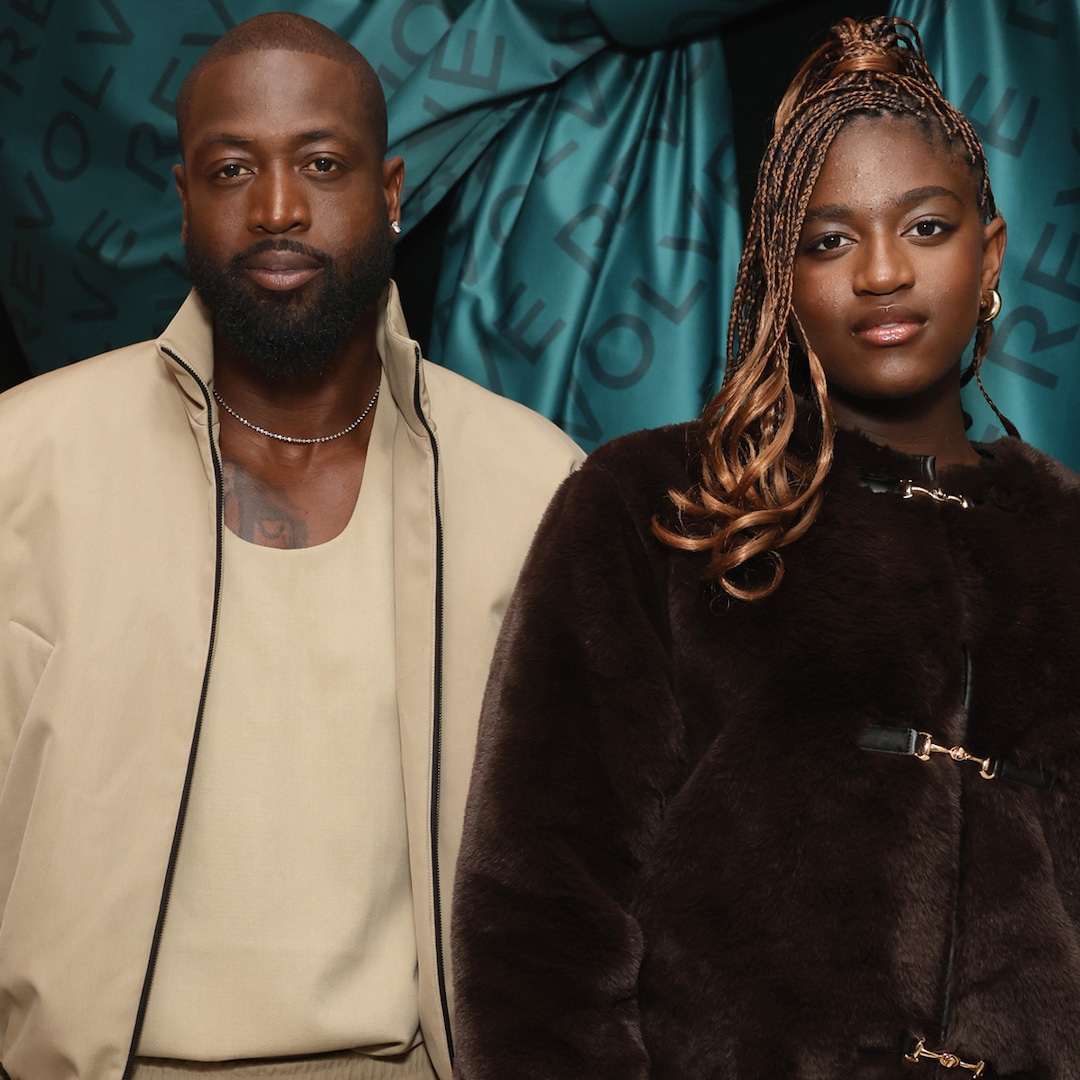
Dwyane Wade's words about Zaya are genuinely worth a moment's attention. Here is a man who spent sixteen seasons in professional basketball, someone whose career was built on a very particular kind of toughness, saying plainly that his nineteen-year-old daughter has shown him what courage actually looks like. "We all think we have courage until that moment presents," he told E! News at the second Translatable ball, the non-profit he founded for LGBTQIA+ youth after Zaya came out. "To see her understand that she has it and to really blossom and bloom in it, it gives you hope."
I find that genuinely moving. Not because it is surprising that a father loves his daughter, but because of how publicly and specifically he has named what he has learned from her. Zaya herself has been clear about why she speaks out: "The positives of having such an inclusive platform completely outweigh all of the negativity online. It has allowed me to let in the positivity and distribute it to all of the trans people in the world who need a voice." That is a nineteen-year-old thinking about the people who might need to hear her. That kind of generosity is not nothing.
Joy in a body
Elliot Page's caption on that shirtless photograph in May 2023 is one of the most honest descriptions of what gender dysphoria actually costs, and what its absence actually gives. "Dysphoria used to be especially rife in the summer. No layers, just a T-shirt — constantly looking down, readjusting my oversized T. It feels so f'ing good soaking in the sun now, I never thought I could experience this, the joy I feel in my body."
People who have not experienced dysphoria sometimes struggle to understand what transition is actually for. Elliot's words answer that better than any clinical explanation. It is not ideology; it is standing in the sun without dread, a body that stops being a problem. His coming-out statement in 2020 named both things plainly: "My joy is real, but it is also fragile." He was right on both counts, and the fact that he has continued to be open about his journey, including writing about it at length in his memoir Pageboy, has mattered to countless people who recognised their own experience in his.
The long road and the late arrival
What is striking about several of the people in this piece is how long they spent managing feelings they could not yet name or act on. Laverne Cox describes years of running away from herself before moving to New York and finally, in her words, finding relief. Laura Jane Grace traces her dysphoria back to childhood and describes years of anxiety, substance use, and depression before, in her thirties, recognising that the feelings were not going to go away. Teddy Geiger talks about learning to push feelings down, not allowing herself to explore them, until the unexplored feelings came out as anxiety and compulsion.
This is something I have heard from so many people over the years. The feelings do not dissolve because you suppress them. They find other ways out. The cost of not being able to be yourself is real and it accumulates, and it shows up in mental health, in relationships, in years of life spent at a distance from who you actually are. Transition, when it comes, is not the beginning of the story. It is usually the resolution of a story that started very early and ran underground for a long time.
No single story
Tommy Dorfman's reflection on how transition changed the kind of relationship she needed is another reminder of how complete the process can be. "I've been learning that as a trans woman, what I'm interested in is not necessarily reflected in a gay man." Transition does not just change how you move through the world physically. It can change what you need from the people closest to you, and navigating that honestly, as she and her former partner did, takes courage from everyone involved.
Kai Schreiber, meanwhile, makes me smile. "I want to be a supermodel. Period. I've been practising my walks in the kitchen for years; my mom can show you all the videos I forced her to film." Her father saying "Kai was always who Kai is" captures something that parents of trans children sometimes take time to arrive at, and that once arrived at, changes everything. She was always who she is. That is not complicated.
The variety across these stories, the ages, the timelines, the paths taken, the things lost and found, is not a problem to be resolved. It is what human beings actually look like. Anti-trans politics depends on a cartoon: a single, suspicious narrative that can be questioned, delayed, or denied. What these people's lives show is that no such single narrative exists. There are as many transitions as there are people who transition, and all of them deserve the same thing: the freedom to live as themselves, without having to justify it to anyone.
Comments