
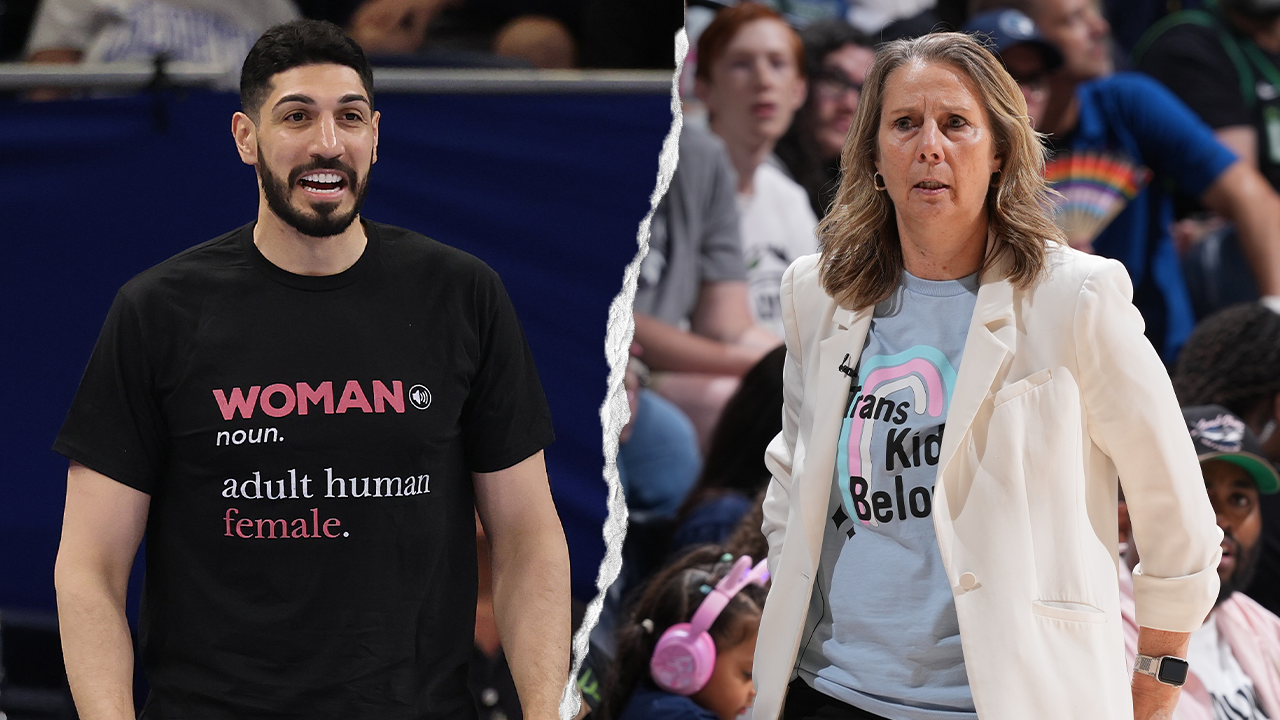
Cheryl Reeve, head coach of the Minnesota Lynx and a four-time WNBA champion, wore a T-shirt that said "Trans Kids Belong" during a nationally televised game. She heard from parents whose children felt, for a moment, that someone with a platform believed they were worth something. Then, after the Lynx closed their regular season, she said this: "What is happening in the name of some issues of transgender in sports — it's really an attack on all transgender community. They don't want transgender people to exist."
The response was immediate. Enes Kanter Freedom called for her resignation. He challenged her to prove her hypocrisy by nominating him for the 2027 WNBA Draft. The Fox News machine cranked up. The outrage was loud and organised and, if you pay attention to these things, entirely predictable.
Here is what I noticed: nobody actually denied it.
What Reeve said, and why it landed
The argument from Freedom and others who share his position is that protecting women's sports is not an attack on anyone's existence. That excluding trans women from certain athletic competitions is simply a matter of fairness, of biology, of competitive integrity. A limited, practical concern, they say. Nothing personal.
But watch what happens when someone names the broader pattern. Watch what happens when a coach with a platform says: this is not really about sport, this is about whether trans people are allowed to be here at all. The response is not "that's unfair, that's not what we're saying." The response is: step down. You are unfit to lead. You are a hypocrite. You are the problem.
If the sports argument were genuinely only about sport, that would be a strange way to respond to someone who wears a T-shirt and talks to parents of trans children. You would simply say: we have no quarrel with trans people existing, we just have concerns about elite athletic competition. You would say it calmly, and move on.
The fury tells you what the calm argument is trying to conceal.
A T-shirt and what it meant
Reeve said something that I found genuinely moving. She said that if wearing that shirt helped just one person feel differently about themselves, it was worth it. She heard from parents of trans children. She heard how it affected families. She described it as one of the most meaningful moments of her season, not a tactical gesture, not a statement for the cameras, but something she believed in wholeheartedly.
Trans kids are living through a period of sustained political attack. Every week brings a new piece of legislation, a new ban, a new public figure announcing that their existence is a problem that needs solving. Against that backdrop, seeing someone with a platform say "you belong" is not a small thing. It does not surprise me at all that parents were in touch with her. It does not surprise me that children felt the difference.
Visibility matters. It matters at a level that people who have never needed it sometimes struggle to understand.
The WNBA draft stunt
Freedom announced that he intends to enter the 2027 WNBA Draft under the name "Enisa Freedom," presenting it as a serious test of the league's eligibility standards. He has said he is not mocking trans people. He has said his goal is not publicity or political theatre.
The WNBA's collective bargaining agreement states that only women are eligible to play. The league has never had a trans woman on a roster. There is no actual eligibility crisis to test. What there is, plainly, is a man announcing that he will pretend to be a trans woman in order to make a point about trans women, while insisting he means no disrespect to trans women.
I will leave it to the reader to decide how much disrespect is contained in that manoeuvre.
Royce White took the same basic position further into open satire, describing a female alter ego and suggesting the Lynx would be "the perfect home as the new transgender capital of America." The statement is presented as humour. What it actually does is use trans identity as a punchline, and then invite anyone who objects to be told they have no sense of humour.
These are not serious arguments about sport. They are performances, aimed at an audience that finds trans existence funny or threatening or both, and Reeve was right to say so.
What the sports argument is actually about
The sports debate in its current form is not primarily driven by concern for female athletes. If it were, we would see the same energy applied to the funding gaps, the pay gaps, the media coverage gaps, the safety failures, and the structural inequalities that have shaped women's sport for generations. We do not. The energy is concentrated almost entirely on trans women, a group so vanishingly small in elite sport that their actual competitive impact is negligible, but whose symbolic weight in this particular culture war is enormous.
Sophie Cunningham said she extends love, and I take that at face value. There are people who hold genuine, good-faith concerns and who also genuinely do not harbour hatred. I believe some of them exist. But the movement that has built itself around these concerns, the political infrastructure, the media apparatus, the legal campaigns, is not interested in good faith. It is interested in exclusion, and it is using sport as the argument because sport sounds more reasonable than "I don't want trans people in public life."
Cheryl Reeve named that. She named it clearly, from a platform that matters, at a moment when it was costly to do so. That is not nothing; that is exactly what a leader looks like.
If there is a news story you would like me to cover then just let Sammy know.
Dr Helen Webberley is a Gender Specialist, Medical Educator, and founder of GenderGP. She writes about gender diversity, trans healthcare, and the lives of trans people and their families.
Comments