
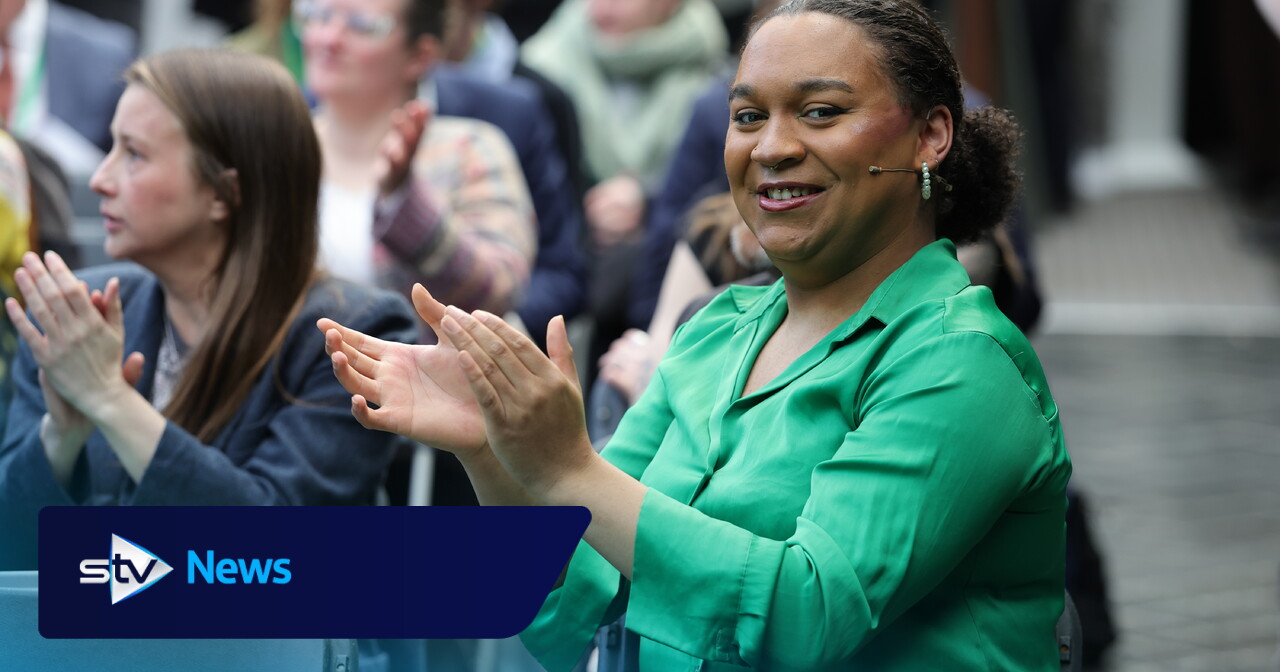
Iris Duane, one of the first openly transgender MSPs in the Scottish Parliament, says being transgender has never been the most interesting thing about her life. At 23, she is a housing and education spokesperson, a recent graduate, and one of the youngest parliamentarians in the UK. She is many things, and she knows it.
A historic moment, held lightly
After the Scottish Parliament election in May, Iris Duane and her Green colleague Q Mannivanan became the first openly transgender MSPs in Holyrood's history. That is genuinely significant. And Iris knows it. But she also knows something that takes real confidence to say out loud, that a historic first does not have to become the only story anyone tells about you.
"I am transgender," she said, "but that's never been the most interesting thing about my life, and often isn't something that comes into everyday life." She went on to note that some people had chosen to focus on it, and called that "a shame". I think she is right, and I think the way she said it was quietly brilliant.
There is something so human about wanting to be seen whole. Trans people are so often asked, implicitly or explicitly, to lead with their transness, to explain it, to justify it, to make it the headline of every room they walk into. Iris is refusing that, without drama and without apology. She has a housing brief, a five-year mandate, and a recent politics degree from the University of Glasgow. She is twenty-three years old and one of the youngest parliamentarians in the UK. Any one of those things would make her worth listening to.
The abuse, and what it told her
It would be dishonest to celebrate this story without acknowledging what came alongside it. In the days after the election, the Scottish Greens described the abuse directed at their new MSPs as "disgraceful", saying trans people in particular had been "targeted and abused as part of a cynical culture war that has been encouraged by other parties and parts of the media".
Iris was clear-eyed about what that felt like. "I think it was quite difficult to know that individuals that don't know me or don't know my values or don't know where I stood for, wanted to bring so much harm upon myself, and that was quite upsetting." That is a remarkably composed thing to say about strangers directing harm at you. She did not minimise it. She also did not let it define the experience.
Because then she said this: "I have had such a positive and welcoming environment in person. First of all, nobody mentions it in real life very often, and those that do thank me for being in politics and are very, very happy to see me there." Online fury versus the actual room. The contrast tells you something useful about where hatred tends to live, and where ordinary human warmth tends to live.
The EHRC guidance, and why it is not a footnote
Iris's election has arrived at a particular moment in UK politics. The Equality and Human Rights Commission has issued guidance, following the Supreme Court's ruling in the For Women Scotland case, clarifying that single-sex spaces such as toilets, changing rooms, and hospital wards should generally be operated on the basis of biological sex rather than acquired gender. Service providers can now exclude trans people from those spaces if they decide other users might object to a trans person being present.
That guidance is, as Iris said, "going to impact all trans people across the UK." She described it as "really disappointing", and pointed to something the guidance itself acknowledges: there is no verifiable way to police who is and is not transgender. Which means what gets policed, in practice, is anyone who does not look sufficiently like whatever the person at the door decides is correct. That is not a trans problem, it is a problem for any woman who is tall, or broad-shouldered, or short-haired, or simply having a difficult day. Iris put it plainly: "It will make the UK more unfriendly for not just trans people but for everyone."
The legal picture is this. The Supreme Court interpreted the Equality Act 2010 in a particular way: it did not amend or repeal the Act, and trans people remain protected under the characteristic of gender reassignment. Many legal commentators, equality organisations, and trans advocates argue the ruling is inconsistent with Parliament's original intent when passing both the Gender Recognition Act 2004 and the Equality Act 2010. The EHRC guidance that followed is also draft guidance: it carries weight, but it is not statute.
What she is actually there to do
Iris is the Greens' spokesperson for tertiary education and housing. On housing, she was direct: "There are people in this country that are waiting more than 10 years to get a social home. There are homeless people, there are people who are in temporary accommodation that's unfit for them, there are lots of families in these situations as well, and it's really destroying lives." She described housing as a human right and pledged to hold the Government to account over the ongoing housing emergency.
That is a substantial brief for anyone. For a 23-year-old in her first term, it is a considerable one. And it is what she wants to be known for. The history-making part of her election is real, and it matters, not because it defines her but because it shows other young trans people that Parliament is a place they can be. Every trans adult was once a trans young person looking around for evidence that the world had room for them. Iris is that evidence now.
She graduated from the University of Glasgow this summer. She is one of the youngest parliamentarians in the UK. She is a housing spokesperson with a five-year mandate. And yes, she is transgender, which has never been the most interesting thing about her life. I believe her completely.
If there is a news story you would like me to cover then just let Sammy know.
Dr Helen Webberley is a gender specialist, medical educator, and founder of GenderGP. She writes about gender identity, trans healthcare, and the lives of trans people and their families.
Comments