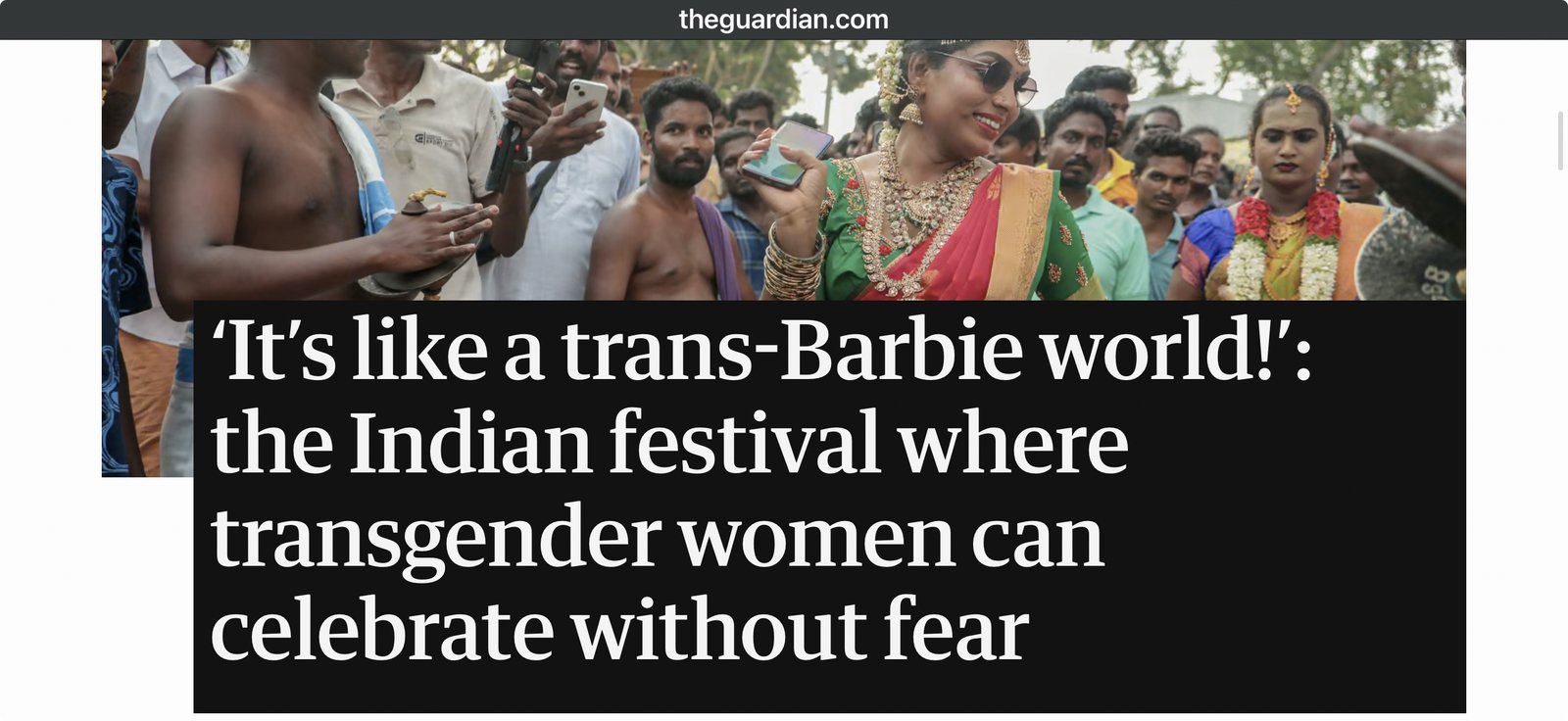
Every year in Tamil Nadu, tens of thousands of hijra and transgender women gather at Koovagam for one of the oldest trans celebrations on earth. This is not a new movement or a modern invention. This is a living tradition that predates most of the arguments being made today about whether trans people belong in public life, and it is glorious.
What is Koovagam and why does it matter?
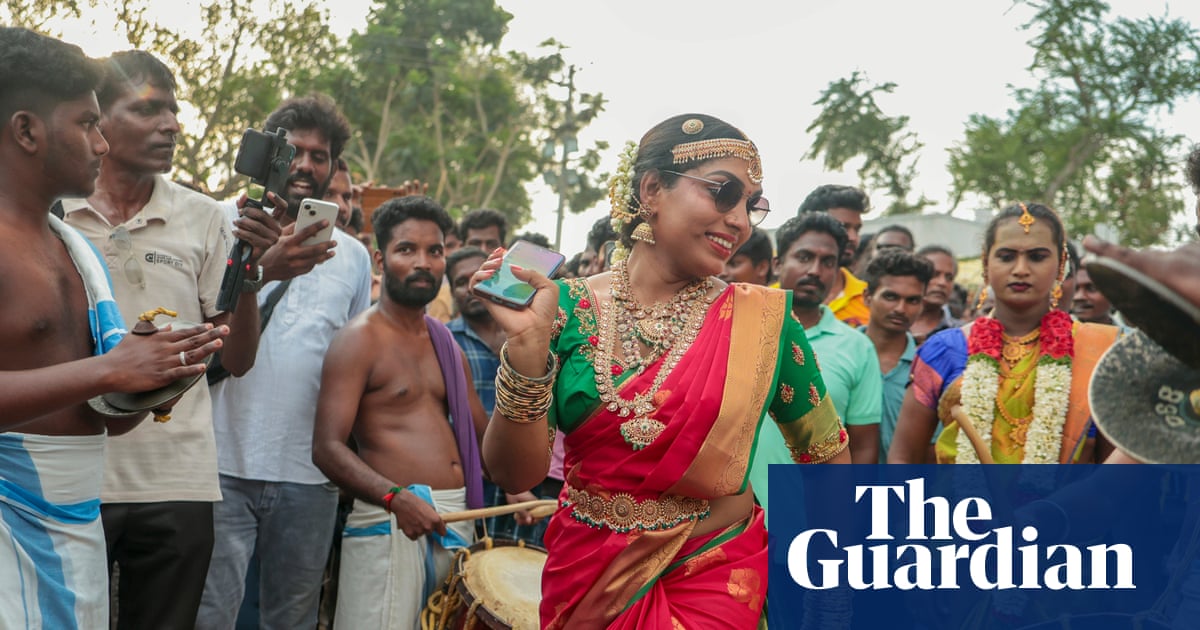
Koovagam is an annual festival centred on the Koothandavar temple in the village of Ulundurpet, Tamil Nadu. Hijra and transgender women travel from across India to take part in a ritual that enacts the marriage of the deity Aravan, followed by collective mourning upon his death. The festival draws somewhere between twenty and fifty thousand people each year, and it has been going for centuries.
I find this extraordinary because the conversation in the UK right now would have you believe that trans identity is a social contagion, a modern trend, something cooked up on the internet and fed to impressionable young people. Koovagam makes that argument look not just wrong but absurd. Trans people have always existed. They have always found each other. They have always built community, meaning, and ritual around who they are. That is not new. What is new is the attempt to legislate it away.
Is hijra identity the same as being transgender?
Hijra is a distinct identity, with its own cultural and spiritual history, and it would be a mistake to flatten it into Western categories. At the same time, Koovagam draws transgender women from across India who are not hijra but who find in the festival a space of recognition and belonging that they cannot always find elsewhere. The two communities are not identical, but they share something important: the knowledge that gender diversity is not an anomaly to be managed. It is part of the human picture.
India legally recognised a third gender category in 2014, following a Supreme Court ruling. That recognition has not been perfect in practice, and trans people in India face significant discrimination, violence, and poverty. The legal acknowledgement matters, and the festival matters, because visibility saves lives. When a trans person can see themselves reflected in a centuries-old tradition, in a crowd of tens of thousands, in a ritual that takes their identity as its entire premise, that is not a small thing.
What can the rest of the world learn from this?
Plenty. We are living through a period in which trans rights are being rolled back in the UK, in the United States, and across parts of Europe. The arguments being used to justify that rollback often rely on the idea that trans identity is novel, contested, or inherently unstable. Koovagam is a direct rebuttal to every one of those arguments. Gender diversity has been celebrated, ritualised, and honoured across cultures and throughout history. The novelty is not the trans people. The novelty is the organised effort to make them disappear.
Celebrations like this one matter clinically as well as culturally. Affirmation, community, and visibility are not soft extras on the side of healthcare. They are part of what keeps people well. A trans person who grows up knowing that people like them have always existed, have always gathered, have always been considered sacred in some traditions, is a trans person with something to stand on. That matters enormously when the world outside keeps telling them they should not exist.
How does this connect to the fight for trans rights today?
Every time someone tells me that trans people are a new phenomenon, I think about the hijra communities that have been documented in South Asia for over two thousand years. Every time a government announces that it is protecting children by blocking access to gender-affirming care, I think about what it means to grow up knowing that your identity has ancient roots, sacred associations, and a festival with fifty thousand people at it. The contrast is stark.
We do not need to romanticise the difficulties that trans people in India face to take the lesson that Koovagam offers. The lesson is simply this: trans people belong. They always have. The world is more beautiful for them being in it.
If there is a news topic that you would like me to cover, just let Sammy know.
Dr Helen Webberley, Gender Specialist and Medical Educator.
helenwebberley.com
Comments