
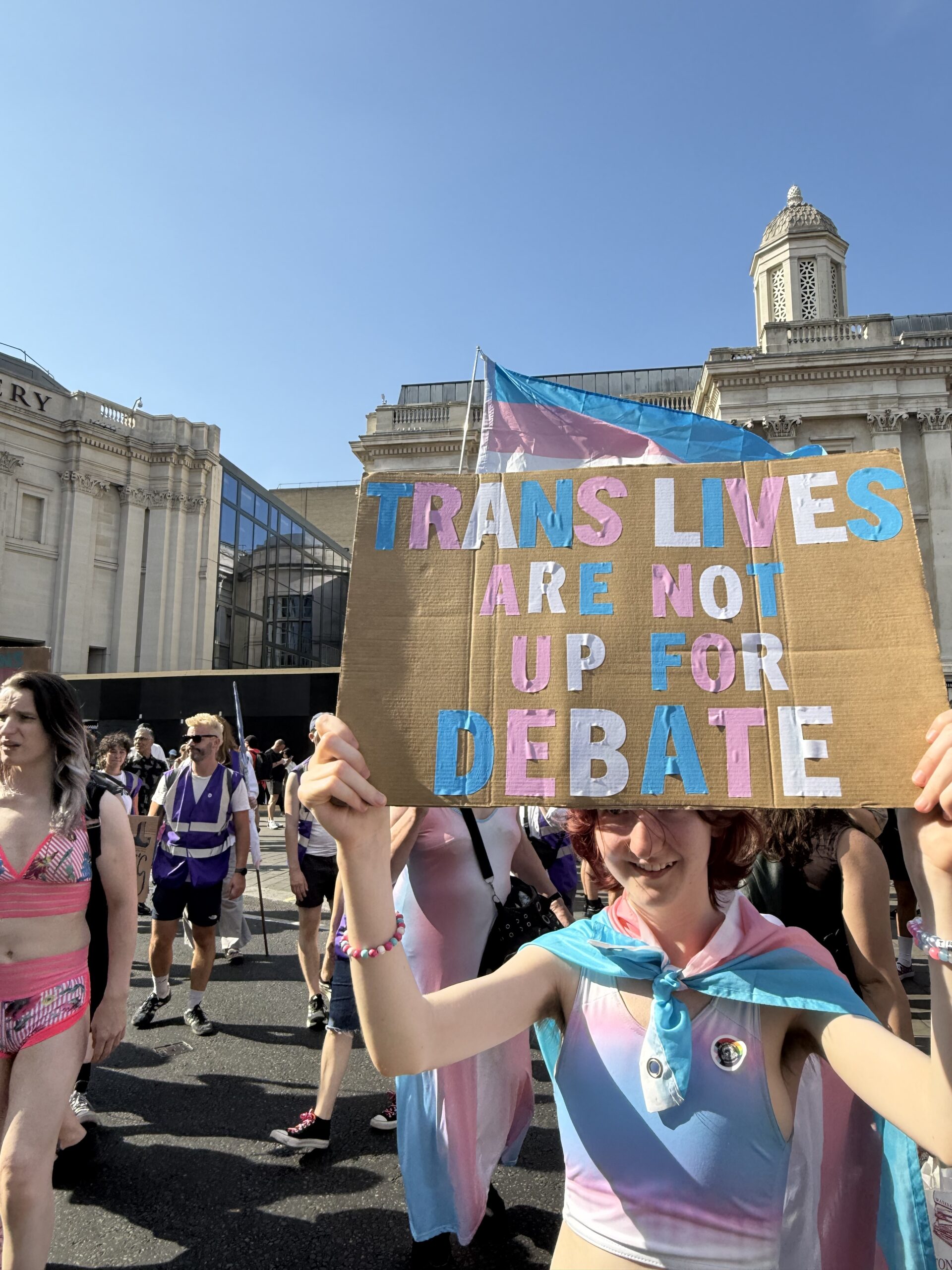
Anti-trans activists have taken a legal challenge against the NHS clinical trial examining puberty blockers for young trans people to the High Court, asking judges to rule the trial unlawful. Good Law Project is supporting the trans youth charity Gendered Intelligence to intervene and defend young trans people's access to care. Puberty blockers are a standard treatment for trans youth across the world, and delay causes genuine harm.
What is actually being challenged here?
Just before the 2024 general election, the outgoing Conservative government rushed through a ban on the prescription of puberty blockers to young trans people in England. When Labour took power, Wes Streeting made that ban permanent. The Cass Review, for all the criticism it has rightly received, at least recommended a clinical trial to gather evidence. That trial, the NHS Pathways trial, became the one remaining route through which young trans people in the UK might access puberty-blocking treatment.
Now a coalition of claimants, including the Bayswater Support Group and Keira Bell, funded by a group with reported links to the far right, is asking the High Court for permission to challenge that trial too. Their argument is that prescribing puberty blockers to young people in the trial would fail to safeguard their rights, safety, and wellbeing. A treatment used safely across the world, recommended by the Endocrine Society, endorsed by WPATH's Standards of Care, and accessed by trans young people in country after country, is being framed as a threat to the very children it is designed to help.
The gap between the claim and the evidence
Puberty blockers are not experimental. They have been used for decades, including to treat precocious puberty in children, long before trans healthcare entered the conversation. The international evidence base supporting their use in gender-affirming care is substantial. When Good Law Project says the claimants' suggestion is not what the evidence supports, that is not a political position; it is a straightforward statement of fact.
What the evidence does support, clearly and repeatedly, is the harm caused by withholding care. One parent, speaking to Gendered Intelligence, described the moment treatment was taken away from their child as devastating. Another said they are afraid to take their child to NHS appointments because they no longer know how that child will be treated. These are not abstract policy concerns. These are families, living the consequences of decisions made by people who have never met their children and never will.
The voices that matter most
I have heard versions of this story so many times, from so many young people and their families, and the thing that stays with me is how clearly trans young people themselves articulate what is happening to them. One young person, speaking to Gendered Intelligence, said something I think every judge, every politician, and every activist on either side of this debate should be required to read: "Trans young people should be protected and treated as people, not discussed like objects. No-one talks about the harm caused by not recognising or supporting someone with their gender identity."
They are right. The harm of not recognising and supporting a young trans person is real, it is documented, and it is serious. Unwanted puberty changes are not reversible. The distress they cause is not trivial. And yet the framing of this legal challenge, and of so much of the political conversation around it, treats inaction as though it were the safe option. It is not. Delay is a decision, and withholding care is a decision whose consequences land on real young people, in their bodies, in their mental health, in their sense of who they are.
What Good Law Project and Gendered Intelligence are doing
If the High Court grants permission for this challenge to proceed, Good Law Project will support Gendered Intelligence's application to intervene. That matters because Gendered Intelligence works directly with trans young people and their families. They know what this community actually needs. Having their voice in the courtroom, alongside the legal arguments, is exactly right.
Keira Bell's original challenge to young trans healthcare in 2020 was overturned on appeal, following Good Law Project's intervention. The legal system has already corrected one attempt to restrict this care through the courts. The hope is that it will do so again.
Why I find this so hard to accept
There is something particularly galling about watching a clinical trial, set up specifically to gather evidence, being attacked on the grounds that it lacks evidence. The trial exists precisely because the political decision to ban puberty blockers outran the scientific process. Stopping the trial does not protect young trans people; it just ensures we never gather the data that would help them. That cannot be what genuine concern for their wellbeing looks like.
Decisions about gender-affirming care belong with young people and their clinicians, not with politicians acting under electoral pressure, and not with activists pursuing an agenda through the courts. Every week this drags on is another week that a young trans person in the UK cannot access care that their peers in other countries receive as a matter of course.
I hope the High Court sees this challenge for what it is, and I hope Good Law Project and Gendered Intelligence are given every opportunity to make that case.
Comments