
Trans people are not a campaign strategy. They are not a wedge issue to be deployed or a messaging problem to be managed. They are people: children with parents who love them, families trying to keep their kids safe, young people working out who they are. When politicians decide that those lives are useful raw material for a campaign ad, the cost is not paid in polling points. It is paid by real families, in real time, in ways that do not disappear when the election is over.
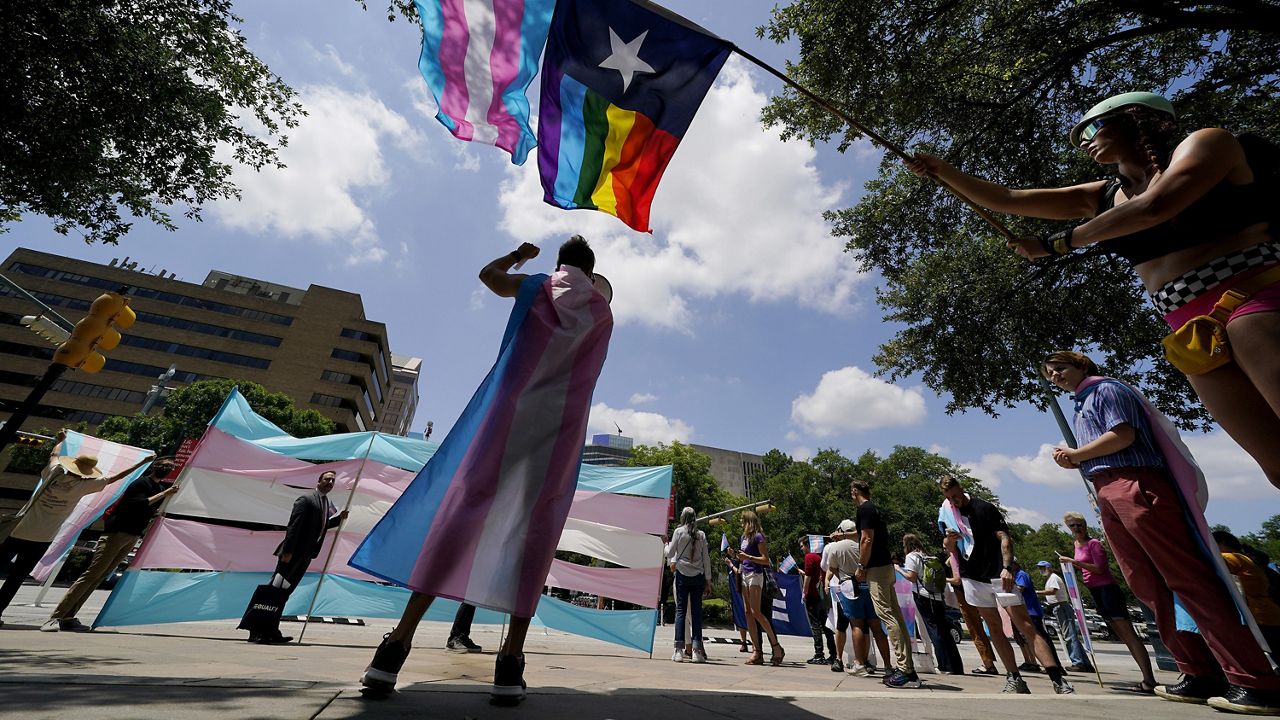
Ken Paxton is running for U.S. Senate in Texas, and he has reached for the same playbook that Texas Republicans have used before. He has attacked his Democratic opponent, state Representative James Talarico, for saying he has "a special place in my heart for LGBTQ youth." Paxton called this evidence that Talarico is willing to "sacrifice our children at the altar of the radical trans movement." He posted a photo with his daughter at a basketball game and wrote about keeping "men out of women's sports."
I want to stay with what Paxton actually said there. He took a politician expressing warmth towards vulnerable young people and reframed it as a threat to children. He called trans youth "the radical trans movement." He described protecting them as sacrifice. This is not political argument. It is dehumanisation, and it has consequences.
Brad Pritchett, CEO of Equality Texas, names those consequences directly. Paxton's earlier legal ruling gave the green light for the state's child protective services to investigate parents who had provided gender-related medical care to their children. "It did real material harm to families and kids," Pritchett said. "What we've seen over and over again is the families of trans kids are just trying to do what they can to keep their kids safe... here in Texas, and folks like Ken Paxton have really gone out of their way to target those particular Texas children just because they're transgender."
That is worth reading twice. Children targeted not because they had done anything wrong, not because they were in danger, but because they were transgender. Families investigated because they were loving their children in the way their children needed. This is what the campaign strategy produces. Not a debate. Not a policy outcome. Harm to specific children.
Andrew Proctor, a lecturer at University College London, explains the political mechanics clearly enough: by centering children and women, Republicans tap into fears about gender and sexuality in ways that feel more personal than abstract debates about adult rights. It activates the base. It puts the other side on the back foot. It works, at least electorally, because it is designed to.
Which is exactly the problem with how some Democrats have responded. The Talarico campaign's statement is a case study in what happens when a party treats trans rights as a liability to be managed. The statement says James "opposes trans athletes playing girls' sports when it jeopardizes safety or fairness." It positions trans inclusion as something that might sometimes need to be weighed against other concerns. It speaks the language of the attack rather than rejecting the premise of it.
And here is where I have to be direct. Trans people are not a messaging challenge. The question of how Democrats talk about trans rights is not what concerns me here. What concerns me is this: when political parties treat trans people's existence as a dial to be turned up or down depending on what the polls say, they are making a calculation about whose lives are expendable. Trans young people can hear that calculation. They live with its consequences.
Don Haider-Markel, a political science professor at the University of Kansas, points out that most voters are more concerned about grocery prices and international conflict than about who competes in which sports. Pritchett makes the same point: "Transgender kids are not the reason you can't afford gas. They are not the reason you can't afford groceries." Both are right, and both are saying something the people running these campaigns already know. The issue is not central to voters' daily concerns. It is raised because it divides, because it frightens, because it works as a tool of distraction.
The children this is actually about do not get to choose whether they are used this way. A trans teenager in Texas did not ask to be the subject of a campaign ad. Their parents did not ask to have their love for their child described as sacrifice on some ideological altar. They were living their lives, trying to get through the day, trying to find care, trying to feel safe. And then a politician decided they were useful.
Gender diversity is not a problem to be solved. Trans young people are not a threat to be contained. They are children, and they deserve politicians who say so clearly, who mean it when they do, and who do not walk it back the moment the campaign consultants get nervous. What is happening in Texas is a reminder of what the alternative looks like: investigations, fear, children targeted for being who they are, and a campaign that calls this protecting families.
If there is a news story you would like me to cover then just let Sammy know.
Dr Helen Webberley is a Gender Specialist, Medical Educator, and advocate for trans rights and gender diversity.
Comments