
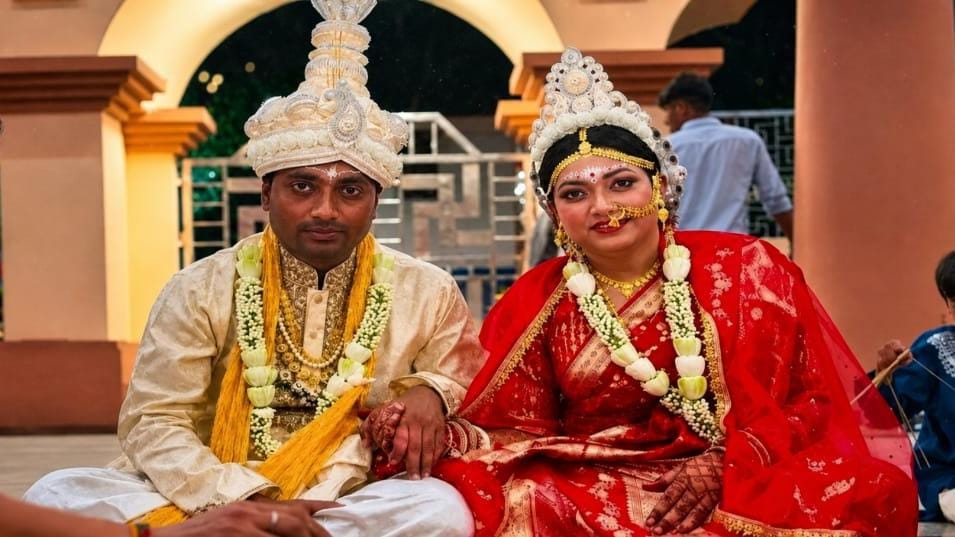
On 10 July, Tasnuva Anan Shishir arrived at Dhakeshwari temple in Dhaka dressed as a bride. She wore vermilion and conch-shell bangles. Priests performed traditional Hindu marriage rituals. The temple received its customary offering. And a woman married the man she loves, in what has been reported as the first transgender marriage in Bangladesh's history.
That is the story. Two people, a ceremony, a temple that has stood since the 12th century. The paperwork was completed. The rituals were observed. By any ordinary measure, a wedding happened.
What came next was something else entirely.
A backlash that couldn't make up its mind
It was weeks before pictures began circulating on social media, and when they did, Bangladesh's response was telling less for its fury than for its confusion. Critics could not settle on which rule the couple had broken. Was this a same-sex marriage? An interfaith violation? A desecration of a sacred national site? The answer, apparently, was all three simultaneously, and the targets of outrage multiplied accordingly: the couple, the temple, the priests, the committee general secretary who confirmed the ceremony had taken place.
A statement signed by over 1,200 people, including clerics and conservative professionals, called it an illegal "same-sex marriage" and demanded investigation and legal action. An anti-LGBTQ activist named the ceremony an "illegal male-male marriage" and asked how it had been permitted at all. The Chakbazar Police Station said it had examined the documents and would act if a formal complaint were filed.
The problem with framing this as a same-sex marriage is not just that it is factually wrong. It is that the label carries specific and serious legal weight in Bangladesh. Section 377 of the Penal Code 1860, inherited from British colonial law and retained after independence, criminalises same-sex sexual activity with a maximum penalty of life imprisonment. Calling Tasnuva's marriage a same-sex union is not a neutral descriptive error; it is an attempt to bring the law down on a woman who has legally changed her name, undergone gender-affirming medical transition, and has lived publicly as herself for years.
Educator and cultural practitioner Oliur Sun said exactly this in a public Facebook post, criticising Bangladeshi media for denying Tasnuva "the right to self-identify even though she has legally changed her name, undergone gender-affirming medical transition and has long lived publicly as a woman." He described the framing as a deliberate amplification of prejudice, writing that the press was "fuelling anti-trans hatred and moral panic" rather than reporting facts. He is right.
Who Tasnuva Anan Shishir is
Tasnuva is not an unknown figure in Bangladesh. She is an actor and a former television news presenter. She has lived and worked publicly, and she has been legally recognised in her identity. She is a woman who wanted to marry the person she loves and went through the proper channels to do it. The temple conducted the ceremony. The groom's identity was not disclosed, presumably because those around them understood the risks.
None of that complexity appears in the outrage directed at the couple. What the critics see is a set of categories being violated at once: Muslim and Hindu, trans and cisgender, bride and groom in a combination they refuse to accept. The person at the centre of all of it, Tasnuva herself, barely appears in the public debate as a human being. She appears as a problem to be resolved.
The wedding was an act of ordinary love, and the response treated it as a constitutional crisis.
The broader picture in Bangladesh
This did not happen in a vacuum. Since 2013, Bangladesh has officially allowed third-gender recognition. Some transgender people entered public life, and a transgender woman was elected mayor of a rural town in 2021. There were real, fragile gains.
Then came the 2024 uprising that ended Sheikh Hasina's government. The political opening it created was not only for democracy. According to reporting by the Global Press Journal, hardline conservative groups moved into the space, and the lives of transgender people in Bangladesh have grown more dangerous since. Bangladeshi model, actor and human rights advocate Maria Kispotta told ThePrint that society needed to catch up with the reality of trans people's lives, though the article I was reading was cut off before her full remarks were included.
What is clear is that Tasnuva's wedding did not take place against a neutral backdrop. It took place at a moment when trans people in Bangladesh are more exposed than they were a few years ago, which makes what she and her husband did considerably braver than it might otherwise appear.
What I keep coming back to
Dhakeshwari temple was founded in the 12th century, destroyed by war, rebuilt, and designated Bangladesh's national temple. It has survived more than most things. The idea that it has been damaged by hosting a wedding, by priests performing rituals for two people who came to be married, is not a serious argument. It is an expression of disgust looking for a respectable vehicle.
The temple committee general secretary denied that any unusual payment had changed hands. The ceremony followed Hindu religious ritual. The paperwork was in order. A woman wore vermilion to marry her husband. The fury this produced says far more about the people producing it than it does about anything that happened at Dhakeshwari on 10 July.
I genuinely hope Tasnuva and her husband are somewhere safe and happy. That they got to have their wedding, that someone did the paperwork and the priests said the words, matters. It is a small, real piece of history, and it belongs to them.
If there is a news story you would like me to cover then just let Sammy know.
Dr Helen Webberley is a gender specialist, medical educator, and advocate for trans rights and gender diversity.
Comments