
No openly transgender woman has ever played in the WNBA, and none is scheduled to. The controversy gripping the league in 2026 is not about a real eligibility crisis but a manufactured political storm, driven by bad-faith declarations from former NBA players and amplified by the White House, in a league where the actual question of trans inclusion has never once come up in practice.
What is actually happening here
The BBC's explainer frames this as a debate "on both sides of the argument." But there is no argument in the sense the framing implies. One side is responding to something that exists. The other is responding to something that does not.
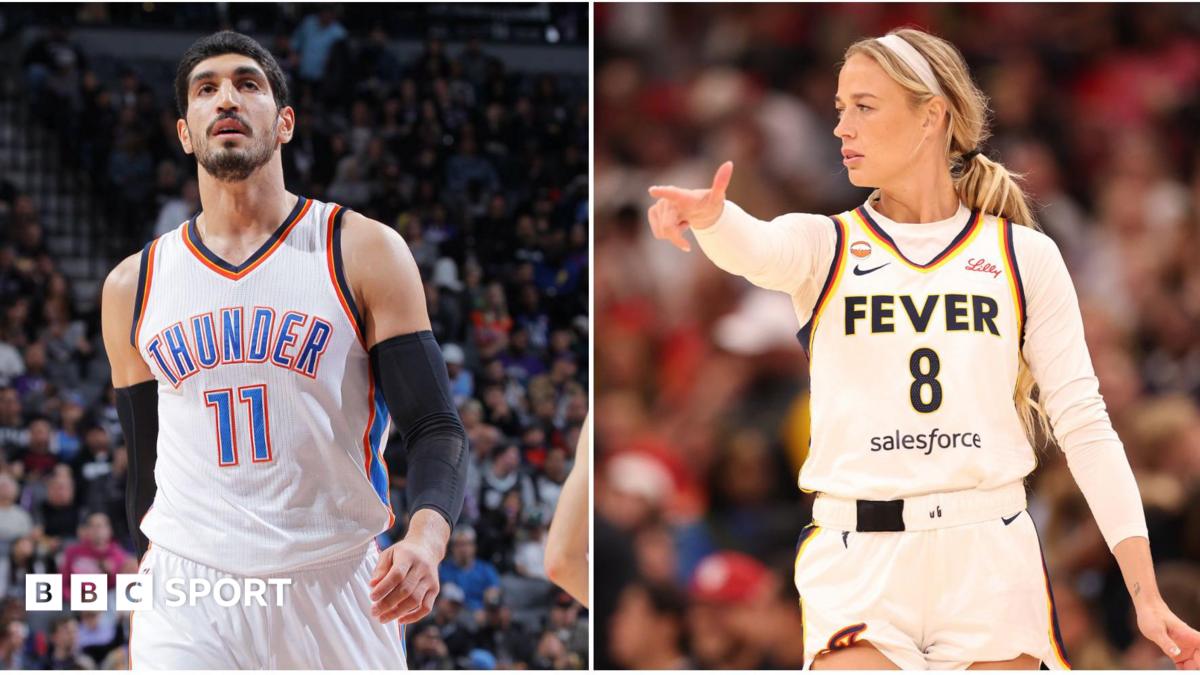
Enes Kanter Freedom, who retired from professional basketball in 2022, announced he was declaring himself a WNBA prospect. Royce White, a Republican Senate candidate who appeared in three NBA games, said he "identifies as sometimes identifying as a woman for purpose of basketball." These are not sincere declarations of gender identity. They are stunts. And the BBC, to its credit, notes the lack of "grand scale" to the protests and acknowledges the striking fact that the debate consumed a league in which no trans woman plays, has ever played, or is due to play. But naming that irony once and then continuing to report the stunt as newsworthy sports controversy is itself a choice about what gets treated as real.
Sophie Cunningham, playing her eighth WNBA season, said she wanted to protect "young girls in a locker room, or young girls in sport who shouldn't have to go against biological men." Donald Trump called her comments supportive. JD Vance called her inspiring. And so a basketball player's interview became a White House talking point, which became protests at games, which became a league-wide distraction from one of the most competitive WNBA seasons in the sport's history.
What the evidence actually shows about performance
Here is what a neutral explainer tends not to include. The scientific picture on trans women in elite sport is genuinely complex, contested, and evolving, but the honest summary is this: trans women who transition after male puberty do retain some measurable physiological differences in certain sports, for certain periods, under certain conditions. That is real, and it matters for how sports governing bodies set rules. But "some measurable differences in some contexts" is not the same as "dominant, unfair, and universal." The data on actual performance outcomes in competitive settings is thin, because the number of trans women competing at elite level has always been vanishingly small. You cannot build a crisis around an evidence base that barely exists.
What the governing bodies that have implemented bans are responding to is mostly theoretical. Athletics, swimming, and cycling have moved to outright bans not because trans women were winning everything or even most things, but because the political pressure to act became harder to resist than the scientific uncertainty. The International Olympic Committee's announced "once-in-a-lifetime sex test" for the 2028 LA Games catches not only trans women but athletes with differences in sexual development, people whose bodies do not fit neat binary categories and never did. That is not a precision instrument; it is a blunt one, applied to an imagined problem.
Cheryl Reeve, the Minnesota Lynx head coach, put it better than any policy document when she said: "The narrative that I think is problematic is to suggest that transgender athletes are the biggest problem in women's sports." She is right. The biggest problems in women's sports are pay equity, media coverage, investment, facilities, and the structural undervaluing of women's athletic achievement that has persisted for decades. A debate about hypothetical trans players in a league with zero trans players is not a contribution to solving those problems. It is a distraction from them.
Who is being harmed by the noise
The WNBA players whose season is being overshadowed did not create this situation. Even Cunningham has said she wants to "get back to basketball." The players' association, which did not name Cunningham directly, was clear that it would not be "used as political pawns." That statement deserves more attention than it got.
But beyond the court, the people most harmed by this kind of sustained public argument are trans people themselves, especially young ones, who watch every news cycle reinforce the idea that their existence in public life is a problem to be managed, a threat to be contained, a debate to be had. There is no openly trans woman in the WNBA, and trans girls and young women are still absorbing the message that sport is not for them, that their bodies are suspect, that their presence requires justification.
I have spent years listening to trans young people describe what it feels like to be the subject of conversations in which they are never quite allowed to be the person in the room. This is one of those conversations, scaled up to a national stage, with a former president weighing in and protests organised at games. The scale of the response to the absence of a problem tells you exactly what this is really about.
What fair rules actually require
The WNBA's eligibility criteria says: "Only players who are women are eligible to play in the WNBA." Trans women are women. That is not a vague oversight. It is accurate. The question of how to assess hormonal eligibility for specific sports at elite level is a legitimate technical and scientific question, and different sports have come to different conclusions. But "trans women are women" is not a technical question. It is a factual one.
Kanter Freedom's claim that if "simply declaring who you are is all that's required" he meets the criteria is not a good-faith engagement with how gender identity works. It is a performance, designed to generate exactly the kind of coverage it received. No sporting body uses self-declaration alone as its eligibility standard. No serious person is proposing one. The argument is a strawman, and amplifying it as though it represents a genuine legal and competitive risk to women's basketball is a disservice to the sport and to the people who play it.
Gabby Williams of the Golden State Valkyries said she would welcome a transgender athlete "on my team or against my team, any time." That is worth noting not as a political statement, but as the view of a professional athlete who has actually thought about who she plays with and what she values. The people closest to the game are often the ones least captured by the panic around it.
If there is a news story you would like me to cover then just let Sammy know.
Dr Helen Webberley is a Gender Specialist, Medical Educator, and founder of GenderGP. She writes about gender diversity, trans healthcare, and the lives of trans people and their families.
Comments