
The BBC edited out the 'Protect the Dolls' trans rights slogan from actor Bethany Antonia's T-shirt in Strictly Come Dancing rehearsal footage, calling it standard practice for overt branding. But blurring a message of solidarity with trans women while leaving countless other cultural signals untouched is not neutral. It is a choice, and choices have meanings.
What actually happened?
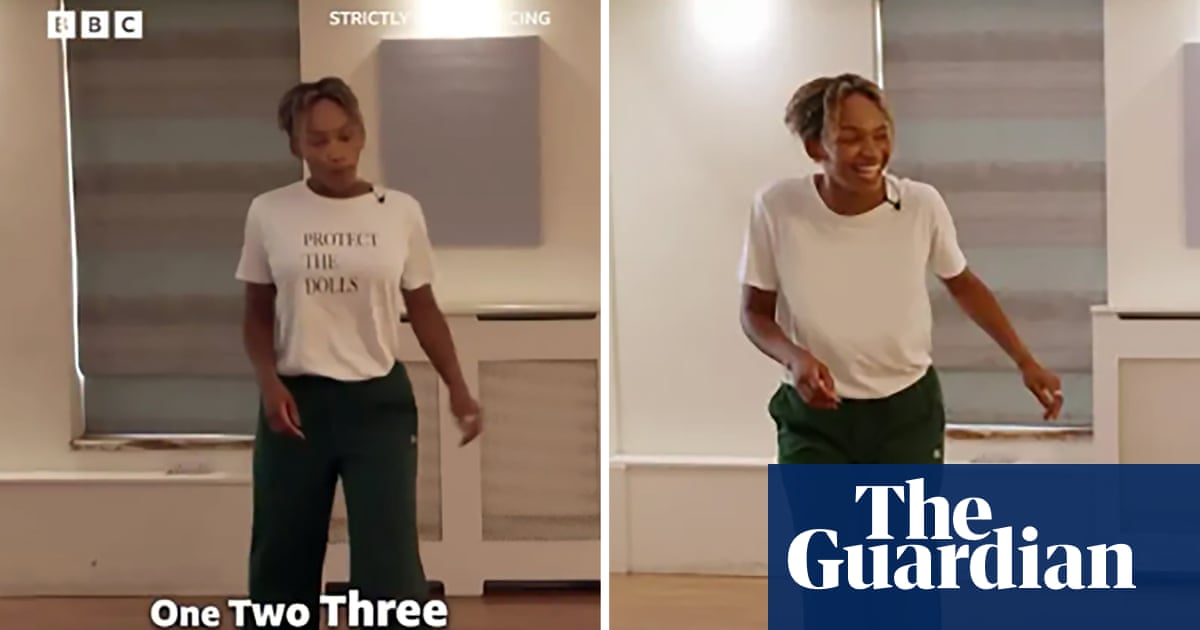
Bethany Antonia, who many will know from House of the Dragon, was filmed training with her professional partner Nancy Xu in a white T-shirt bearing the words "Protect the Dolls." A social media clip the BBC posted showed the slogan clearly. Then Saturday's show aired, and the same rehearsal footage appeared with the T-shirt looking plain white, the words gone. The same edited version sits on iPlayer.
The T-shirt is designed by Conner Ives. Proceeds go to Not A Phase, a UK charity supporting trans people. Pedro Pascal has worn it. Tilda Swinton has worn it. Troye Sivan has worn it. It is not an obscure or ambiguous item. It is a straightforward, visible act of standing with trans women.
The BBC's response was a single line of standard corporate language: edits are made to reduce the inclusion of overt branding or slogans, regardless of the wording or statement in question. Standard practice. Nothing to see here.
The 'standard practice' defence does not hold
I want to take that defence seriously for a moment, because it deserves examination rather than dismissal. The BBC has a genuine obligation to impartiality. It has blurred political slogans before. In 2017, during a pre-election period with strict broadcasting rules, a Jeremy Corbyn slogan on a T-shirt was blurred during a One Love Manchester clip. The rules that applied there are specific and time-limited. And in 2024, the words "Trans Rights Are Human Rights" on Kaiser Chiefs' Ricky Wilson's T-shirt appeared to have been blurred on Michael McIntyre's Big Show.
So there is a pattern here. And it is not a pattern of consistent impartiality. It is a pattern of trans rights messages in particular being treated as something requiring erasure.
Ask yourself the question the BBC's spokesperson did not answer: would a poppy be blurred? A rainbow flag during Pride month? A charity ribbon? A St George's cross? The answer, and we all know it, is no. Those symbols carry enormous cultural and political weight, and they pass through BBC broadcasts without anyone reaching for the blur tool. The poppy carries a view about sacrifice and remembrance. The rainbow flag carries a view about whose love is worth celebrating. Nobody edits those out in the name of impartiality.
The moment you apply the rule selectively, you have already taken a side. Calling it standard practice does not change that.
What 'Protect the Dolls' means, and why it matters
"Protect the Dolls" is a phrase of love and solidarity with trans women, particularly trans women of colour. It says: these people are here, they are beautiful, and they deserve to be safe. That is the message the BBC decided to erase from a Saturday night entertainment show.
Not a political party. Not a campaign for a specific piece of legislation. Not a commercial brand. A message of solidarity with a group of people who, in the current climate, are experiencing a sustained and very public campaign of hostility. The charity that benefits from sales of that T-shirt exists because trans people need support that public services are failing to provide.
Bethany Antonia chose to wear it. She has not commented publicly on the BBC's decision, and I am not going to speak for her. But the people who saw that social media clip and then watched Saturday's show will have noticed. Trans viewers will have noticed. The message sent to them is not a complicated one: your solidarity is acceptable on social media, but not on the main show.
This is what casual erasure looks like
I do not think anyone at the BBC sat in a room and decided to send a hostile message to trans people. That is almost certainly not what happened. What probably happened is exactly what the spokesperson described: a routine editorial decision, made quickly, by someone following a guideline, with no particular awareness of what that decision would communicate.
That is the problem. Casual erasure does not require malice. It requires only a set of rules applied without thought about who bears the cost of them. When the rule is "no slogans," but the rule in practice means "no trans solidarity," and nobody notices, and the edit goes out, and the spokesperson defends it as standard practice, the cumulative effect on trans people watching is not neutral. It is one more signal that their causes do not count as real causes, that their solidarity is political in a way that other people's solidarity is not, that they are still, somehow, the exception to be managed rather than people to be seen.
Bethany Antonia wore that T-shirt in rehearsals because she wanted to. The BBC decided her viewers should not see it. I think she deserved better than that, and I think the trans people who would have seen those words on a mainstream Saturday night show deserved better too.
Comments