
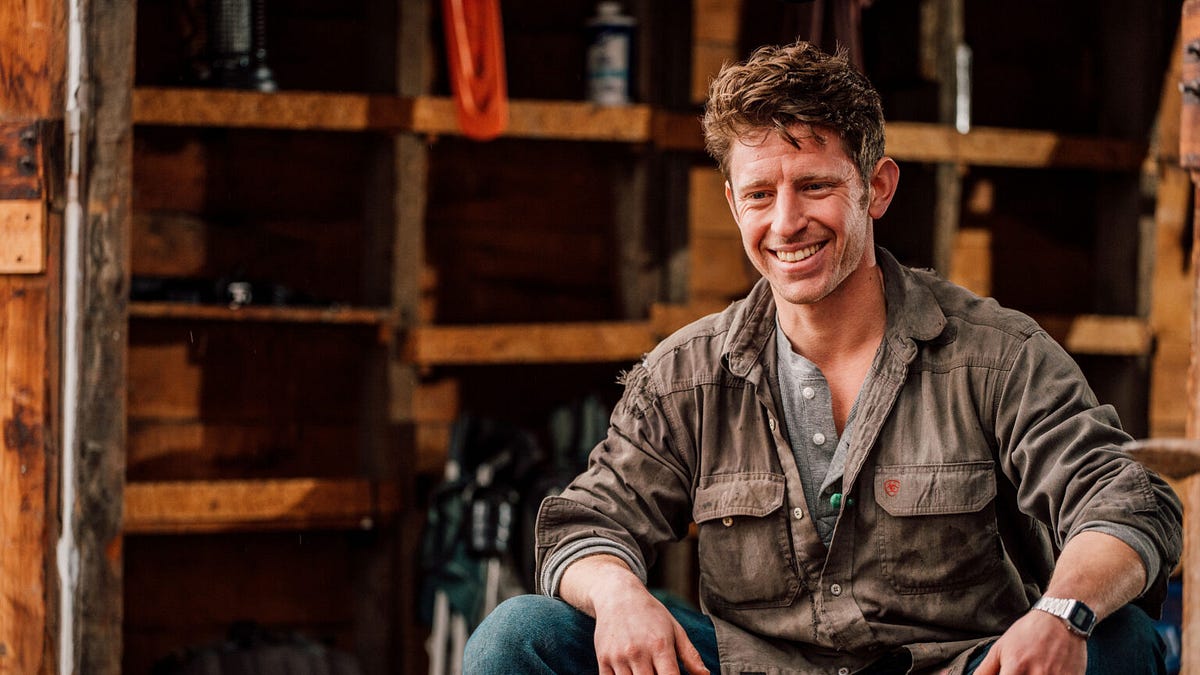
Sam Forstag, the Democratic candidate in Montana's fiercely competitive 1st Congressional District, refused to throw trans people under the bus during a live debate, insisting that government has no business in personal medical decisions. In a race Trump won by 11 points, his answer is a direct challenge to the Democratic playbook that treats trans rights as a liability.
What actually happened in the debate
The moderator put the question plainly: does Forstag consider gender identity a protected classification under the 14th Amendment? It's the kind of question that has sent other Democratic candidates scrambling for cover. In Ohio, Marcy Kaptur ran an ad boasting about her vote to keep "transgender ideology" out of schools. In Iowa, Josh Turek pledged to support a federal funding ban on gender-affirming care. The pressure to distance yourself, to signal that you are not one of those Democrats, is real and well-organised.
Forstag didn't do any of that. He talked about dignity, about Montana's own state constitution, about the simple principle that politicians have no business in a doctor's office. And then he said the quiet part out loud: the anger and the rhetoric, he told his opponent, is "singing and dancing while they pick our pockets."
His opponent, Aaron Flint, is a talk radio host with a long record of anti-trans commentary. Flint's response to the moderator's question was about "not touching children" and "chopping off body parts." Forstag's response was to point out that Flint has no actual solutions for working people and is in the pocket of AI companies and data centres. The contrast was stark, and it was deliberate.
Why this race matters so much
Montana's 1st is not a safe seat. Cook Political Report moved it from Likely Republican to Lean Republican, and public polling has put it in a dead heat. This is a district that went to Trump by 11 points. Forstag knows that. He campaigned alongside Alexandria Ocasio-Cortez in Missoula during his primary, which tells you something about how he reads the politics of his own state. He is not pretending to be someone he isn't in order to win.
His background as a smokejumper, fighting wildfires, gives him real credibility in a state that has watched forests burn. He is running as a full person with a genuine record, not as a carefully curated set of calculated distances from anything that might upset someone. And within that, he has chosen not to sacrifice trans people on the altar of electability.
What it looks like to treat trans rights as non-negotiable
Representative Zooey Zephyr, a trans state legislator who lives in Forstag's district, said it well: if a congressional candidate in western Montana can stand up for trans people in one of the most competitive House races in the country, then Democrats everywhere should take note.
I think that's right, and I want to say why. The argument made by organisations like Searchlight, which has been actively advising Democrats to distance themselves from trans rights, is that the maths don't work: that being seen to support trans people costs you more votes than it wins. Forstag's campaign is a live test of that theory. But even setting aside the electoral calculation, there is something else worth naming. The candidates who have chosen to run anti-trans ads or pledge to restrict gender-affirming care are not just making a tactical decision. They are making a moral one. They are telling trans people in their districts: your dignity is negotiable. Forstag is making the opposite case.
His framing is smart, too. He is not making a long speech about the history of trans rights or the evidence base for gender-affirming care. He is talking about government overreach, personal freedom, and the right of patients and parents to make their own decisions. That is language that resonates in Montana. And he is connecting his opponent's anti-trans rhetoric directly to a failure to address what working people actually need. The culture war, he is saying, is the distraction. That is a coherent political argument, not just a principled stand.
What happens if he wins
If Forstag wins this seat, the argument that trans rights are an electoral liability in competitive districts takes a serious hit. That matters, because the argument has been doing real damage. It has given cover to Democrats who want to move right on this, and it has left trans people watching their own party treat them as a problem to be managed rather than constituents to be represented.
A win in Montana's 1st would not settle the question permanently, and one race never does. But it would give something concrete to point to. It would make it harder for the next candidate to say: we had no choice.
I hope he wins. I hope he wins because trans people in Montana deserve a representative who will not trade their dignity for a poll number. And I hope he wins because it would prove, in the most competitive of environments, that you can stand with trans people and still take the seat.
If there is a news story you would like me to cover then just let Sammy know.
Dr Helen Webberley is a Gender Specialist, Medical Educator, and advocate for trans rights and gender diversity.
Comments