
Bentley Hudgins has become the first openly transgender member of the Georgia House of Representatives, winning House District 90 with 92.5% of the vote. They did it against a backdrop of more than $180 million in Republican anti-trans advertising across the country. Now they are in office, and they have work to do.
A night worth remembering
When I read about nights like this one, I think about all the trans people in Georgia who woke up the next morning and felt, perhaps for the first time in a while, that the state they live in had made room for them. That is not a small thing. Politics can feel abstract, but representation is not abstract at all. It is the difference between being spoken about and being spoken for.
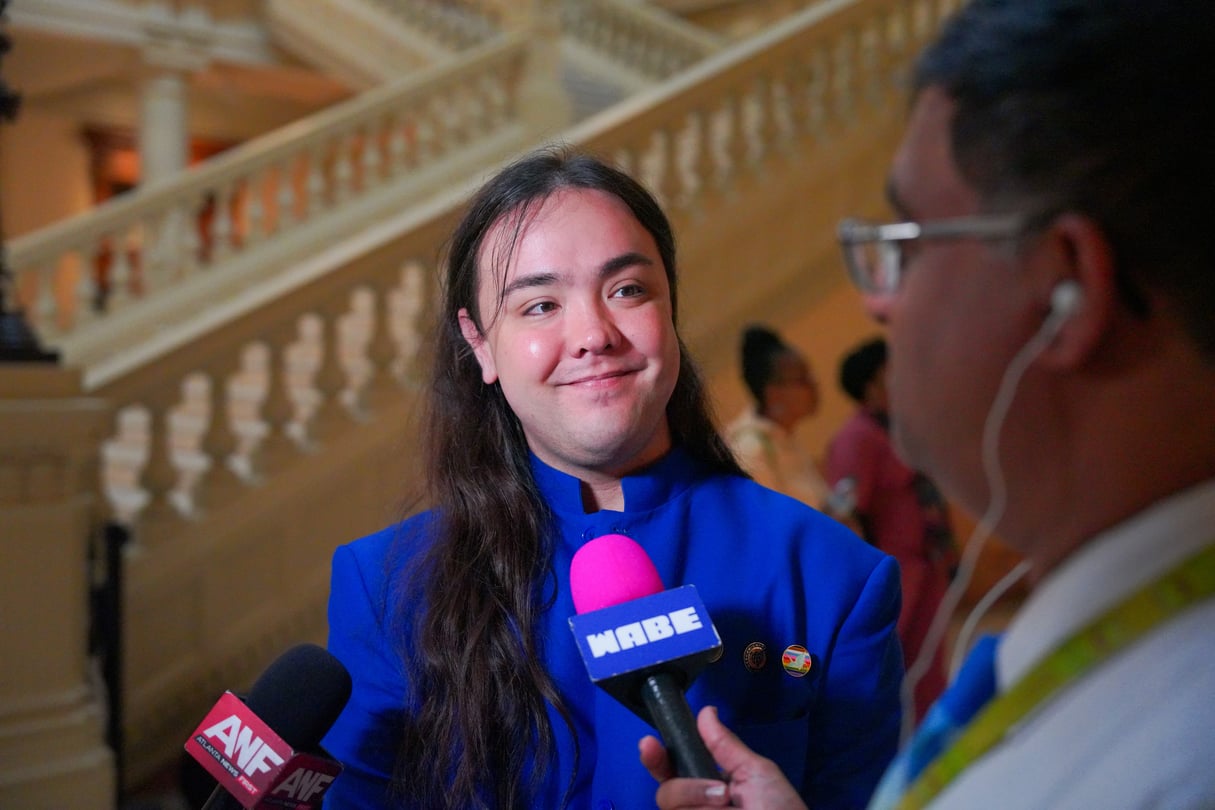
Bentley, who uses they/them pronouns, was at the Capitol on Wednesday celebrating a win that was historic by any measure. They will represent a DeKalb County district covering parts of Druid Hills, Candler Park and Panthersville, succeeding Democratic Rep. Saira Draper, who chose not to seek reelection. And they arrived there with a mandate: 92.5% of the vote.
That figure is striking. It tells you something about the community Bentley will serve, and something about Bentley themselves. This was not a narrow squeaker. The people of House District 90 sent them decisively.
What the ads were trying to do
It is worth pausing on that $180 million figure, because it is staggering. According to an Associated Press report drawing on data from AdImpact, Republicans spent more than $180 million on television attack ads targeting transgender people through late October. That is not a footnote. That is a coordinated, lavishly funded campaign to make trans people frightening to voters, to use trans lives as a political weapon.
And in Georgia, those ads ran. Bentley faced them. And then Bentley won anyway.
What that tells me is that when trans people are visible, when they are known to their neighbours, when they can point to real relationships and real community rather than the caricature on the television screen, the caricature loses. That is not guaranteed everywhere, and I do not want to be naive about how hard the fights ahead will be. But it happened here, and it matters.
What Bentley said, and why it landed
The quote that stayed with me was this one: "At the end of the day, LGBTQ+ people are Georgians. We want to sit at a kitchen table in a house we're not sweating whether we can pay rent. And just like everybody else, we want to get access to healthcare when we need it."
That is not a campaign speech, but somebody telling the truth about their life and their community. The kitchen table. The rent. The healthcare. These are the things that organise most people's days, and Bentley named them without hedging or performing. That is exactly the kind of voice that belongs in a statehouse.
Jeff Graham, executive director of Georgia Equality, described Bentley as already a seasoned advocate with lived experience that will be an asset in the legislature. That is true, and it is also an understatement. Bentley served as Georgia state director for the Human Rights Campaign from October 2023 until June this year, leading statewide legislative and electoral priorities. They did not arrive at this moment unprepared.
The agenda
With Democrats likely to take control of the Georgia House, Bentley told WABE they are looking forward to working with the incoming leadership. Their priorities are concrete: expanding healthcare access, protecting same-sex couples, pushing for surrogacy laws, and working to repeal Georgia's Religious Freedom Restoration Act, which advocates argue has been used as a legal cover for discriminating against LGBTQ+ people.
None of that will be easy, even with a Democratic House. Georgia is not Massachusetts. The political terrain is contested, the opposition is organised, and the appetite for trans-inclusive reform is not universal even within the coalition Bentley will be working alongside. I say that not to dampen the moment but because Bentley knows it, and I think their supporters deserve to know it too. Historic wins do not automatically translate into legislative victories.
What they do translate into is presence. Access. The ability to be in the room when decisions are made. Bentley compared this moment to the political climate when Karla Drenner became the first openly gay member of the Georgia legislature in 2000, when same-sex marriage was still illegal. The echo is intentional. Progress from that moment to this one was real, and it was not inevitable.
A prayer to their neighbours
Bentley's closing words to WABE were these: "It is a little bit of a prayer to our neighbors that no matter who you are, what you look like, where you come from, who you love, and how you choose to live your life, that you are welcome at the state Capitol."
A prayer. I find that word choice genuinely moving. Not a demand, not a declaration of victory, but a prayer. An offering to the community they now serve, including the people who did not vote for them, including the people who may not yet believe them. That is the disposition of someone who wants to govern, not just to win.
Georgia is exactly where this kind of moment matters most. Not because it was expected, but because it was not. Trans people exist everywhere, and they always have: in rural Georgia and in Atlanta, in purple districts and red ones, at kitchen tables all across the state. Bentley Hudgins will now be in the room where some of the decisions affecting those lives get made.
That is worth celebrating. And it is worth watching.
If there is a news story you would like me to cover then just let Sammy know.
Dr Helen Webberley is a Gender Specialist, Medical Educator, and advocate for trans rights and gender diversity.
Comments