
US transgender rights have been unravelled by a deliberate political strategy, not a spontaneous shift in public opinion. Conservative think tanks identified trans rights as an electorally useful issue, funded state-level legislation, and built a media machine to normalise hostility. Understanding the mechanics of that playbook is what makes it possible to push back.
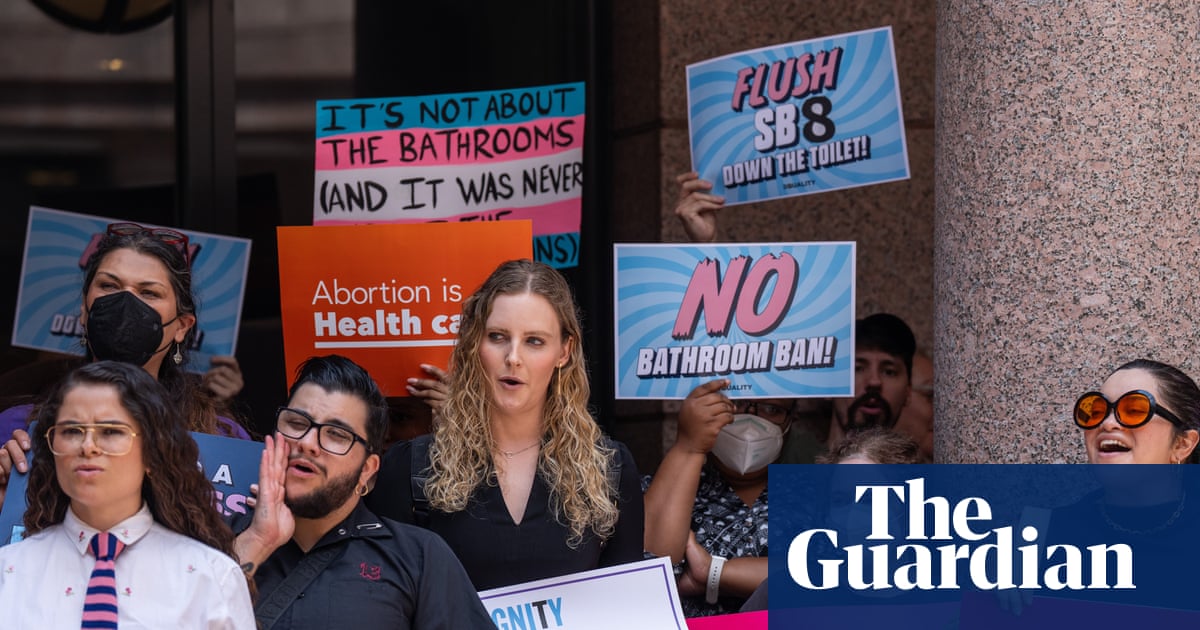
I keep coming back to the moment Shelby Chestnut described in this Guardian piece. It's 2016, and attorney general Loretta Lynch is addressing transgender Americans directly on national television: "No matter how isolated or scared you may feel today, the Department of Justice and the entire Obama administration wants you to know that we see you; we stand with you." The North Carolina bathroom bill was repealed within the year. Chestnut, who now leads the Transgender Law Center, thought: "Oh, this is the next phase of protections for trans people."
He was right that it was a turning point. He just couldn't have known which direction.
What actually happened between then and now
In 2016, almost 200 corporate leaders called for the repeal of HB2. The NCAA pulled seven March Madness games from North Carolina. The economic and cultural pressure was overwhelming, and it worked. Fast forward to this year: Kansas and Idaho have both passed bathroom bills without anything like the same outcry. In Idaho, using the wrong bathroom is now a misdemeanour for a first offence and a felony, carrying up to five years in prison, for a second. Five years in prison for using the bathroom.
How did we get from there to here? The Guardian's reporting names the mechanism clearly, and I think it deserves to be followed carefully rather than summarised away. After the 2022 midterms failed to produce the expected Republican wave, the American Principles Project, a conservative think tank, conducted research into what might have worked better. One of its major findings: voters across demographics in battleground states tended to support Republican positions on transgender issues. The conclusion the organisation drew was that trans rights could be a highly successful political issue, and what followed was a funding and coordination effort that shaped legislation across dozens of states.
This is the playbook. It was not built on genuine public revulsion at trans existence. It was built on polling data and strategic calculation. Trans people were identified as a group whose rights could be attacked with relatively low political cost and significant electoral upside. That is a chilling thing to write, and it is what the evidence shows.
The pendulum that only swings one way
What strikes me reading the history laid out here is how the same legal ground kept being crossed and recrossed. The Obama administration extended anti-discrimination protections to trans people in healthcare, in schools, in the military. Trump's first term withdrew those protections. Biden reinstated them. And during the Biden years, while the administration was swinging the federal pendulum back, the states moved so fast and so far that the pendulum became almost irrelevant. By 2024, 26 states had banned trans students from school sports. Twenty-seven states had restricted access to gender-affirming care for young people, despite every major US medical association supporting that care as best practice.
Federal protection, it turns out, is easier to remove than state legislation is to repeal. Executive orders go with the administration. Laws stay until courts overturn them, and courts take years. The strategy was not accidental.
The media machine that made hostility feel normal
The article mentions that Fox News aired at least 130 segments in a single summer about the possibility of trans women playing in the WNBA, a league in which no trans women have ever played. I want to pause on that. One hundred and thirty segments about something that has not happened. That is not journalism; it is the deliberate manufacturing of a threat, repeated until viewers feel the threat is real, repeated until trans women become something to be afraid of rather than people trying to live their lives. Riley Gaines built an entire public career on the same premise.
Meanwhile, books featuring trans characters are banned from school libraries. A trans storyline was erased from a Pixar series before the show even aired. The cumulative effect is to make trans lives invisible in one direction and monstrous in another, depending on which serves the moment.
What understanding the playbook actually changes
Shelby Chestnut and the Transgender Law Center saw some of this coming. They convened a coalition after Trump's first term began, built around litigation and advocacy, grounded in the recognition that the tide was turning. That foresight has mattered. The cases being fought in court now, against bathroom bans and care restrictions and sports bans, are grounded in years of preparation.
But the reason I think this piece from the Guardian matters, beyond the documentation it provides, is that it names the playbook as a playbook. The hostility trans people face in the United States right now did not arise because society decided it was wrong to be trans. It arose because a network of organisations decided that attacking trans people was electorally useful, funded the effort, coordinated the messaging, and watched the legislation follow. That is a different problem from a cultural shift in values, and it has a different answer.
The answer is not to endlessly defend trans existence to people who have been told to see it as a threat. It is to name, clearly and repeatedly, what actually happened: who built this, what they built it for, and what it has cost the trans people, particularly the young ones, caught in the machinery.
Trans people are not a political issue. They are people, with lives and families and jobs and relationships and futures. The fact that some organisations decided those lives were useful ammunition is something we should all be clear-eyed about, and furious on behalf of.
If there is a news story you would like me to cover then just let Sammy know.
Dr Helen Webberley is a Gender Specialist, Medical Educator, and advocate for trans rights and gender diversity.
Comments