
Australia's Press Council has ruled that six News Corp papers breached its standards by publishing a headline calling a school shooter a 'transgender dropout'. With no established link between the shooter's trans identity and the killings, the Council found the references unfair, prejudicial, and in breach of two of its core principles.
What the headline actually said
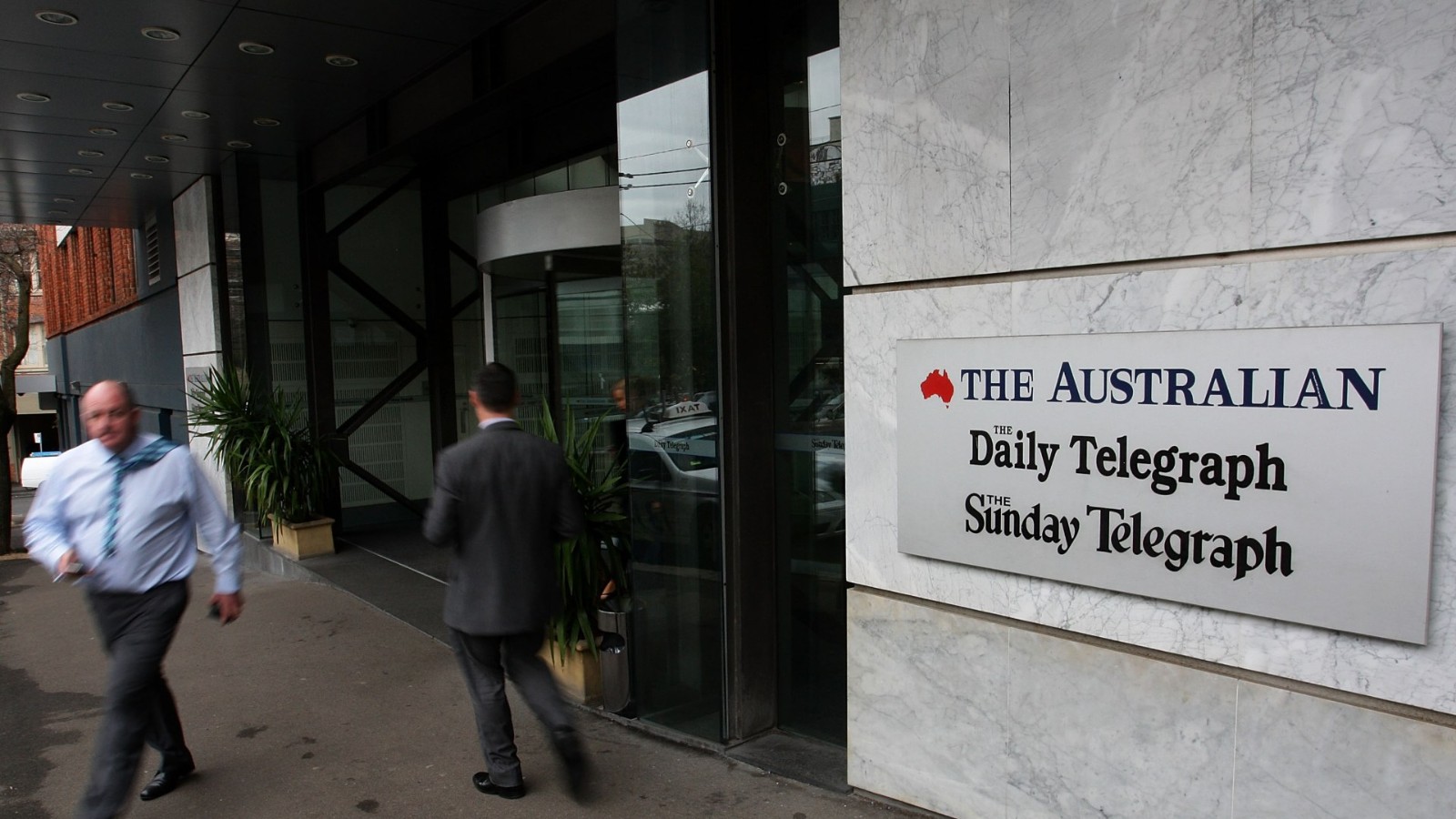
On 13 February, six News Corp Australia papers, among them the Daily Telegraph, the Herald Sun, and the Courier-Mail, ran a print headline that read: "Canada school shooter a transgender dropout." Eight people had been killed in Tumbler Ridge, British Columbia, a town of about 2,700 people, six of them inside the local secondary school. The suspected shooter was found dead from what appeared to be a self-inflicted injury.
It was a devastating story. A community had been torn apart overnight. And somehow, the editorial decision in Sydney and Melbourne was to reach for a word that told the reader nothing about why it happened, and implied everything.
Why the Council ruled against the papers
The Press Council acknowledged that reporting on a mass shooting is a matter of legitimate public interest, and that the shooter's trans status had been confirmed at a police press conference. But confirmation is not the same as relevance. The Council found that the prominence given to that detail "could lead some readers to conclude that this characteristic was either a cause of, or a significant factor in, the shootings," and that it "could contribute to substantial prejudice against transgender people."
That is not an abstract concern. When a headline places a person's trans identity next to the word "shooter," it is doing something to every trans person who reads it, and to every person who reads it and knows a trans person, and to every person who does not know any trans people at all. It plants an association. It suggests a connection. And it does that work in the fraction of a second it takes to scan a front page, long before any reader reaches whatever caveats might be buried further down the article.
The Council's own 2023 advisory guideline on reporting about people with diverse sexual orientation and gender identity is clear on this: such references "should be relevant to a story and in the public interest," and particular care must be given to headlines, precisely because many readers never get further than them.
How the papers defended themselves
The papers' response, as summarised by the Council, is worth looking at carefully. They argued that it is a publisher's responsibility to communicate facts clearly. They noted that the article had used they/them pronouns for the shooter, and said this "deserves some explanation as the subject is transgender not binary." They pointed out that no motive had been established. And they suggested that the shooter's childhood transition might help explain mental health problems, not because they were transgender, they said, but because of the likely isolation involved in transitioning.
That last argument is worth pausing on. The papers were not arguing that being trans caused the shooting. They were arguing that the social difficulties of being trans might have contributed to mental health struggles that might have contributed to the violence. And they apparently felt that was a distinction that cleared them of any responsibility for the headline they chose.
The Council disagreed. So do I.
The damage arrives before the ruling does
The adjudication was published on 6 November. The headline ran on 13 February. That is nearly nine months during which the association between trans identity and mass violence sat on the front pages of six Australian newspapers, unremarked upon and uncorrected in any official sense.
This is the structural problem with press regulation as it currently operates. The Council has no power to fine anyone, cannot order compensation, and cannot unpublish a headline. What it can do is require the papers to publish the ruling, with specific requirements about date, page, and positioning. That matters as a record. It matters as a statement of principle. But it cannot reach back to February and undo what was done to the trans community in those first hours and days.
This was not the first time the Council has had to make this call. In June, it found the same two principles had been breached by a Daily Mail Australia headline that called a woman "trans" with no clear relevance to the story being reported. Daily Mail Australia said the word had been included inadvertently, that the headline had already been amended, and that the paper was prepared to undertake further training. The pattern is becoming familiar: the headline runs, the harm is done, the complaint is lodged, the ruling arrives months later, the paper expresses some version of regret, and then the whole cycle is available to repeat.
What this costs trans people
People tell me, again and again, that one of the most exhausting things about being trans is watching yourself used as a shorthand. As a signal. As an explanation for things that have nothing to do with who you are. A person's trans identity becomes the detail editors reach for when they want to suggest something is strange, or troubled, or dangerous, even when the evidence for any such connection is entirely absent.
Trans people did not make this editorial choice. They did not write this headline. They did not decide that their existence was the most salient fact about a mass shooting in British Columbia. And yet they are the ones who absorb the consequences: the sideways looks, the assumptions, the thickening of a cultural atmosphere that is already hostile enough.
The Australian Press Council has now said, clearly and in writing, that what those six papers did was unfair and likely to cause substantial prejudice. That is a meaningful thing to have on the record. I hope the editors who made those decisions read the ruling carefully. I hope their readers see it too.
If there is a news story you would like me to cover then just let Sammy know.
Dr Helen Webberley is a Gender Specialist, Medical Educator, writer, and advocate, and the founder of GenderGP.
Comments