
Caitlin Clark has every right not to perform a political position on demand. But when the most famous player in women's basketball declines to say that trans girls and women belong in sport, the silence lands differently to a trans teenager wondering whether she has a place in the game she loves.
What actually happened
Clark's Indiana Fever teammate Sophie Cunningham had said, in an interview, that young girls "shouldn't have to go against biological men" and argued for what she framed as protection for female athletes. The comments sparked protests outside three consecutive road games, in Seattle, Portland, and Minneapolis. Cunningham was booed. Minnesota coach Cheryl Reeve wore a "Trans kids belong" shirt on the sideline. Other players added their voices in various directions.
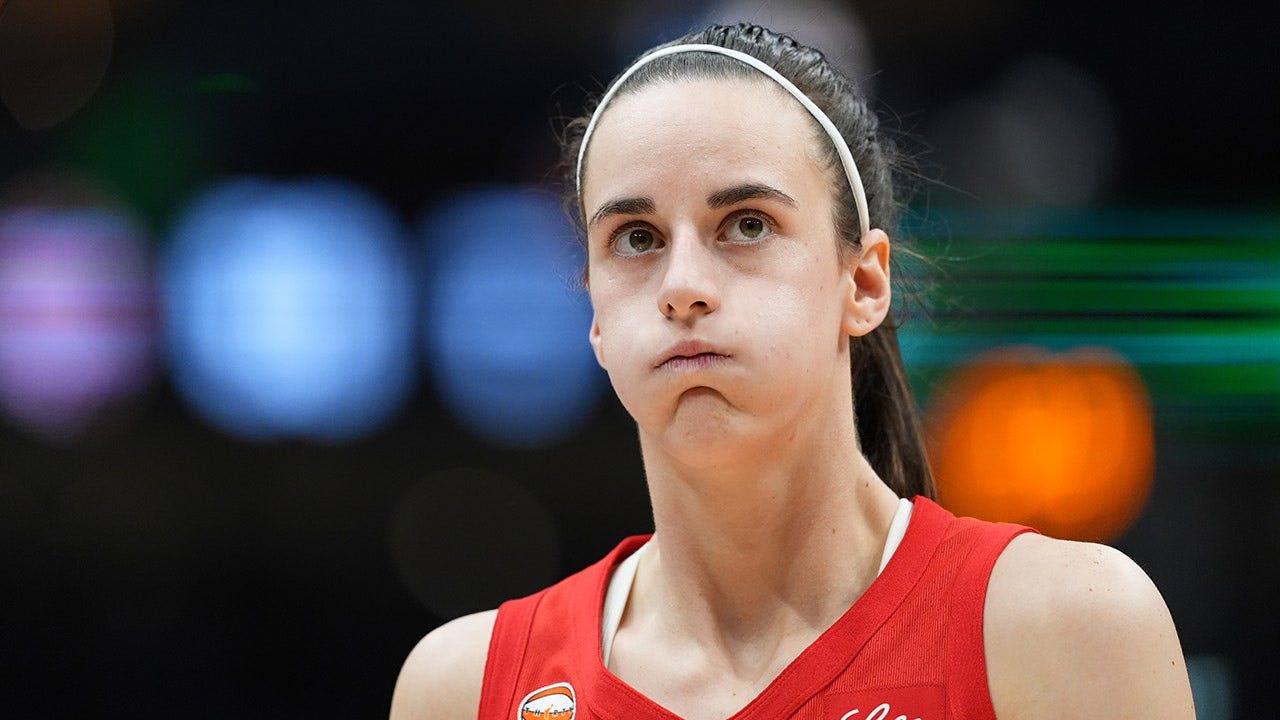
Clark, the biggest name in the sport by some distance, said nothing for two games. The Fever kept her away from the postgame podium after both. When a reporter tried to ask Clark's teammates about the controversy, a Fever PR representative shut the press conference down mid-question.
Then, after the Fever's loss to the Lynx, Clark appeared at the podium and delivered this: "I think it's for leagues and governing bodies to work with their athletes to find solutions. Our focus is on basketball."
When pressed, she said: "I just answered."
She had every right to say that
I want to be fair to her here, because the Fox News piece framing this story is not. The article frames Clark's answer as a failure, a carefully crafted dodge that left "everyone wanting more." It implies she owed both sides a declaration. She did not.
Nobody is entitled to a public figure's opinion on a contested political question simply because they shout the question loudly enough. Clark is a professional athlete in the middle of a season, not a politician, not an advocate, and not a spokesperson for anyone's cause. The pressure put on her, from all directions, to produce the right take on demand is itself worth noticing. The Fever's PR team running interference before she was ready was not suspicious management of a guilty party: it was a team trying to give a young woman time before she had to speak into a camera about something far bigger than a basketball game.
"Our focus is on basketball" is not nothing. It is a considered refusal to be conscripted into a culture war that has been specifically aimed at her sport. The framing in the Fox News piece, that the WNBA "encouraged players and coaches to make social and political statements" and Clark alone "decided not to play along," is designed to make her silence look like cowardice. It reads instead like someone who has thought carefully about what she can and cannot control. That is a reasonable thing for her to do. It is not the same as the question being open, though, and nobody should read her caution as evidence that it is. Whether trans girls belong in the game is not a matter on which the people who study this are still gathering evidence.
What the Fox News framing gets wrong
The article is by a reporter from OutKick, a sports media outlet with a clear editorial line on trans issues. The piece describes trans women and girls throughout as "biological males who identify as girls or women," which is dehumanising, inaccurate, and not a neutral framing. It frames Cunningham's position as "protecting women's sports" while framing Reeve's shirt as a statement from the other "side." That is not balance: it is one side describing itself as the default.
Trans girls and women are not a controversy. They are people. The "controversy" is whether they are allowed to exist in public life, including in sport, and that is a question with a human answer, not a procedural one that leagues and governing bodies will tidy away.
When the piece says "groups fighting to keep women's sports female," it is borrowing a framing that treats trans women as not-women. Sophie Cunningham's position, as reported, rests on that assumption. Reeve's shirt rejects it. Clark chose not to say which she holds. That is her right. But describing those as equivalent "sides" in a symmetrical debate is not journalism: it is taking a position while appearing not to.
What the silence costs
None of this is Clark's fault. The pressure on her is unfair. The framing around it is worse. And yet.
There is a trans girl somewhere who plays basketball, or wants to, who watched all of this unfold. She watched a teammate of the sport's biggest star go on record to say she should not be there. She watched protests outside arenas. She watched the game's most famous player decline to say she belongs. She is not reading the tactical reasoning. She is reading the room.
I hear from trans young people regularly, and what they describe is not a neutral absence of support: silence from people with power reads as permission for exclusion. It does not feel like someone staying out of it. It feels like the biggest person in the room looking away.
Cheryl Reeve chose differently. She put on a shirt that said three words: "Trans kids belong." That is not a complicated political statement. It is an acknowledgement that trans children are real, and that they deserve a place in the game. Reeve is not the biggest name in this story. But those three words did something that a carefully managed podium answer could not.
Where this leaves us
Clark is not obliged to be an advocate. The people calling her a coward for staying quiet are wrong. The people saying her silence proves she secretly agrees with Cunningham are also wrong: silence proves nothing except that someone chose not to speak.
What is true is that the biggest stars in any sport carry a kind of gravity that shapes what feels normal. When they speak, it shifts things. When they do not, other voices fill the space, and in this case, the voices filling it have not been kind to trans girls and women.
The Fox News piece frames this as Clark failing both sides equally. I do not think that is right. The stakes are not equal. On one side is an eligibility rule, the kind of thing governing bodies write and rewrite all the time, and where the evidence at the level almost everyone actually plays does not show the advantage the argument assumes. On the other side is a trans girl who plays basketball and who, after a week like this one, may be wondering whether she still can. Those are not two halves of one debate. One of them is paperwork. The other is a child's place in the world.
Clark's answer pointed to the leagues and governing bodies. She is right that they have a role. But governing bodies move slowly, and that girl is wondering right now.
Comments