
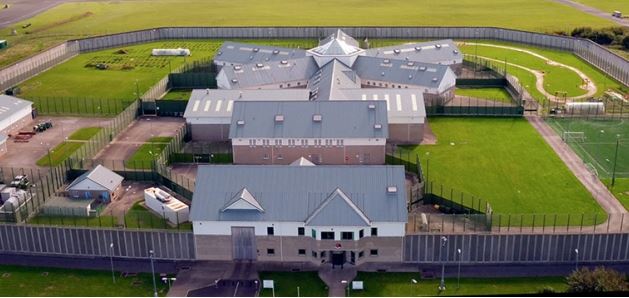
No transgender or non-binary prisoners have been held at Jurby prison on the Isle of Man in the past five years, according to an FOI response from the Department of Home Affairs. It is a small, concrete data point that shows how trans prison policy is being driven by fear rather than by anything the evidence actually supports.
What the FOI actually found
A Freedom of Information request asked the Isle of Man government two things: how many transgender prisoners are currently held at Jurby, and whether they are housed on wings for men or women. The Department of Home Affairs replied that no transgender prisoners have been jailed there since 2021, and that no inmates have identified as non-binary in that period either.
That is the whole story, numerically speaking. Zero. Not a small number, not a handful managed with difficulty. Zero, over five years.
The department did add that staff are working on updated policies, and that work is ongoing. Which raises a question worth asking: what is the urgency driving that policy work, exactly, when the population it would govern has been entirely absent for five years?
The gap between fear and reality
I think about this kind of finding a lot, because it illustrates something I see repeatedly in the public debate around trans people. The fear is enormous and loud. The reality is quiet, ordinary, and completely at odds with what the fear describes.
Trans people in prison are not a theoretical group. They are real people, many of them deeply vulnerable, navigating an institution that is already hard enough without having to fight for their basic dignity as well. The debate about where they are housed, and how their gender identity is recognised, matters a great deal to those individuals. But the scale of that debate, the heat and urgency of it, has almost no relationship to the numbers of trans people actually in the prison system.
The Isle of Man is a small jurisdiction, and Jurby is a small prison. Of course the numbers are low. But the pattern they represent is not unusual. Across many countries, the number of trans people in prison who require housing decisions is small, the number of documented incidents involving trans prisoners that match the fears raised in policy debates is smaller still, and the actual risk picture looks nothing like what the loudest voices in the room claim it does.
Policy being built for a problem that does not exist at scale
What strikes me about this story is not the zero itself. It is the detail that staff are nonetheless working on updated policies, with that work still ongoing. I am not suggesting that preparedness is wrong. A prison that has no trans prisoners today may have one tomorrow, and having a thoughtful, humane policy ready is far better than scrambling when someone arrives.
But context matters. Across the UK and many other countries, trans prison policy has been significantly tightened in recent years, in ways that have made life harder and less safe for trans people who are already in custody. Those changes have been driven by public pressure, by political anxiety, by worst-case scenarios amplified far beyond their actual frequency. The people affected, mostly trans women, are among the most marginalised and at-risk people in the system. Harsher policy does not make prisons safer. It makes vulnerable people less safe.
When I read a finding like this one from the Isle of Man, I find myself thinking about the gap between the noise and the reality. How many hours of political debate, how many column inches, how many policy consultations have been devoted to a problem that, in this jurisdiction at least, has not materialised in five years? And how much of that energy has been spent asking what trans people in prison actually need to be safe, rather than asking how to manage the public discomfort with their existence?
What good policy looks like
Good prison policy for trans people is not complicated in principle, even if it takes careful implementation. It starts from the same place all good prison policy starts: every person in custody deserves to be housed safely, treated with dignity, and not subjected to harassment or violence. Gender identity is part of that. It is not a problem to be managed around; it is a characteristic of a human being who has the same claim to safety as everyone else in that building.
The Isle of Man's Department of Home Affairs is working on updated policies. I hope the people developing those policies will let the evidence lead, rather than the noise. Zero trans prisoners in five years is not a reason to build a hostile or restrictive framework. It is a reason to build a thoughtful, humane one, ready and waiting, grounded in dignity and in the reality of who trans people actually are.
Comments