
Joanna Whaley won the Michigan Democratic primary for House District 2 and could become the first openly transgender woman elected to the state legislature. She ran on affordability, utility costs, and healthcare reform, and her community voted for those things. Her identity was secondary on the doorstep, and that, she says, is exactly how it should be.
Who is Joanna Whaley?
She is a chaplain, a parent, and a political newcomer. Her day job involves clinical spiritual care in hospitals, which sometimes means accompanying people at the end of their lives and helping them and their families find a way through. That is not a background that tends to produce polished political operatives, and that is almost certainly part of why people responded to her.
She knocked 17,000 doors. She attended every city council meeting in all four of the cities she hopes to represent, Allen Park, Lincoln Park, Melvindale, and Southgate, over fourteen months. What she heard on those doorsteps was not abstract. People are choosing between utility bills and insulin. They are watching their water bills climb while DTE asks for more. She has a child who needs insulin. She knows what that calculation feels like, personally, and she said so.
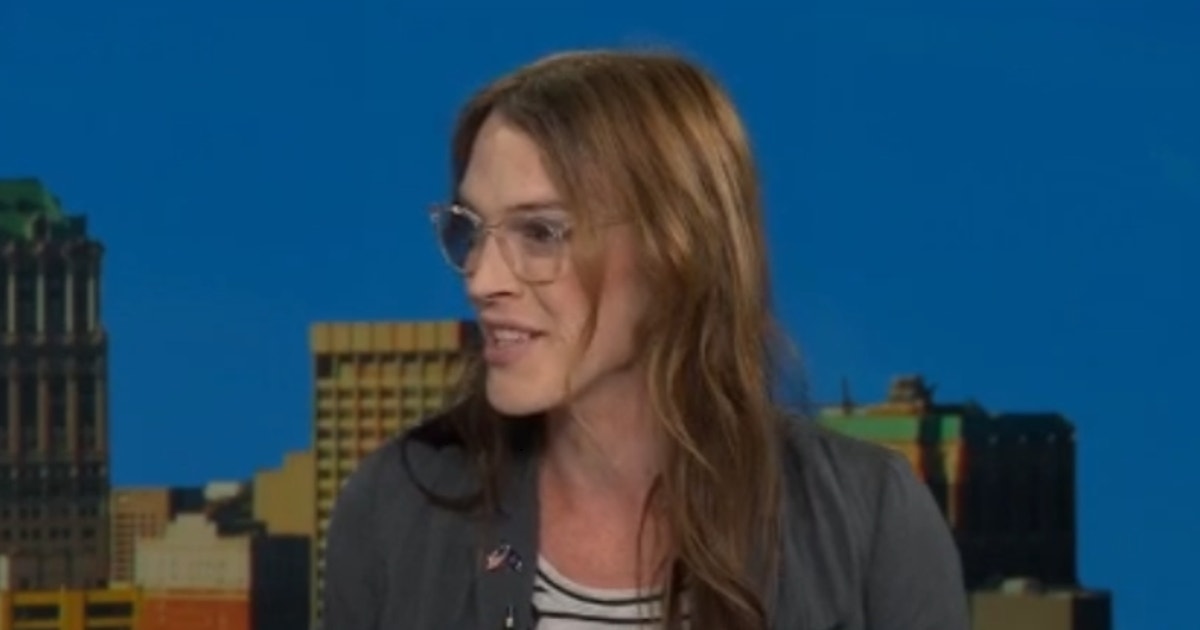
"My training as a pastor my whole career taught me to listen for the existential crisis in my communities," she told FOX 2. "And our communities are feeling a lot of distress, they're feeling a lot of crisis right now." That is the kind of sentence that either rings true or it does not, and in Whaley's case it rang true enough that she beat a longtime politician in the primary to get here.
What her community actually voted for
The headline, inevitably, is about history. First openly trans woman. Could make the Michigan legislature. And yes, that matters, and I will come back to it. But Whaley herself was careful and clear about what happened in that primary. "My community didn't vote for history," she said. "They didn't vote because of identity. They voted because I'm showing up for their issues."
There is something worth listening to in that. She is not dismissing the significance of her identity, she is placing it correctly. "Who I am is just an interesting part," she said, "but what I do is what matters when you get elected." Voters in Downriver Michigan were weighing up utility bills and healthcare costs and who was actually going to show up for them, and they chose her. She earned it on substance.
She now faces Republican challenger Ronald Kokinda in November. The general election is the harder road, and nothing is guaranteed. But she won a competitive primary as a trans woman running on kitchen table issues, and that is not nothing.
Why representation in legislatures matters anyway
Even if Whaley's primary voters were thinking about their bills and not her identity, the identity still matters, and here is why. Legislatures across the United States have spent the last several years debating trans people's existence, their healthcare, their right to use a bathroom, their children's access to sport and to medical care, and most of those debates have happened in rooms that contain very few, if any, trans people. The people being legislated about are not in the room.
That is not a small thing. Policy made without the people it affects tends to be made badly. It tends to rely on assumptions rather than experience, on fear rather than familiarity, on abstract concerns rather than the actual texture of actual lives. When a trans woman who has spent her career accompanying people in their worst moments, listening for what they actually need, walks into a legislature, the room changes. Not because she announces her identity, but because she is there.
Whaley acknowledged the weight of the moment without letting it swallow the moment. "We stand in a moment where we acknowledge it, and we do know what it could mean for folks statewide," she said. Then she came straight back to Allen Park and Lincoln Park and Melvindale and Southgate. That discipline, the ability to keep both things in view without one collapsing into the other, is a skill. It is also, I think, exactly what good representation looks like.
The noise online versus the ground reality
One thing Whaley said stayed with me. "If you go online, you're going to see a lot of things speaking about my identity. But when you get on the ground, people are concerned about everyday things." That gap between the online conversation about trans people and the lived reality of how trans people are actually received in their communities is one I have noticed again and again. The culture war is loudest where it is most abstract. Up close, on someone's doorstep, after fourteen months of showing up to city council meetings, people tend to evaluate you on what you have actually done.
That does not mean discrimination does not exist, or that Whaley has not faced it, or that the political climate is not genuinely hostile in places. It is. But it does mean that the hostility is not the whole picture, and that trans people who run for things, who show up, who do the work, can find that their communities are more interested in their policies than in their gender. That is not a guarantee. It is a possibility, and it is worth naming.
I am rooting for Joanna Whaley in November. Not because her winning would be historic, though it would be, but because she sounds like exactly the kind of person a legislature should contain: someone who listens, who shows up, who understands from personal experience what it costs when the system fails, and who wants to change it. Michigan's Downriver communities deserve that. And she has earned the chance to try.
Comments