
Adam Hamilton, a Democratic megachurch pastor running for Senate in Kansas, went viral for refusing to use trans people as a campaign weapon. He said Jesus told him to love his neighbour, and that politicians have turned a small, real group of people into a polling tool. It was a simple answer, and it landed because almost nobody in electoral politics says anything like it.
What he actually said
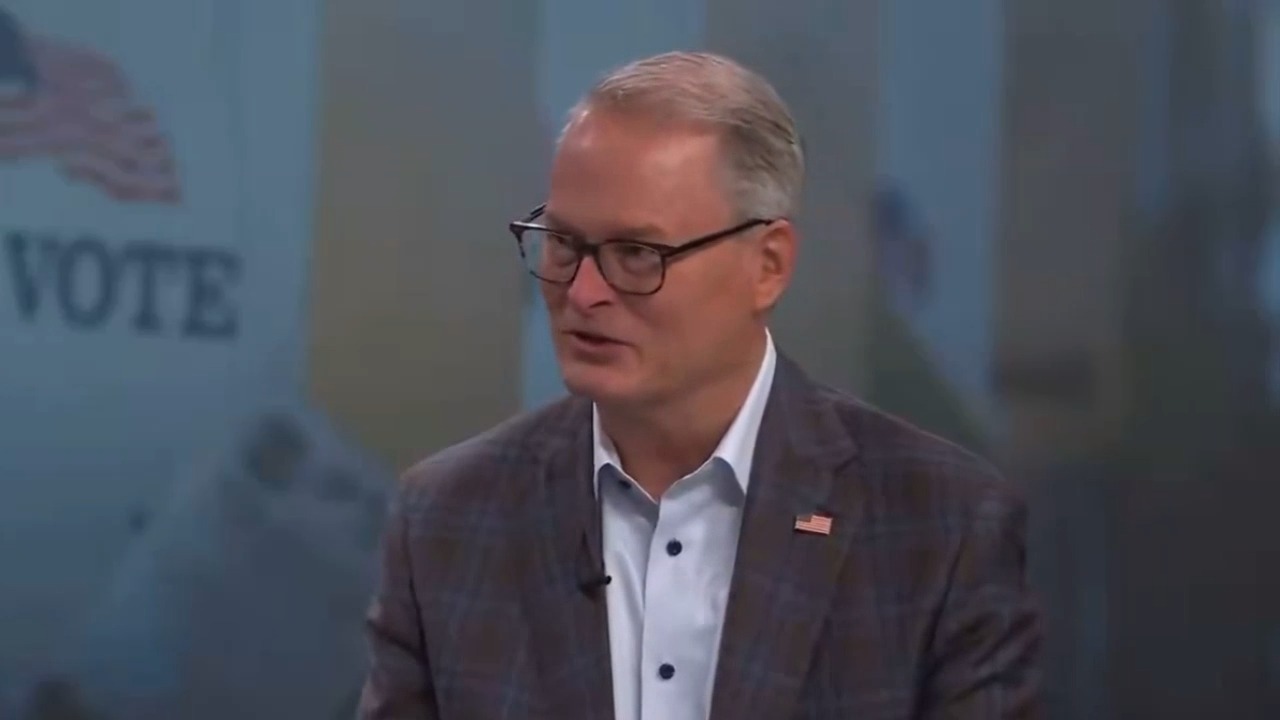
Hamilton was asked about his stance on trans rights during an interview with Kansas City's KMBC. It is the kind of question that gets deployed like a trap in American politics right now: say the wrong thing and you hand your opponent a clip; say nothing and you look spineless; try to triangulate and you end up satisfying nobody.
He didn't do any of those things. He said he didn't understand everything about the issue. Then he said this: "I look at people, and I understand one thing really clearly when it comes to transgender, and that is Jesus told me I was to love my neighbor as I love myself. So I'm gonna love the trans person as well as the straight person, as well as the male or female."
And then he named the mechanism behind so much of what trans people are currently living through: "I just think we have to do better than picking on small groups. And what's happened is we've turned a group of people into a campaign issue because it polls well."
That last sentence deserves to sit for a moment. Because it is true, and almost nobody running for office says it out loud.
Why this landed the way it did
Trans people are not a new political reality. They have existed across every culture and every period of history. What is relatively new is the decision, made quite deliberately by political strategists, to treat their existence as a vote-winning attack line. The polling came first. The legislation followed. Bills restricting healthcare, banning bathroom access, removing protections from schools: many of these were not driven by constituent demand or genuine policy concern. They were driven by focus groups showing that hostility to trans people moved certain voters.
Hamilton called that out plainly, in Kansas, while running against a Republican incumbent, on camera. That is why the clip spread.
It is not that people had never heard the argument before. It is that they are not used to hearing it from someone who is also, in the same breath, admitting the limits of their own understanding and leading with their faith rather than their politics.
On the sports question
Hamilton has said he opposes allowing males to compete in female sports. That position will be reported alongside the viral clip, and it is worth noting what it means.
The framing itself is contested. Trans women are women. The question of how sporting bodies set eligibility criteria is real and genuinely complicated, but it is a question about the specific physical demands of specific sports, not a question about whether trans women belong in women's spaces more broadly. Those two things get collapsed constantly, and the collapse is not accidental: it is how a narrow debate about elite athletic competition gets used to justify wholesale exclusion from public life.
Hamilton's position on sport does not cancel out what he said about dignity and scapegoating. Both can be true, and the clip went viral for the second part, not the first. What it does mean is that he is not a fully formed ally on every question, which is fine, and honest, and probably closer to where a lot of people actually are than the political conversation tends to admit.
What faith and trans dignity can look like together
There is a version of religious engagement with trans lives that is warm, curious, and grounded in genuine care. Hamilton, whatever his position on individual policy questions, is pointing towards it. The idea that Christianity requires hostility to trans people is a political choice, not a theological inevitability. Many people of deep faith, across traditions, arrive at exactly the opposite conclusion: that the call to love your neighbour is not conditional on understanding everything about them.
I have heard from trans people whose faith communities have been their strongest source of support. I have heard from parents whose church held them while they learned how to support their child. The narrative that religion and trans acceptance are incompatible is as manufactured as the idea that trans people are a threat to women's spaces: it is pushed hard because division is useful, not because the underlying reality supports it.
What this says about where public feeling actually is
Hamilton is running in Kansas, one of the most reliably Republican states in the country. He is described as being in a surprisingly competitive race. He did not say what he said because it felt safe. He said it because he meant it, and it appears that at least some voters in a ruby-red state are not as uniformly committed to the anti-trans playbook as the playbook assumes they must be.
Politicians frequently justify their silence or their hostility to trans rights by saying their constituents demand it. Sometimes that is true. Sometimes it is a convenient cover for not wanting the argument. Hamilton's response suggests there may be more room than most candidates believe, even in difficult terrain, for someone who is willing to say: these are real people, they deserve to be treated with dignity, and I am not going to use them to win a news cycle.
That is not a revolutionary position. It is a basic one. The fact that it reads as brave in the current environment tells you a great deal about how low the bar has fallen, and how much damage has been done to real people while politicians have been busy calculating their angles.
Comments