
The 2026 Supreme Court term has been called bleak and destructive by constitutional law professors, with rulings that expand presidential power and carry consequences for trans people across America. Courts can rewrite law, but they cannot rewrite identity. The legal battles matter, and they are not the whole story.
What legal experts are actually saying
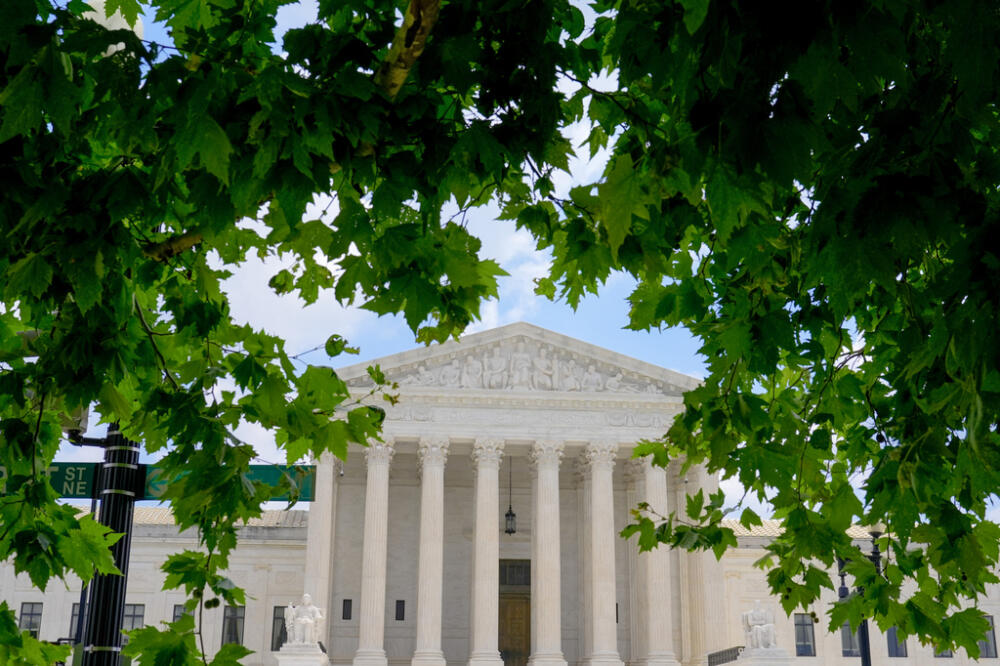
Two words stood out when WBUR's Amory Sivertson asked two eminent constitutional law professors to sum up this Supreme Court session. Stephen Vladeck at Georgetown said: bleak. Carolyn Shapiro at Chicago-Kent said: destructive. These are not commentators given to hyperbole, and their alarm is worth taking seriously.
The term produced rulings across immigration, civil liberties, and the shape of the presidency itself. The headline that will probably travel furthest is the birthright citizenship case, Trump v. Barbara, in which the Court upheld the 14th Amendment's guarantee that anyone born on US soil is a citizen, striking down an executive order that tried to deny that right. Chief Justice Roberts put it simply: "Citizenship, then and now, was the right to have rights." That is a clean and welcome statement. And yet, as Vladeck pointed out, three justices would have upheld the order. A fourth sided with the majority on the outcome but not on the constitutional reasoning. The fact that a 160-year-old amendment was ever genuinely in question tells you something about where the Court has moved.
Then there is the ruling that has Shapiro and Vladeck most alarmed: the conservative majority dramatically expanding the president's power to fire the leaders of independent federal agencies, dismantling nearly a century of precedent in the process. The agencies affected include those that fund and regulate research, education, and healthcare. When you pull at that thread, it reaches further than it might first appear.
Where trans rights sit in all of this
The WBUR article names trans rights explicitly in its headline, and this term has not been kind. I am not going to catalogue every ruling here because the picture is still moving and I will not speculate on specifics I cannot confirm from what I have in front of me. What I can say is this: the broader direction of the Court, combined with the expansion of executive power and the narrowing of civil liberties protections, creates a climate in which trans people in America have real and legitimate cause for concern. That is not scaremongering. It is the honest reading of what legal experts who study this institution are telling us.
Gender-affirming care for young people has been one of the most visible fronts. Bans passed at state level have worked their way through the courts, and the composition of the Supreme Court means that the odds of those bans being struck down on federal constitutional grounds are not what they were five years ago. People who needed care have gone without it. Families have moved states. Young people have waited, and waiting is not neutral when puberty does not pause for legal proceedings.
What the courts cannot do
Here is the thing I find myself wanting to say to every trans person reading this in fear, and I mean it without any hint of false reassurance: a court ruling does not tell you who you are.
I have spent years talking with trans people, listening to their stories, and watching what actually changes their lives. It is almost never a legal milestone. It is the morning they stopped pretending. The parent who came around. The doctor who listened. The friend group that used the right name without making a fuss about it. The moment they looked in the mirror and felt, perhaps for the first time, something close to peace. None of that is in the jurisdiction of the Supreme Court of the United States.
That is not a reason to stop fighting the legal battles. Those battles are real and the people harmed by bad rulings are real. A young person denied puberty blockers because of a policy that a court failed to strike down is genuinely harmed, and I will not minimise that. But there is a difference between the law as it stands and the life that is possible within it, and trans people have always found ways to live with courage and authenticity in systems that were not built for them, often in much harsher conditions than these.
Bleak is not the end of the sentence
Vladeck called this term bleak. I think that is the right word for the session, but not the right word for what comes next.
Trans people in America are not waiting for the Supreme Court to tell them they are allowed to exist. They are living, building community, finding doctors who will help, moving when they have to, staying and fighting when they can. The legal framework around them has shifted in ways that make some of that harder, and that matters. But the through-line of trans life in America is not a court docket. It is people figuring out how to be themselves, which is, when you look at it closely, one of the most ordinary and most extraordinary things a human being can do.
If there is a news story you would like me to cover then just let Sammy know.
Dr Helen Webberley is a gender specialist, medical educator, and founder of GenderGP. She writes about gender diversity, trans healthcare, and the lives at the centre of both.
Comments