
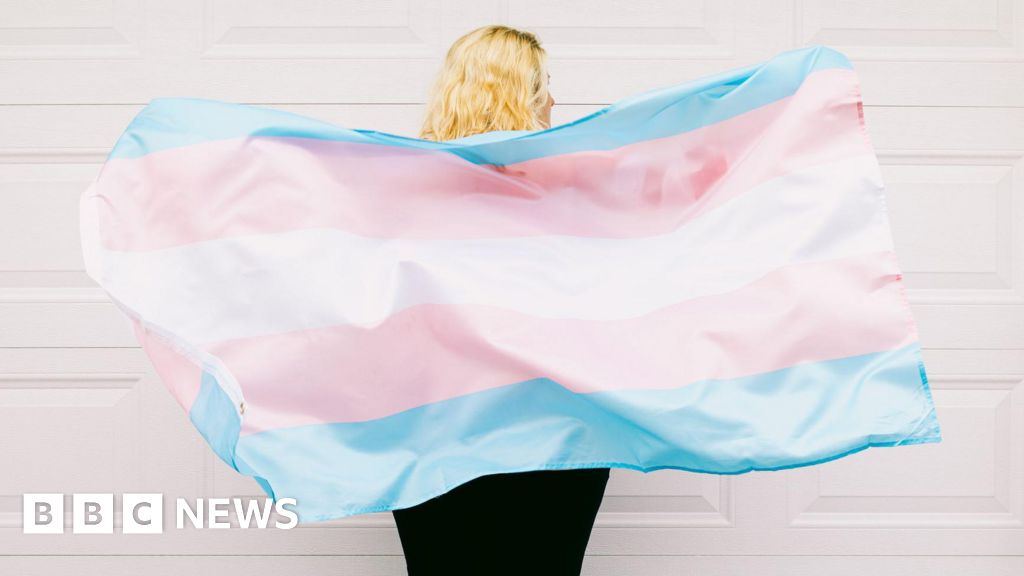
Trans means that a person's gender identity differs from the sex they were assigned at birth. Trans people exist across a full spectrum of identity, and they always have. The current debate in the UK is not about whether trans people are real: it centres on a Supreme Court ruling from April 2025 that interpreted the Equality Act 2010 as defining woman by biological sex, a decision that has been widely contested.
What does trans actually mean?
Trans is simply a shorter way of saying transgender. A trans woman is a woman whose gender identity is female, but who was assigned male at birth. A trans man is a man whose gender identity is male, but who was assigned female at birth. Non-binary people hold an identity that does not sit exclusively at either end of the male-female spectrum. Some trans people experience significant distress about the mismatch between their body and their identity, which is known as gender dysphoria. Others do not, and the absence of distress does not make someone less trans.
People transition in different ways. Some change their name and pronouns and adjust how they dress and move through the world. Some take hormone treatment. Some have surgery. Some do a combination of all of these, and some do none. There is no single correct way to be trans, and there is no checklist that has to be completed before a person's identity counts.
What is the Supreme Court ruling actually about?
In April 2025, the UK Supreme Court ruled unanimously that when the Equality Act 2010 uses the words "woman" and "sex," they refer to biological sex as recorded at birth. The case was brought by For Women Scotland against the Scottish Government, which had included some trans women within its definition of women for the purposes of gender representation on public boards.
The Court did not create new law. It interpreted existing law, and interpretations can be wrong. Many legal experts, equality organisations, and trans rights advocates have argued that this interpretation contradicts what Parliament intended when it passed both the Gender Recognition Act 2004 and the Equality Act 2010: that people with a Gender Recognition Certificate would be recognised in their acquired gender across most of public life. The ruling has been described by critics as inconsistent with the spirit and purpose of both pieces of legislation.
Crucially, the Supreme Court confirmed that trans people retain protection under the Equality Act through the protected characteristic of gender reassignment. The ruling narrowed how the word "woman" is read in specific legal contexts. It did not erase trans people from equality law.
What has changed since the ruling?
The Equality and Human Rights Commission has published guidance following the ruling, requiring that single-sex facilities open to the public, including toilets and changing rooms, be used on the basis of biological sex. Parliament has 40 working days to review that code of practice. If no objection is passed, it comes into force automatically. That process is still under way.
The guidance is draft. It does not yet have the weight of statutory law, and it remains subject to parliamentary scrutiny and potential legal challenge.
How many trans people are there in the UK?
The 2021 Census for England and Wales suggested around 262,000 people over 16 identified as trans, roughly 0.5% of the population. That figure has been contested: the ONS later noted that language barriers may have affected responses in some areas, and described the data as "in development." Whatever the precise number, these are hundreds of thousands of real people, with families, jobs, friendships, and lives, whose daily existence has become the subject of a political argument they did not ask for.
What is a Gender Recognition Certificate?
A Gender Recognition Certificate is a legal document issued under the Gender Recognition Act 2004. Obtaining one changes a person's birth certificate so that it reflects their acquired gender. The process requires a diagnosis of gender dysphoria, evidence of living in the acquired gender for at least two years, a statutory declaration, and a fee of £6. More than 10,250 GRCs had been issued in England, Wales and Scotland as of September 2025.
A GRC is not required to update a driving licence, passport, or medical records. Non-binary is not currently recognised as a gender on legal documents in the UK.
Where does the BBC's framing fall short?
The BBC frames this as a debate between women's rights and trans rights, and that framing does real harm. It presents two groups of people as natural opponents, when the overwhelming reality is that trans women are women, trans men are men, and the vast majority of women, trans and otherwise, are not in conflict with one another at all.
The article also describes trans women, in the context of the Supreme Court ruling, as "biological males who identify as women." That is the ruling's language, not neutral language, and it reduces a person's entire identity to the marker on a birth certificate. Trans women do not "identify as" women in some tentative or provisional sense. They are women. The law's current interpretation of them is contested, but their identity is not.
When the BBC quotes groups who say the ruling protects "the half of humanity who need single-sex spaces," it presents that framing without noting that trans women are also part of humanity, also need safe spaces, and also face discrimination, harassment, and violence at elevated rates. Balance that presents inclusion as a threat to safety, without naming the safety risks faced by those being excluded, is not balance. It is a choice.
What is the biological sex debate really about?
Sex is more complex than a binary. Chromosomes, hormones, anatomy, and reproductive capacity do not always align neatly. The Supreme Court adopted a simple working definition for legal purposes, which is its right, but that definition is not a complete account of human biology and was never intended to be. The existence of differences of sex development, variations in chromosome patterns, and the full range of human bodies makes clear that biology itself does not sort into two clean categories as tidily as the ruling implies.
None of that changes the core point: gender identity is real, it has always existed across human cultures and throughout recorded history, and trans people deserve to live safely, with dignity, in the gender they are.
What does transition involve?
Transition can include social steps, such as changing a name, pronouns, and presentation, and medical steps, such as hormone treatment or surgery. Hormone therapy for trans men typically deepens the voice and promotes facial hair growth. For trans women, it promotes feminisation. Both are forms of gender-affirming care, supported by major medical organisations worldwide including the World Health Organisation, the Endocrine Society, and WPATH.
Some people later stop transitioning, a process called detransition. Accurate figures are not available, but detransition is less common than transition, and where it happens it deserves to be treated with the same dignity and respect. Its existence does not invalidate the experience of the far larger number of people for whom transition has been life-changing in the best possible sense.
If there is a news story you would like me to cover then just let Sammy know.
Dr Helen Webberley is a gender specialist, medical educator, and founder of GenderGP. She writes about gender diversity, trans healthcare, and the lives at the centre of them.
Comments