
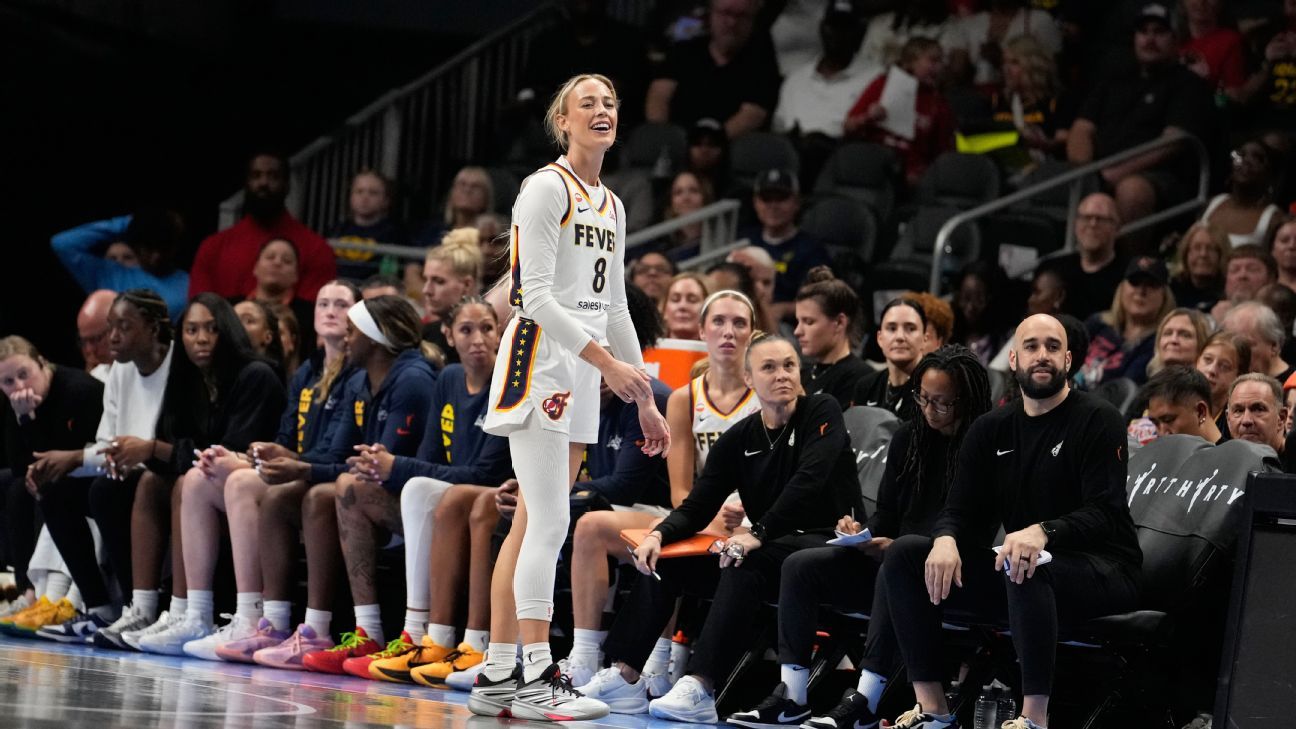
At a Dream versus Indiana Fever game on Sunday, at least three fans were asked by WNBA security personnel to cover their shirts. Two of those shirts carried messages saying women's and girls' sport should be restricted to those assigned female at birth. One was a shirt in support of transgender people. The league responded the following day with something you do not always see: a clear, public acknowledgement that its own staff got it wrong.
"This should not have happened," the WNBA statement said. And that was it. No hedging, no lengthy explanation, no suggestion that the fans had done anything wrong. The security workers from the Atlanta game were informed directly that asking fans to cover the shirts was not acceptable.
What actually happened in Atlanta
The Atlanta Dream distanced themselves from the incident quickly, saying in their own statement that Dream personnel were not involved in the decisions made by WNBA security. That distinction matters, because it tells us this was not a deliberate policy from a club trying to manage a politically charged atmosphere. It appears to have been a call made in the moment by security staff, possibly trying to keep the temperature down at a game that has become one of the most politically freighted fixtures in American sport right now.
The Fever have been at the centre of this debate, largely because of comments made by Sophie Cunningham, who said she was opposed to transgender girls and women competing in girls' and women's sports. That led to protests outside Fever away games, and to a five-game ban for a Storm minority owner who confronted fans holding signs supporting Cunningham. Everywhere this team goes, there are people with something to say, and on Sunday in Atlanta, security decided to try to quieten them. The league said no.
Why the league's correction matters
What strikes me most is that both sides were silenced. The fans who wanted transgender women excluded from sport, and the fan who wanted to show support for transgender people, were all told to cover up. That is not targeted suppression of one view; it looks more like a security team that panicked and reached for the simplest tool available, which was telling people to put a layer over whatever was causing a fuss.
The WNBA's response was to say, without qualification, that none of those fans should have been asked to do that. And I think that matters, even though the shirts on two of those fans carried a message I disagree with. Free expression at a sporting event includes opinions I find harmful. What it does not include is a league using its security apparatus, even inadvertently, to shut down the voice of a fan who came wearing a pro-trans shirt. That person deserved to be there as they were, and the league said so.
The broader picture around the WNBA and trans athletes
There has never been a transgender woman in the WNBA. The collective bargaining agreement says the league is restricted to women, but contains no specific language about gender identity or sex assigned at birth. There have been players in the league who were assigned female at birth and later came out as transgender or nonbinary, and they play without incident. The debate that has consumed so much attention this season is almost entirely hypothetical, fuelled by political momentum rather than any actual situation within the league.
That context makes the intensity of the response at these games all the more striking. People are bringing their most felt convictions about gender, sport, and fairness into arenas where the actual question has not yet arisen in any concrete form. And somewhere in that atmosphere, a security officer made a call that the league then had to publicly reverse.
What institutional correction looks like
I do not want to overstate what the WNBA did here. A short statement saying security got it wrong is not a policy position on transgender inclusion, and it does not resolve any of the underlying tension. But it is something. It is a league telling its own staff, in public, that silencing fans, including a fan there to show support for trans people, was not acceptable. That kind of correction, done openly rather than quietly, is what accountability looks like at the granular level.
For trans people and allies who go to WNBA games wanting to be visible, wanting to wear a shirt that says they are there and they belong, the league just said: you should have been free to do that. I hope that lands with the weight it deserves.
If there is a news story you would like me to cover then just let Sammy know.
Dr Helen Webberley is a gender specialist, medical educator, and advocate, and the founder of GenderGP. She writes about gender identity, trans healthcare, and the lives of trans people and their families.
Comments