
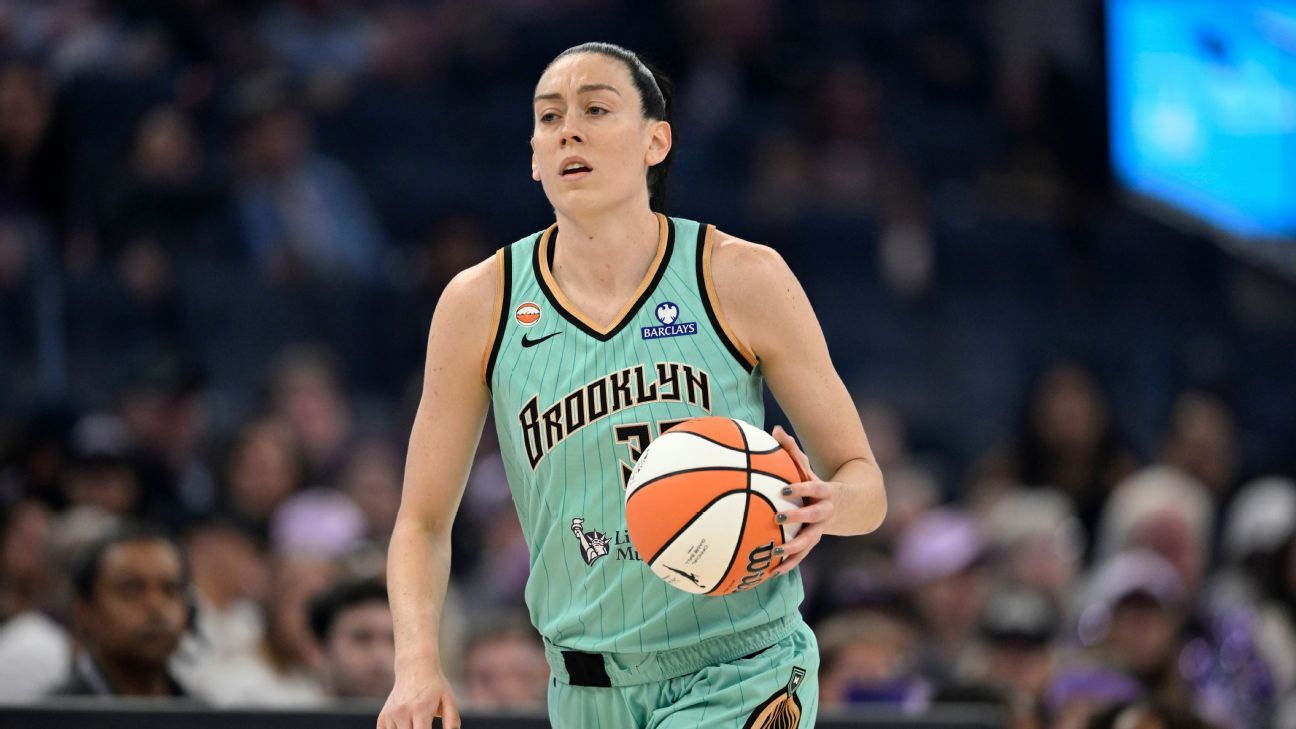
When Breanna Stewart says she wants her arena to feel safe, she is not asking for anything new. She is asking for what the WNBA has always been. The rallies outside games claim to protect women's sport, but one of the greatest players in that sport says the protests themselves are what is making it feel unsafe.
Stewart spoke to reporters before the Liberty faced the Indiana Fever in New York. She was not making a grand political speech. She was saying something straightforward: "I want Liberty fans and even Indy fans that are going to come here tonight to be able to have this arena be a safe space." That sentence should not need saying. The fact that it does tells you everything.
The protests outside WNBA games began after Sophie Cunningham said publicly that she opposes transgender girls and women competing in women's sport. Sophie Cunningham is, of course, entitled to that view. Stewart said exactly that: everyone is entitled to their opinion, and the moment that stops being true, something far more serious has gone wrong. But Stewart also named what troubles her, and it is worth staying with what she actually said. The issue is not opinion. The issue is division. "People are trying to divide us as teams, but also as teammates or as opponents," she said. That is a different concern entirely, and a legitimate one.
Here is what I keep returning to. There has never been a transgender woman in the WNBA. Not one. The collective bargaining agreement restricts the league to women, but it carries no specific language about gender identity or sex assigned at birth, because the question has never needed to be answered in practice. The rallies, the T-shirts, the security interventions at the Atlanta game last week, all of it is a response to a hypothetical. And in the middle of that hypothetical, Breanna Stewart, two-time Olympic gold medallist, two-time WNBA champion, one of the finest players the league has ever produced, is standing in front of reporters asking that her workplace feel safe.
That is not a theoretical harm. That is a real one, happening right now, to a real woman, in women's sport.
Sophie Cunningham saw the attention differently. More fans are coming to games, more eyes are on the league, and that is good for women's basketball. I understand the logic, and I would not dismiss it entirely. Visibility matters. But there is a difference between fans who come because they love the game and fans who come because they want to make a point about who should be allowed to exist in it. Stewart noticed that difference too. She called the protests "stunts for attention" riding a wave the league had built through talent, community, and decades of work. She is not wrong.
Stewart has been a consistent ally to trans people throughout her career. When she faced backlash over a Harry Potter themed shoe, she did not retreat. She donated royalties from that shoe to The Trevor Project, which supports LGBTQ+ young people in crisis. That is not a political calculation. That is someone who has decided what she believes and acts on it, quietly and without announcement.
The people organising rallies outside WNBA arenas say they are standing up for women's sport. But the women inside those arenas, the ones who have dedicated their lives to building something extraordinary, are saying: what you are doing is making this harder, not better. When your campaign to protect women's sport makes one of the best players in women's sport feel unsafe at her own game, you have to ask what the campaign is actually for.
The WNBA has always been a place where people felt they could be themselves. Stewart put it plainly: fans come "because they can feel like they can be themselves in whatever capacity that is." That is not a loophole or a political stance. That is a community. And it was built not by excluding people, but by welcoming them.
Protecting that is not a distraction from women's sport. It is the point of it.
If there is a news story you would like me to cover then just let Sammy know.
Dr Helen Webberley is a gender specialist, medical educator, and advocate, and the founder of GenderGP. She writes about gender diversity, trans healthcare, and the lives at the centre of both.
Comments