
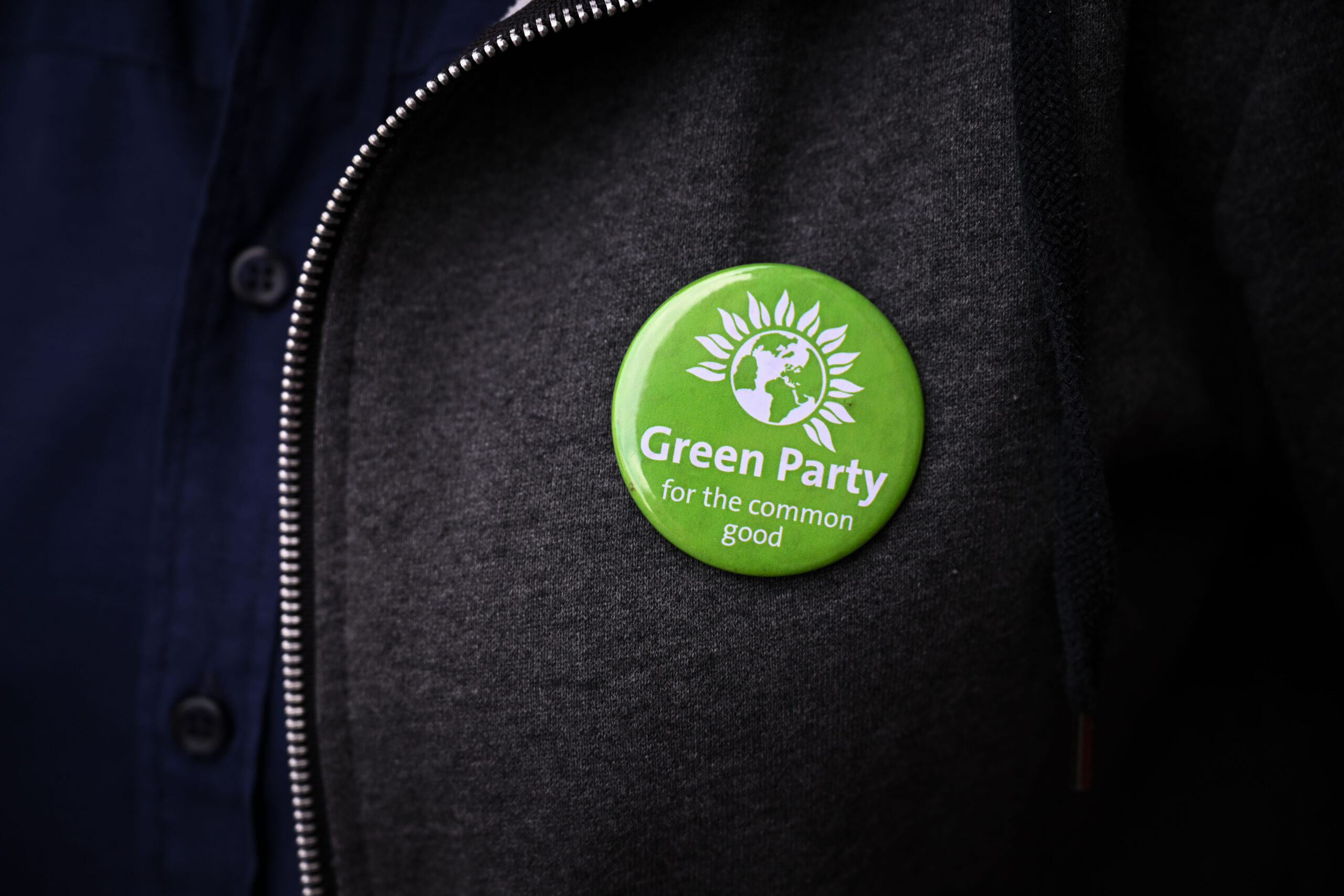
A refused conference stall has become a court case. The Green Party of England and Wales declined an application from a group called Green Women's Declaration to hold a stall at the Green conference in October 2025. The reason the Greens gave was straightforward: they wanted to protect their trans members. Green Women's Declaration responded with a legal challenge, claiming discrimination on the grounds of their views about gender and what they call "sex-based rights". The Good Law Project has stepped in to defend the Greens, and the fight is now on.
On the surface, this looks like a dispute about a conference stall, but it is a test of whether a political party can hold a principled position in favour of trans inclusion and then actually act on it, without being hauled into court for doing so.
What the Greens actually did, and why
The Green Party did not ban the group from existing. It did not prevent anyone from holding gender critical views. It refused one application to host a stall at one party event, because the party had decided that allowing it would put their trans members at risk. That is a decision a political party makes about how it runs its own space, based on its own manifesto and code of conduct. Trans rights are written into the Greens' constitution. They formed part of the party's last manifesto. The party was, in other words, doing exactly what political parties are supposed to do: standing by what they say they believe.
The Good Law Project's deputy head of legal, Cat Knight, put it well: "Trans people are facing a relentless assault on their rights, so it's all the more important that they are both seen and heard in our political system. Parties must have the power to defend their trans members, and provide safe spaces where everyone can shape the laws and policies that govern our lives."
That is not rhetoric. It is a description of something genuinely at stake.
The legal argument the Greens are making
The Greens are not pretending that gender critical views have no legal protection. They acknowledge that the Equality Act 2010 protects people who hold those views as a philosophical belief. But Articles 10 and 11 of the European Convention on Human Rights protect freedom of expression and freedom of association. A political party's right to organise, to set its own rules, to operate in line with its stated values: those are not trivial freedoms. They are the foundations of what it means for political parties to exist at all.
If a gender critical group can use discrimination law to force entry into the spaces of a party that has explicitly committed to trans inclusion, then every party's ability to stand by its principles becomes negotiable. That matters for the Greens. It matters for every party that has taken a position on anything.
The political context this sits inside
This case does not arrive in a vacuum. Since the Supreme Court ruling on the Equality Act, the pressure on trans people in public life has intensified in ways that are genuinely alarming. Labour ministers backed a bathroom ban. Kemi Badenoch described the ruling as a victory. Reform have been forthright about their views. Safe spaces for trans people within party politics are narrowing, not expanding.
What the Good Law Project is pointing to is that this is not just about comfort or belonging. Political parties are where laws get made and challenged. They are where communities organise. If trans people are effectively excluded from them, or if parties that support trans people face legal jeopardy for doing so, then trans people lose a platform they need. The political system has shaped many of the problems trans people are living with right now: the healthcare barriers, the hostile policing, the threats to trans children, the legal uncertainty. That same system can be used to push back, but only if trans people are in it.
What litigation as a tool actually signals
The thing that strikes me most about this case is not the legal argument. It is the choice to bring it at all. Litigation is expensive, slow, and uncertain. A group that genuinely wanted to participate in the democratic process would have far more effective ways to do so. What a legal challenge does, even one that fails, is consume the time and resources of the party defending itself. It signals to other parties that holding a pro-trans position carries a cost. It creates a chilling effect that does not require a court victory to work.
I am glad the Good Law Project is there. I am glad the Greens are fighting this rather than settling quietly. And I hope the case makes it absolutely clear that political parties can and must be able to protect the people their values commit them to protecting.
Trans people deserve to be part of democracy, not as a concession, not as a footnote, but as full participants with the same right as anyone else to shape the world they live in.
If there is a news story you would like me to cover then just let Sammy know.
Dr Helen Webberley is a Gender Specialist, Medical Educator, writer, and advocate, and the founder of GenderGP. She writes about gender diversity, trans healthcare, and the lives of trans people and their families.
Comments