Sabalenka backed a policy. The coverage invented a crisis.
Aryna Sabalenka said she supports the WTA's transgender eligibility policy, and that is a position she is entitled to hold. What the Fox News coverage did with her words is a different matter entirely: it layered dehumanising language, false urgency, and culture-war framing onto a story about a policy that affects no one currently playing on the tour.
By Dr Helen WebberleyResponding to Fox News4 August 20264 min read

Photo by Prashant Gurung on Unsplash
Aryna Sabalenka said she supports the WTA's transgender eligibility policy, and that is a position she is entitled to hold. What the Fox News coverage that wrapped around her words did with them is a different matter entirely: it layered dehumanising language, false urgency, and culture-war framing onto a story about a policy that affects no one currently playing on the tour.
What Sabalenka actually said
At a press conference in Montreal during the Canadian Open, Sabalenka was asked about the WTA's new transgender eligibility rules. She answered directly and without drama. She said she thinks fairness on the tour matters, that biologically men are stronger than women and that competing across that difference would not be fair, and that she is happy to undergo the genetic screening the policy requires. "It's pretty fair, and let's keep it that way."
Those are measured words from a competitor who was asked a direct question and answered it honestly. She did not use slurs. She did not call anyone dangerous. She did not claim a crisis was unfolding. She said she supports the policy. That is a legitimate position in a legitimate sporting conversation, and I can disagree with elements of how the policy is framed while still acknowledging that she said what she said in good faith.
What the coverage did instead
The article published by OutKick via Fox News did not extend the same good faith. Sabalenka's calm press-conference answer was the seed for something quite different: a piece saturated with the language and logic of a culture war rather than a sports story.
The headline itself calls trans women "males." The body of the piece refers repeatedly to "biological males" and "biological females," framing trans women not as women who happen to be trans but as men who are attempting something. That is not accurate language and it is not neutral language. It is a choice, and the choice tells you something about what the piece is actually for.
Then there are the claims that exist nowhere in Sabalenka's actual words: that "agenda-driven sports media" has been covering for a crisis, that governing bodies have been "dancing around biological reality," that "female athletes paid the price" for years of indecision. Paid what price, exactly? The piece does not say, because it cannot say. As far as publicly available information shows, there are no openly trans women competing on the WTA tour. The emergency the article describes in urgent, martial terms is not occurring on any current draw.
What gets lost when the noise is this loud
This is the part that stays with me. When a story about one player's press-conference answer becomes a relay race across social media, each sharer adding a little more heat, a little more certainty, a little more contempt, what disappears is any honest engagement with the actual lives of trans people in sport.
Trans women who play recreational sport, who love their local tennis club, who are trying to stay fit and connected and part of something, read coverage like this. They see themselves described as inherently threatening, as a problem to be solved, as the reason a protected category needs defending. And the article celebrating this policy was designed for elite professional competition, a context in which the numbers involved are vanishingly small and the question of individual physiology is genuinely complex. The article is not interested in that complexity. It wants the simpler story: women's sport under siege, heroic players drawing lines in sand.
The Sophie Cunningham comparison the article reaches for makes this even clearer. An Indiana Fever guard is mentioned as a parallel example of a female athlete "defending her hard-earned category." What did Cunningham say? The article does not quote her. She is invoked as atmosphere, as evidence of a movement, rather than as a person who said something specific. That is how this kind of coverage works: it accumulates names and associations to give the impression of a groundswell, while the actual facts recede.
The policy itself and what honest scrutiny looks like
The WTA's policy is real, and questions about eligibility criteria in elite sport are real questions. The use of SRY gene screening is a specific and not uncomplicated scientific choice, and reasonable people, including scientists and athletes, can discuss what it does and does not measure. That is a conversation worth having, grounded in physiology, in the specifics of individual cases, in the actual research on athletic performance after transition.
What is not a real contribution to that conversation is an article that begins from the premise that trans women in sport are a threat, uses language designed to deny their identity, and wraps a single player's polite press-conference answer in the rhetoric of a battle being won. Sabalenka deserves better than to have her words used as a vehicle for that. And trans athletes, at every level, deserve better than to be the imaginary villain in a crisis that the coverage itself is manufacturing.
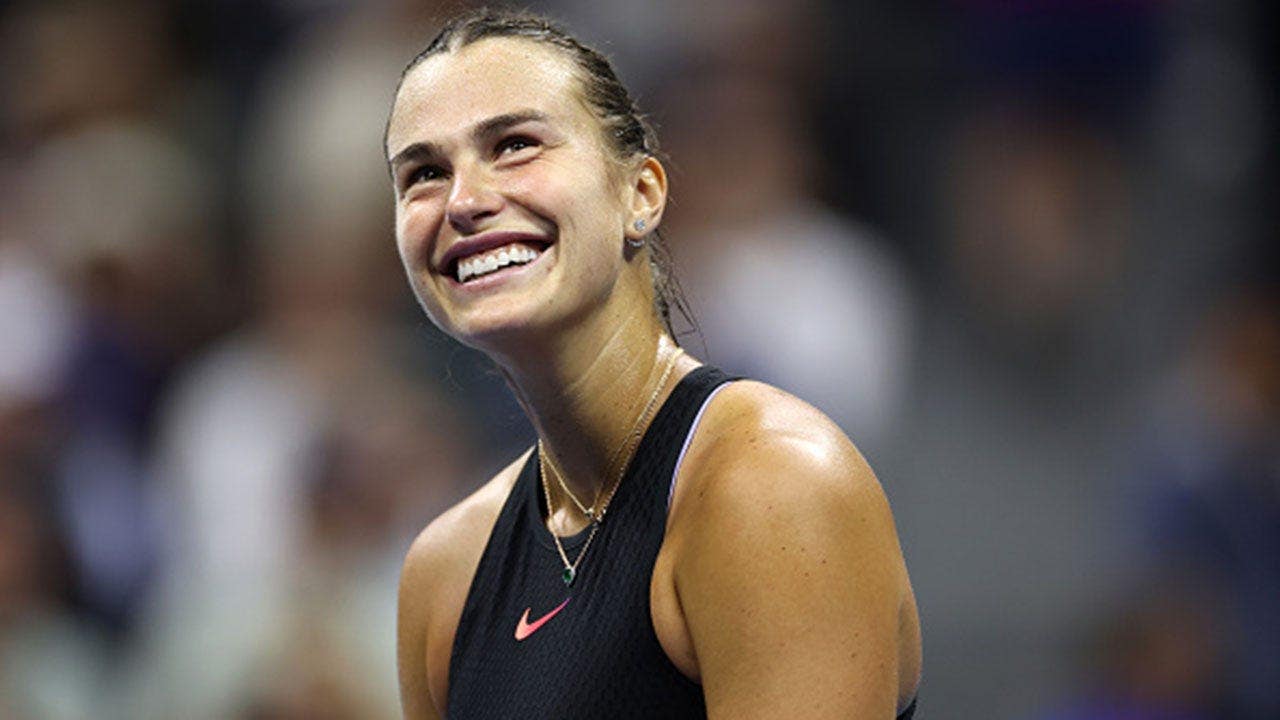 In response toTennis star Aryna Sabalenka supports WTA transgender rules, says males shouldn't face womenFox News
Talk it through with Sammy
Sammy has read this with you, and can help you work out what it means for you.
Show what you stand for
If this piece said something you already believed, say so out loud. Declare the year your dedication began.
Free to join, and it takes under a minute.
Comments