Trade unions back trans workers. That is not a crisis.
Trade unions advocating for trans workers are doing exactly what unions exist to do: representing all their members. The UnHerd piece frames this as an assault on women's rights, but unions include trans people, and the TUC's LGBT+ conference condemning EHRC guidance is democracy in action, not sabotage. The Equality Act 2010 protects trans people. A court ruling is not the same as the law.
By Dr Helen WebberleyResponding to UnHerd22 September 20264 min read

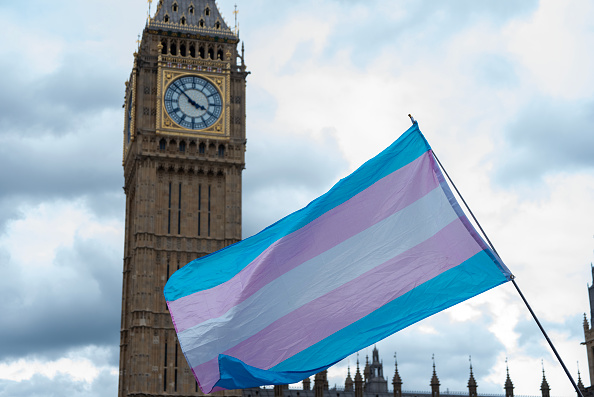
Photo by Matthew Larsen on Unsplash
The UnHerd piece by Joan Smith frames trade unions advocating for trans workers as a threat to women, a problem for the Labour government, and something that needs to be "stopped in its tracks". I want to push back on that framing, because it gets something important backwards, and the thing it gets backwards matters for every trans person trying to understand what their rights actually are right now.
What actually happened at the TUC
The TUC's LGBT+ conference passed a motion condemning the EHRC guidance that followed the Supreme Court ruling. An unnamed union leader pointed out that the only route out of observing guidance they believe is wrong is to change the Act. Nadia Whittome spoke at a fringe meeting and called for legal protection for trans people's rights, privacy, and inclusion. Four unions, including Unison, are boycotting Labour's women's conference because it will not admit trans women.
None of that is sabotage. All of it is what representative bodies do when they believe their members are being harmed. Trans people are union members. They work in schools, on railways, in hospitals, in shops and offices. When guidance is published that affects their daily working lives, their access to facilities, their dignity at work, their unions are supposed to respond. That is the entire point of a union.
The framing that needs examining
Smith describes trans women throughout as "men who claim to be women" and "trans-identified men". She frames calls to protect trans people's rights as an "assault on women's rights". She presents support for trans inclusion as evidence of political unreliability in Andy Burnham, and she asks the Prime Minister to declare the matter settled and closed.
The language is not neutral. A trans woman is a woman. Describing her otherwise is not a statement of biological fact; it is a political position, and one that the majority of medical, legal, and human rights organisations internationally do not share. The piece presents it as self-evident, and it is not.
The "assault on women's rights" framing rests on the assumption that trans inclusion and women's rights are in direct conflict. That assumption is doing a great deal of work in this article, and it is not examined once. What specific right belonging to a woman is removed when a trans woman is included? The piece does not say. It asserts the conflict and moves on.
What the law actually says
The Equality Act 2010 protects trans people through the characteristic of gender reassignment. That is the statute. The Supreme Court ruling in April 2026 was one court's interpretation of how the word "woman" operates in certain sections of the Act. It has been widely criticised by legal scholars, trans rights organisations, and equalities experts as inconsistent with Parliament's original intent. The EHRC guidance that followed has itself been described as confusing and contradictory, including by people with no particular stake in trans rights.
A court ruling is not the same as the law. Calling for the law to be clarified so that it reflects what Parliament meant when it passed the Act is not the same as dismantling the Act. These are different things, and they are being treated here as identical.
Andy Burnham and the political weather
Smith is critical of Andy Burnham for previously supporting trans inclusion and only recently shifting position. She reads the shift as opportunism driven by the Makerfield by-election. She may be right that the shift was politically motivated. What she does not consider is that the earlier position, supporting trans people's access to toilets and reform of the Gender Recognition Act, might simply have been the correct one.
The article's assumption is that moving towards trans exclusion is moving towards principle, and that the previous position was the error. That assumption is never defended. It is the axis on which the entire piece turns, and it is presented as too obvious to argue for.
What is actually at stake
For trans people reading this piece, and for the people who love them, the argument Smith is making has real consequences. She is asking the government to close the door on any further legal protection for trans people, to treat a contested court ruling as a final answer, and to resist pressure from the unions and MPs who represent trans constituents. That is not a neutral constitutional position. It is a demand that trans people accept the legal ground they are on now, however narrow, as all they will ever be allowed.
Trans people deserve better than that. They deserve the same access to workplaces, public facilities, and legal recognition that everyone else has. Their unions fighting for them is not a democratic emergency; it is democracy.
If there is a news story you would like me to cover then just let Sammy know.
Dr Helen Webberley is a Gender Expert, Medical Educator, and founder of GenderGP. She writes about gender diversity, trans healthcare, and the lives of trans people and their families.
 In response toTrade unions are undermining Labour's trans positionUnHerd
Talk it through with Sammy
Sammy has read this with you, and can help you work out what it means for you.
Comments