What transmasculine patients actually want from surgical care
A study in the International Journal of Impotence Research asked 44 transmasculine patients what information they needed before, during, and after genital gender-affirming surgery. Every participant rated complications, surgical technique differences, and long-term follow-up as highly important, yet major information gaps remained, particularly around complication management, financial costs, and structured aftercare support.
By Dr Helen WebberleyResponding to Nature17 November 20265 min read

Photo by Alexander Grey on Unsplash
A study just published in the International Journal of Impotence Research did something that does not happen nearly often enough: it asked transmasculine people who had undergone phalloplasty or metoidioplasty what they actually needed, and then it listened. Forty-four patients. Real people. Real surgery. Real gaps in what they were told.
The findings are not surprising to anyone who has spent time with trans people navigating surgical pathways. But they are worth saying plainly, because the debate around gender-affirming care is so often conducted entirely without the voices of the people who have had it.
What patients said mattered before surgery
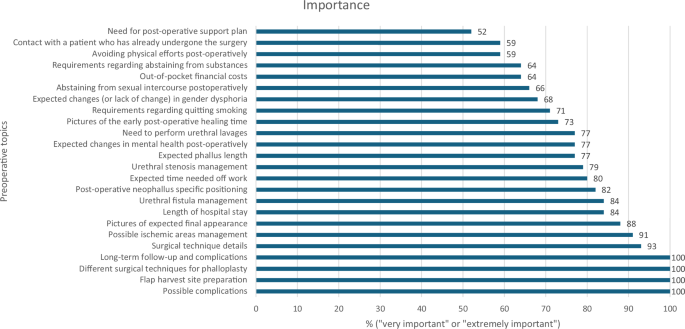
Every single participant, all 44 of them, rated four topics as highly important before their surgery: possible complications, preparation of the donor site, long-term follow-up, and the differences between surgical techniques. That is 100% across the board, on each of those points. When patients want information this consistently, there is no room for a team to decide it probably is not that important, or that they will cover it at the next appointment, or that most people do not really need that level of detail.
The preferred format, chosen by 87.5% of participants, was written materials. Not a rushed verbal briefing in a clinic room. Not a website link sent after the fact. Written information they could read, return to, and absorb at their own pace. That is not an unusual ask. It is what most people want before any significant surgery, and it costs nothing to provide.
The gaps that were actually found
Here is where it gets harder. The researchers calculated informational gaps by comparing how important a topic was rated against how well it was actually covered. The largest gap, 62 percentage points, was around managing ischemic complications. Information about urethral fistula and urethral stenosis each fell roughly 33 percentage points short. Financial costs were 35 points under-covered. And the need for a structured support plan after surgery? Twenty-two points short.
These are not obscure technicalities. Ischemic complications, urethral fistula, and stenosis are among the most significant risks of phalloplasty. Financial costs are, for many people, the reason a surgery they need feels permanently out of reach. A post-surgical support plan is not a luxury. It is what allows someone to recover without falling apart.
The fact that patients were not getting this information is a failure of the system, not of the patients. When someone rates a topic as highly important and then tells you they did not receive adequate coverage of it, that is the clearest possible signal that something needs to change.
What patients needed during and after surgery
During hospitalisation, 100% of participants rated nursing experience with gender-affirming surgery as highly important. Not just general surgical nursing competence, specific experience with this surgery, with these patients, with the particular needs that follow. Respectful communication was rated highly by 95.4%. Clear instructions for self-care at discharge by 97.7%.
In follow-up, 97.7% emphasised guidance on preventing injury to the neophallus, and 93.2% wanted clear criteria for when to seek an unscheduled visit. These are not demanding requests. They are the basics of safe post-operative care, and patients were asking for them because they were not reliably receiving them.
The patient voice in a debate that forgets them
What strikes me about this study is not any single finding. It is that it exists at all. The debate around gender-affirming surgery, particularly in the United States right now, is dominated by legislators, commentators, and campaigners, almost none of whom have had the surgery, cared for people having it, or spoken seriously with people who have. Colorado has recently moved to ban this surgery for minors. Other states are following. And through all of it, the people who have actually had the care are rarely asked what it meant to them, what they needed, or what it would have cost them not to have it.
This study puts 44 of those people on the record. They were not asked whether the surgery was right or wrong. They were asked what they needed to do it safely and well. And they answered with striking clarity and consistency. They wanted complete information. They wanted respectful, experienced care. They wanted to know what to do if something went wrong. They wanted a plan for afterwards.
That is not a radical manifesto. That is what every surgical patient deserves, in every specialty, in every country. The fact that trans patients have to participate in research studies to get it named out loud says something uncomfortable about how their care has been treated.
What good care actually looks like
The study's conclusion is straightforward: comprehensive, written, team-based counselling and structured continuity of care, built around what patients themselves say they need. The WPATH Standards of Care, Version 8, support exactly this approach. Gender-affirming surgical care should be held to the same standards of informed consent, patient communication, and follow-up that we would expect in any other surgical field, not to lower standards presented as caution, and not to higher standards designed to function as a barrier.
Patients knew what they needed. They were specific, consistent, and reasonable. The question is whether the systems caring for them will catch up.
If there is a news story you would like me to cover then just let Sammy know.
Dr Helen Webberley is a Gender Expert and Medical Educator with thirty years of experience supporting trans people and their families.
 In response toTransmasculine patients' perspectives before and after genital gender-affirming surgeryNature
Talk it through with Sammy
Sammy has read this with you, and can help you work out what it means for you.
Comments