
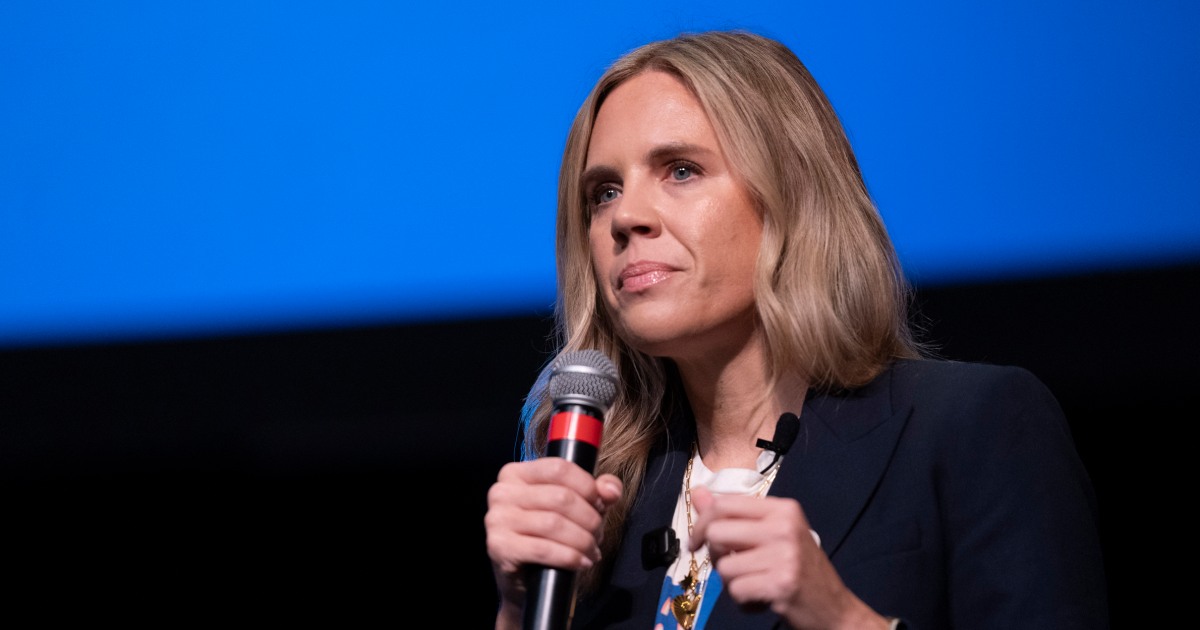
Donald Trump used an anti-trans slur on Truth Social to attack Annie Andrews, the Democratic Senate candidate in South Carolina, calling her a name she does not merit and that no one deserves. Andrews is not transgender. The point was never accuracy: it was to use trans identity as a weapon, and every trans person in America felt that.
Trump referred to Andrews, a physician and mother of three, three times using a dehumanising slur for trans people. He was not describing her identity. He was reaching for a word he knew would sting, and the people it was designed to sting most are not Annie Andrews. They are the trans people across America who watched the president of the United States use their existence as a political insult.
Who is Annie Andrews?
Andrews is a paediatrician. She has spent her career caring for children and families in South Carolina. She is running against Senator Darline Graham, who was appointed to the seat after her brother Lindsey Graham died in July. Andrews has been clear that she does not support gender-affirming surgery for minors or transgender athletes competing in women's sports: positions that place her well within the mainstream of the Democratic Party on these questions.
None of that mattered to Trump. He did not engage with her record, her policy positions, or her campaign. He reached for a slur, used it three times, and moved on.
Andrews responded with something that took more restraint than I would have managed. She largely set the insult aside and talked about her patients, her children, and the cost of living in South Carolina. "Lowering costs and making life better for families across our state is going to take all of us working together," she said. I find that kind of grace genuinely impressive, even as I understand why some people will wish she had said more.
What this language actually does
A slur is not just a rude word. It is a categorisation. It places someone in a group that the speaker wants the audience to regard as lesser. When Trump used this word, he was not making an argument about Andrews. He was making a statement about trans people: that their identity is shameful enough to function as a political attack.
This often gets lost in the coverage of moments like this. The target of the slur was not really Annie Andrews. She is not trans, and she knows that, and her campaign will survive it. The people who absorb this most deeply are the trans people watching. The teenager who has not come out yet. The adult who has spent years building a life that feels safe. The parent who is trying to work out how to protect their child. They all just watched the president of the United States signal, clearly and publicly, that their existence is a punchline.
The White House, asked why Trump used the slur, referred journalists to his social media post. That is its own kind of answer.
Who spoke up
Former South Carolina Governor David Beasley, a Republican, called it abhorrent. "Elections don't have to be about cruelty and lies," he wrote. "South Carolina deserves better." I am glad he said it. It matters when condemnation comes from within the same political coalition, and it takes something to break ranks in this climate.
Senate Minority Leader Chuck Schumer condemned the attack, calling it despicable and describing Andrews as exactly the kind of person South Carolina needs in the Senate. The Human Rights Campaign described Trump's remarks as "the sad, disgusting, pathetic diatribes of a lame duck president with record-low approvals."
Darline Graham's campaign did not comment.
The political context
South Carolina has not elected a Democratic senator in nearly three decades. But the Cook Political Report recently shifted its rating of this race from "Solid Republican" to "Likely Republican," which is the kind of movement that makes an incumbent campaign nervous. Graham has leaned heavily on Trump's endorsement. His willingness to intervene with this kind of post tells you something about how that campaign is reading the race.
None of that changes what the language was. Political desperation does not make dehumanisation acceptable. If anything, it makes it more revealing: when you are running out of arguments, you reach for the weapon that has always been close at hand, and for this administration that weapon is trans people.
What I keep coming back to
Trans identity used as an insult is not a new tactic, but it has a particular weight when it comes from the White House. It shapes what people feel they are permitted to say, to think, to do. Every trans person who reads that post has to reckon with the fact that this is how the most powerful person in their country talks about people like them.
Annie Andrews is going to be fine. She has a campaign, a record, and the composure to respond with dignity. But the trans people this language was really aimed at are not politicians with press teams and Senate races. They are ordinary people trying to live their lives. And they noticed.
If there is a news story you would like me to cover then just let Sammy know.
Dr Helen Webberley is a Gender Specialist, Medical Educator, and advocate for trans rights and gender diversity.
Comments