'No one wants us any more': how Hollywood turned its back on trans actors
Hollywood has effectively erased trans actors from screen. Glaad's 2026 reports found zero trans characters across 225 major studio films and a 79% fall in trans TV characters, the steepest single-year drop ever recorded. Actors who were thriving just a few years ago describe auditions drying up, health insurance lost, and careers that feel as though they never happened.
By Dr Helen WebberleyResponding to The Guardian16 November 20266 min read

Photo by Christian Harb on Unsplash
Trace Lysette went into 2024 on a genuine high. She had just been nominated for an Independent Spirit Award for best lead performance for her title role in Monica, sharing cover space on Variety with Patricia Clarkson, appearing alongside A-listers on daytime television. By any measure, she had arrived. And then the phone stopped ringing.
"It's almost like nothing I did had mattered, like it never happened," she told the Guardian. "Everything I'd built, it just felt like: 'Just kidding. We're gonna take all that away from you.'" She estimates she has auditioned for about seven parts in 2026, nothing since the end of spring, and no lead role or major studio project since Monica.
I read that and I felt it in my chest, because I have heard versions of that sentence from trans people in almost every area of life. You build something real, something earned, and then someone shifts the ground beneath you and acts as though the building was never there.
The numbers are not abstract
Glaad's annual Where We Are on TV report, released this week, analysed scripted television from June 2025 to May 2026 and found seven transgender characters among the 369 LGBTQ+ characters tracked. Seven. That is a 79% fall from the 33 counted the previous year, and the steepest single-year drop since Glaad began monitoring. Two of those seven were played by cisgender men. Because three appeared in cancelled shows and four in limited series, there will be, effectively, no regular or recurring trans characters on television next year at all.
The film picture is no better. Glaad's summer report analysed 225 movies across the ten major distributors, including Netflix, Disney, Universal, Sony, Warner Bros Discovery, A24, Amazon, Apple, Lionsgate and Paramount Skydance, and found zero trans characters. Not a handful. Zero.
Three years ago, the same industry seemed to be getting something right. Zoe Terakes in Talk to Me, Hari Nef in Barbie, Aneesh Sheth in Red, White and Royal Blue: trans actors in mainstream films, their transness neither hidden nor weaponised, just present. That felt like a direction of travel. It was not. It was apparently a high-water mark before the tide went out.
What erasure actually costs
Vico Ortiz, best known for playing the non-binary pirate Jim Jimenez in Our Flag Means Death, described it with a clarity that deserves to be quoted in full: "No one wants us any more, and that affects our healthcare, and that affects our chances to get gender-affirming care, should we want that, and it just spirals."
That is the part that people outside the industry might miss. This is not primarily a conversation about awards or critical acclaim or cultural symbolism. This is about whether trans actors can afford to live. Screen Actors Guild health insurance requires a minimum level of earnings from union work. Jack Haven, who starred in Netflix's Atypical, recently posted a public plea asking if anyone could hire them on a production and pay them $4,000 so they could qualify. Laverne Cox, arguably the most recognisable trans woman in American entertainment, told the Guardian earlier this year that she had lost around 90% of her income in the past two years as acting work, hosting contracts and corporate speaking engagements vanished. Asia Kate Dillon wrote last month that they were looking for service work.
These are not struggling newcomers. These are people who built real careers, who were visible and working and in demand, and who have watched that disappear in what feels like a coordinated withdrawal of welcome.
Who benefits when trans stories are told without trans people?
That is the question I keep coming back to. Trans stories are not disappearing from culture entirely. The conversation about trans lives, trans rights, trans bodies, is everywhere. Politicians talk about little else. What is disappearing is the trans actor's place in the room where those stories are made and told.
When a trans character is cast with a cisgender actor, something specific is lost. It is not just a job, though it is certainly that. It is the authority that comes from lived experience, the small accuracies that only someone who has actually navigated a trans life can bring to a performance. And it sends a message to every trans person watching: your story is interesting enough to tell, just not interesting enough to let you tell it.
Glaad's Megan Townsend pointed out that Gen Z, the largest share of North American moviegoers, also has the highest proportion of LGBTQ+ people: more than one in five Americans under 30, according to Gallup. The studios turning their backs on trans stories are, by that logic, turning their backs on a significant part of their own audience. The business case was always there. The question is whether the industry has decided something else matters more.
Progress is not a one-way street
Raina Deerwater from Glaad said something that stayed with me: "About 10 years ago, you could feel that progress was starting, and then for it to just halt is very disheartening." I think that feeling of whiplash, of having been given something and then watching it be taken back, is one of the most exhausting things about being trans right now. It is not just the loss. It is the insistence that you were naive to have hoped in the first place.
Elliot Page, fresh from a performance in Christopher Nolan's The Odyssey, recently admitted on a podcast that he does not have his next project lined up and that Hollywood is not exactly beating down his door. Only half joking, he said: "If someone wants to call me…" When one of the most acclaimed actors of his generation is making that kind of appeal, something has gone badly wrong.
Trans people have always existed. Trans artists have always existed. The industry found it convenient, for a moment, to reflect that back. It is now finding it convenient not to. The people paying the price for that convenience are real, named, talented human beings who went to work, did the job brilliantly, and are now being told, without quite those words, that they are not wanted.
Trace Lysette called it "a full-on ego death." I think she is right, not dramatic. When the work that tells you who you are and what you are worth dries up, it takes something with it that is hard to name and harder to get back. She deserves better. They all do.
If there is a news story you would like me to cover then just let Sammy know.
Dr Helen Webberley is a Gender Expert and Medical Educator, and the founder of GenderGP. She writes about gender diversity, trans healthcare, and the lives of trans people and their families.
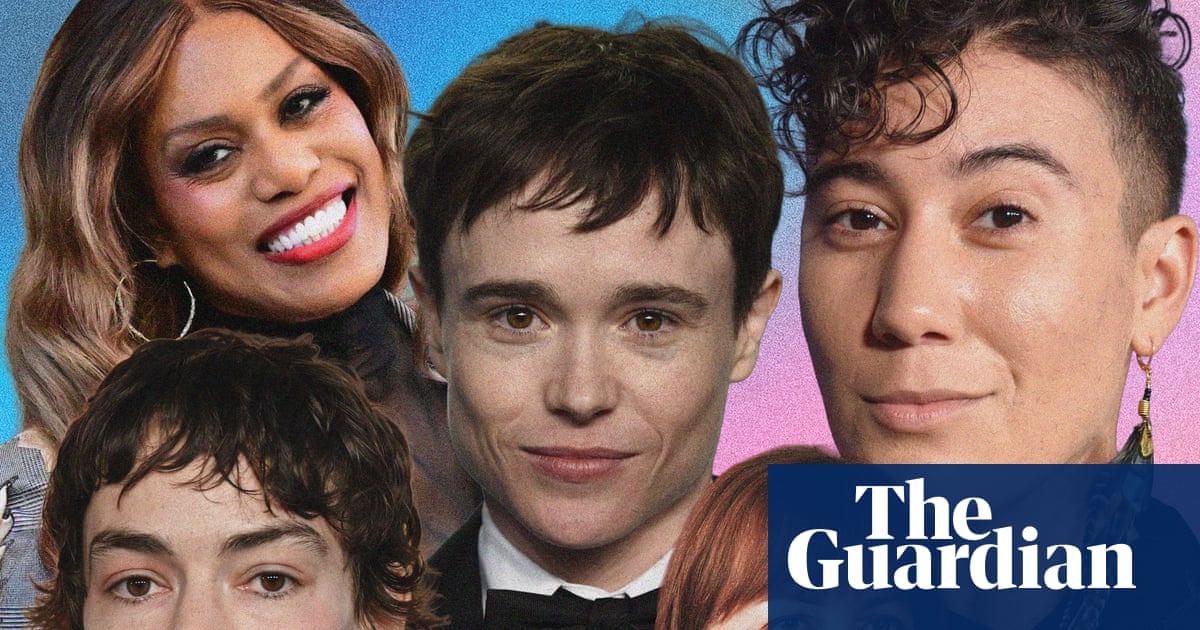 In response to'No one wants us any more': how Hollywood turned its back on trans actorsThe Guardian
Talk it through with Sammy
Sammy has read this with you, and can help you work out what it means for you.
Comments