How a Malaysian mother's love gives her trans daughter refuge
In Kelantan, one of Malaysia's most religiously conservative states, a mother chose to keep her transgender daughter close rather than push her away. Rozi's quiet acceptance has turned their home into a refuge for Hana at a time when trans Muslims in the region face growing legal risk and shrinking public life.
By Dr Helen WebberleyResponding to South China Morning Post29 September 20265 min read

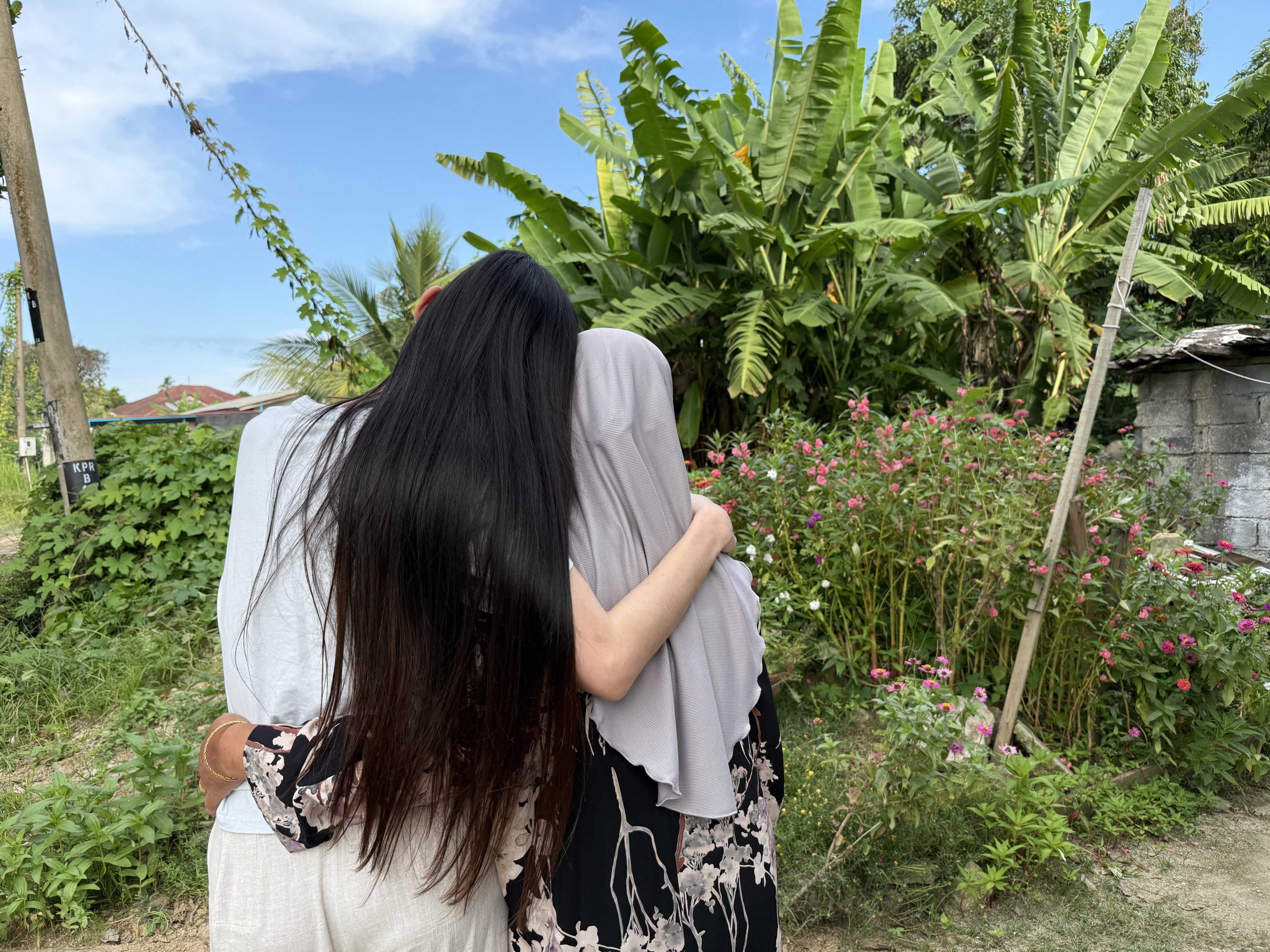
Photo by Muhammad Faiz Zulkeflee on Unsplash
There is a sentence in this story from the South China Morning Post that I keep coming back to. Rozi, 58 years old, works at a local mosque. She lives in a village on the outskirts of Kota Bharu, in a state where 95 per cent of the population is Muslim and where the government has made its view of her daughter's existence entirely clear. And yet, when asked about accepting Hana, she said this: "When you see your own child's face, what mother does not love her child? If I didn't accept her, she would go further and further away from me. I don't want her to be far away."
That is not a political statement, and not a position reached after lengthy deliberation about gender theory or religious jurisprudence. It is a mother doing the maths: my child, or distance from my child. She chose her child.
What acceptance actually costs here
Kelantan is governed by the Pan-Malaysian Islamic Party and has been since 1990. The state's sharia criminal code criminalises gender transition and cross-dressing among Muslims. In September, a 25-year-old trans person pleaded not guilty in a Kota Bharu sharia court to the charge of "posing as a woman" by wearing women's clothing. The maximum penalty is a fine of 3,000 ringgit, two years in prison, or both. Kelantan's deputy chief minister described LGBT practices last year as "a clear transgression of human nature." A revised sharia criminal offences bill, passed recently by Kelantan lawmakers, retains strict penalties for anyone who transitions, helps another person do so, or induces someone to transition.
This is the environment in which Rozi decided that her daughter was still her daughter.
Hana, now 27, began taking hormones around 2019 while living away from Kelantan. When she came home, her hair was longer and her appearance had changed. Her father was taken aback at the station. Her mother's response, as Hana remembers it, was: "Whatever people want to say, let them. Just don't stop coming home."
Four words. Don't stop coming home. I have heard parents say things like that, and I have heard parents say the opposite, and I can tell you plainly which group their children carry with them for the rest of their lives.
A refuge, while public space disappears
Hana dresses more conservatively in Kelantan than she does in Kuala Lumpur, where she travels occasionally for work as an interior designer. She favours loose or unisex clothing and understated make-up to avoid drawing the attention of religious enforcement officers. She thinks carefully about this before going out. She has learned to navigate a world that increasingly does not want her visible in it.
Another member of Kelantan's trans community, speaking anonymously, described how the texture of daily life had changed. "Before, people would still go out to eat, hang out and meet in public. Now it's very different. People don't really do that any more, and even when we gather, it's usually in small groups, maybe four or five people." Social media, which provides income for some trans people in the community, also makes them findable. Users tag religious authorities to demand enforcement action against people they see online. Visibility, which ought to be ordinary, has become a calculated risk.
Thilaga Sulathireh, co-founder of the human rights group Justice for Sisters, put it plainly: these laws "completely disrupt all areas of a trans person's life: their ability to work, move around freely, socialise and be who they are."
Into that landscape, Hana's home is an extraordinary thing. She joins family gatherings. She brings transgender friends over for meals. Her mother fusses over the food. "They are human, too," Rozi said. "They want to eat like us, they want to feel loved. They don't want to be thrown away by their families."
What I would say to any parent weighing this
If you are a parent reading this, and you are trying to work out whether to stand with your child or step back, consider what Rozi did. She did not have a roadmap. She did not have community support or legal protection or a society that would applaud her choice. She had her child's face. She chose not to let that face become distant.
Her theology has not dissolved. She continues to pray for Hana. She views matters of faith as something Hana must ultimately answer for herself: "That is between her and Allah. It is not for humans to judge." That sentence is doing a great deal of work. It is a woman finding a way to hold her faith and her love without dropping either. I am not saying that is easy. I am saying she found a way.
The alternative, which is what many parents in her position choose, is a child who becomes a stranger. A child who learns that home is not safe. A child who carries that knowledge into every relationship they will ever have.
Hana said something near the end of the piece that stays with me. "As long as my family accepts me, that's enough. What outsiders want to say, I don't really care." She can say that because she has somewhere to go back to. Most of the fear, most of the damage, most of the long-term harm that trans people carry through their lives does not come from strangers on the street or hostile governments or social media mobs, though all of those are real. It comes from the moment a parent chose distance over their child. That moment tends to define everything that follows.
Rozi, at the end of the article, is described with teary eyes. "As long as my child is safe. She is still my child." There is nothing in those words that requires a particular culture, a particular religion, or a particular political context. There is nothing in those words that is not available to any parent, anywhere, reading this.
If there is a news story you would like me to cover then just let Sammy know.
Dr Helen Webberley is a Gender Expert, Medical Educator, and advocate, and the founder of GenderGP. She writes about gender diversity, trans healthcare, and the lives of trans people and their families.
 In response toHow a Malaysian mother's love gives her trans daughter refugeSouth China Morning Post
Talk it through with Sammy
Sammy has read this with you, and can help you work out what it means for you.
Comments